
You know how you have that one recipe you just can’t live without? Well, this is my ride-or-die bread recipe. Sourdough sandwich bread. Reliable. Delicious. Loyal.
I’ve got two loaves proofing on my counter right now as I type this. True story. (Also, if you hear a weird beeping sound, that’s probably my timer.)
If you need a loaf that covers everything … PB&J, cold cut sandwiches, runny egg-on-toast mornings, grilled cheese o’clock… THIS is your recipe.
This recipe makes two loaves (because one loaf is never enough) in standard 1½-quart glass Pyrex pans. Honestly, it’s not much extra work to double (or triple) the batch, and trust me … extra bread never goes to waste. It also freezes like a champ. Future-you deserves a loaf too.
Alright, let’s get started. First things first … we need to wake up that sourdough.
Step 1: Build your Levain (don’t panic if you forget)
The night before bread day, you’ll want to make a levain (aka “special super starter”). Levain is just a fancy way of saying you made a little container of active sourdough starter that you will use to make your dough ferment and rise.
It’s just:
- 200 grams (1 cup) of room-temp water
- 200 grams (1½ cups) of flour (store-bought or fresh milled flour)
- 100 grams (½ cup) of sourdough starter
Mix that up in a bowl … no fancy tricks needed (though if you whip out a Danish dough whisk it makes you look very serious about bread).
No unmixed flour clumps allowed.
Oops, I forgot to make my levain … now what?
It’s okay, bread happens. If you forgot … on bread making day … just scoop about 1 cup of cold starter straight from the fridge into the bowl and keep moving. The sourdough sandwich bread will just take longer to rise. More YouTube time for you!
Levain vs. Cold Sourdough Starter:
- Levain = faster rise, more control over hydration, requires some planning
- Cold Sourdough Starter = slower rise, no planning
- My 20-year-old sourdough starter could probably survive a zombie apocalypse, so I’m pretty flexible. If your starter is new, you might want to stick with levain for now.
Step 2: Mix the Sourdough Sandwich Bread
In the morning, it’s bread o’clock. If I remembered to make my levain the night before … great! I want to use it while it’s still peppy and full of rising power. If I didn’t remember (because life), I grab my cold sourdough starter straight from the fridge like, “Surprise! You’re baking today.” Either way, I get the dough going early so it has all day to rise and do its sourdough magic.
To the levain (or cold sourdough starter), add:
- 2 ⅓ cups (550g) of water
- ¼ cup (85g) honey
- 1 tablespoon salt
- 2 tablespoons olive oil
- ¼ cup (17g) dried potato flakes (optional but grandma-approved)
Then slowly mix in:
- 7 cups bread flour (Fresh Milled Flour: 4.5 cups wheat berries … hard white and/or hard red … more info below)
A Word About Water - for your Sourdough Sandwich Bread
We are going to pause to talk about a few of our ingredients.
Let’s talk water. Not the “drink eight glasses a day” kind … although, yes, stay hydrated.
Different bread pans = different water needs. This recipe is built for 1.5-quart loaf pans. If you’re using a deep dish, cast iron (I love this one), unglazed clay, or something your great-aunt passed down that’s built like a tank, you’ll need to adjust the water and flour. (Been there, baked that.)
Here’s my trick: when I get a new bread pan, I keep a little bread diary. Nothing fancy … just water amounts and what worked. Why? Because my memory is like a distracted squirrel.
Once your water is dialed in, everything else falls into place. I usually don’t mess with the amounts of levain, honey, salt, olive oil, or potato flakes unless I’m using a wildly different pan. But I do adjust the flour based on how much water I’ve added.
Quick sidebar: Water quality matters. Some water will give your sourdough a hug. Others will slap it in the face (interfere with the growth of yeast and sourdough bacteria). You don’t want your bread to flop.
Good Water:
- Spring water
- Filtered tap water
- Bottled mineral water
Bad Water:
- Chlorinated tap water
- Distilled water
- Reverse osmosis water
- Super hard or soft water
Why Potato Flakes?
Okay … hear me out. This one’s a little nostalgic.
Grandmas everywhere have been sneaking potato flakes into their bread dough for a long time. That’s reason enough for me. It makes me feel like I’m channeling some kind of flour-dusted kitchen wisdom from the past.
Also, tiny confession … I’m a bit of a minimalist. I don’t hoard school projects. I don’t keep birthday cards in a shoebox under the bed (but I do take pictures of them, because I’m not a complete minimalist robot). Sometimes people assume that minimalist = heartless. But you know what proves I do have a sentimental streak? I put potato flakes in my bread. Boom. Heart.
Now, besides making me feel emotionally balanced, here’s why your bread wants those flakes too:
- Extra food for the sourdough: It gives the sourdough a little extra treat to munch on (which makes the loaf rise higher … happy sourdough = happy life).
- Soft crumb: Potato starch helps create that dreamy, tender texture that’s perfect for sandwich bread.
- A subtle touch of sweetness: Just enough to elevate the flavor.
Also: Potatoes in bread = delicious. End of debate.
So whether you’re doing it for the texture, the flavor, or to honor the wise bread bakers who came before us, a little scoop of potato flakes is totally worth it.
How much flour? (It’s not an exact science)
You will start by mixing in about 3 cups of flour, then slowly add more until the dough starts pulling away from the sides of the bowl.
There’s no exact science to this part … honestly, sourdough is a bit moody. The weather, humidity, flour type, and even the vibe in your kitchen can affect how much flour you need. That’s why I go by feel instead of measurements.
Here’s my quick-and-dirty flour check … swipe your finger across the dough:
- If it’s super sticky and clings to your finger like a toddler at bedtime? Add more flour.
- If it’s just slightly tacky but holds together well in the bowl? You’re golden.
This isn’t a rustic, open-crumb kind of loaf … we’re not chasing giant holes here. Save that drama for your crusty boules. This is sourdough sandwich bread, and it needs a bit more structure. Think soft, sturdy slices that hold up to a smear of butter or a proper lunch sandwich … so err on the side of more flour.
Fresh Milled Flour Users, Assemble!
Note: You can skip this section if you are not using freshly milled flour. But … if you didn’t know you can mill your own flour from wheat berries right in your kitchen … you’re in for a treat. It’s yummier, more nutritious and honestly kind of magical. Curious? Check out this article on the health benefits of fresh milling or this blog post for a simple overview to get you started.
If you are using fresh milled flour (yay, you!), here’s your slightly different process:
- Add water, honey, salt, olive oil, and potato flakes (optional) to your levain.
- Mill 4½ cups (900g) of wheat berries. I typically use hard white and/or hard red wheat berries.
- Hard white wheat berries – a more classic “white-bread” taste
- Hard red wheat berries – a heartier, nuttier flavor.
- Need help choosing wheat berries? I’ve got a blog post just for that.
- Add 4 cups of your freshly milled flour.
- Knead for 8 minutes (fresh milled flour takes a little longer to develop gluten).
- Let the dough sit for 30 minutes to hydrate (fresh milled flour is a thirsty flour … this step helps it take a drink).
- Gradually add more flour until the dough feels right. (I like my dough a tad wetter because fresh milled flour will keep absorbing moisture).
- Knead for another 8 minutes (some extra gluten love).
There’s a second recipe card specifically for my fresh milled flour lovers. It’s waiting for you at the bottom of the blog … like a little treat for making it this far.
Confession: I love my Ankarsrum mixer … it’s a total bread beast. Fresh milled dough needs serious kneading power, and this thing doesn’t even blink. I may or may not have destroyed two KitchenAids before finally upgrading. Should’ve made the switch way sooner.
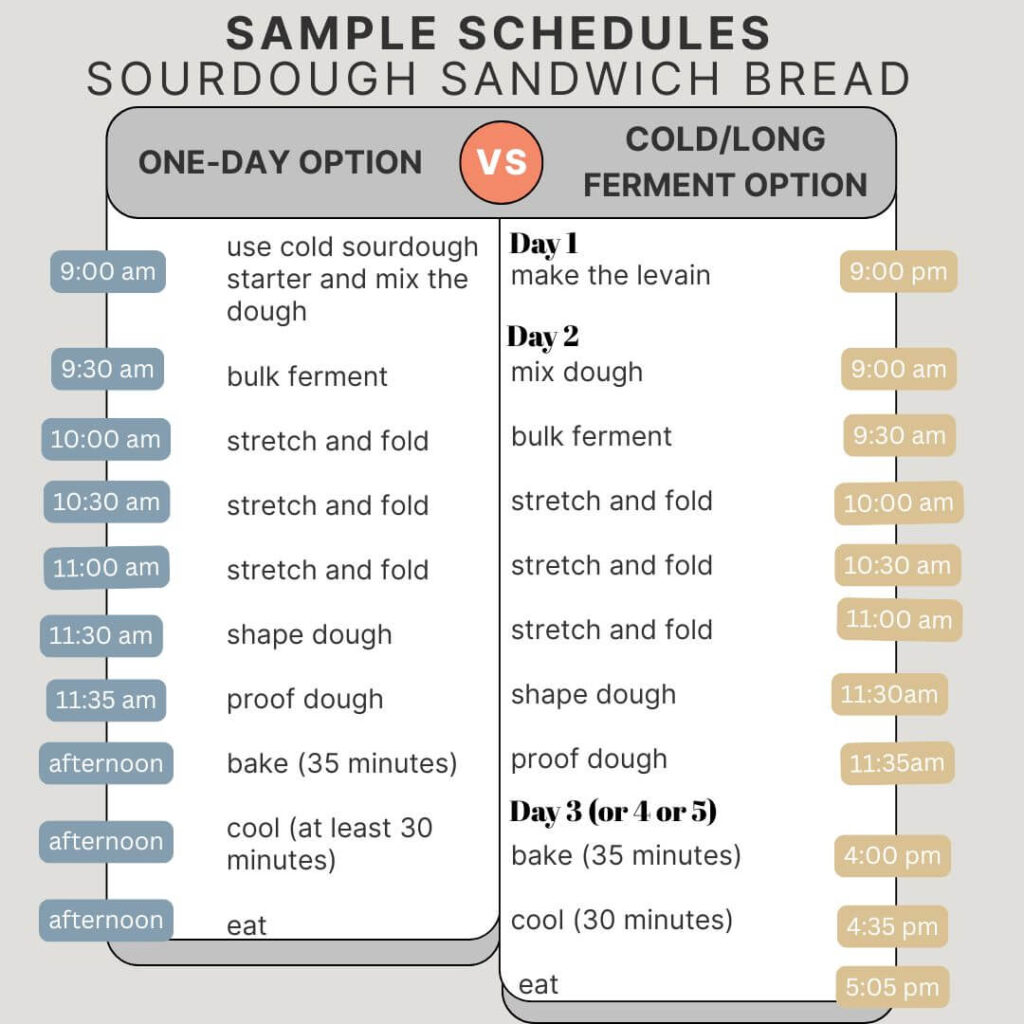
Step 3: Bulk Fermenting (a.k.a. The Waiting Game)
Now it’s time to let the sourdough start doing it’s thang.
- Cover the dough and put it in a warm, cozy spot.
- Wait 15-30 minutes.
- Do a set of stretch and folds: pull a side of the dough up and fold it over. Repeat all around.
Do this 2-6 more times, spaced about 30 minutes apart. You’re building gluten strength here.
When a little piece of dough can stretch thin like a windowpane without tearing … you’re ready. (Stretch a small piece of dough to see if you can get it translucent – like a window … if it tears … then you need to do some more stretches and folds).
Step 4: Shaping your Sourdough Sandwich Bread
Now is the time to shape this big blob into two lovely sourdough sandwich bread loaves. I don’t usually put flour on my counter … but you are welcome to if you feel like your bread is extra sticky.
- Split the dough in half (you can measure it or eyeball it).
- Shape each half into a loaf.
- Tuck them lovingly into greased bread pans.
- Cover up the dough babies so they stay cozy.
Step 5: Proofing your Sourdough Sandwich Bread
This is where you can choose your own adventure.
Want bread today? Stick your sourdough sandwich bread in the oven with the proof setting on, or just leave the light on (if your oven doesn’t have a bread proof setting).
Want extra flavor? Get your bread to rise, then pop your dough in the fridge for 1-3 days. This helps slow down the fermentation process, which lets the sourdough work all of its magic … and makes it extra sour. You can bake it straight from the fridge if you want. (No need to bring to room temperature unless they look sad and flat and need a little extra rising time.)
The goal of proofing is simple: let the bread rise in the pan until it looks ready. You’re aiming for a gentle dome peeking above the rim … soft, puffed, and proud. Trust your eyes (and your gut).
Pro Tip: If your bread rises beautifully and then sinks like a deflated balloon in the oven, it’s a sign it was overproofed. Next time, pop it in the oven a little sooner.
Step 6: Baking Time!
- Preheat your oven to 350°F.
- Bake for 35 minutes until golden and glorious.
- Cool in the pan for 5 minutes.
- Run a knife around the edges if they’re clinging and flip onto a cooling rack.
- Important: Try not to slice into hot bread (I know, it’s torture). Yes, the bread is still cooking after you pull it out of the oven. It’s still finishing up its internal baking magic. At least wait 30 minutes to dive into your sourdough sandwich bread. I believe in you.
Final Pep Talk about Sourdough Sandwich Bread
Your first loaf might be a little wonky. Maybe you used the wrong pan, maybe your proofing time was off, or maybe the dough just had a mind of its own that day. That’s okay. That’s part of learning.
Bread baking … especially sourdough … is a relationship. You’ll get to know your flour, your starter, your kitchen’s moods. And soon enough, it won’t feel like a science experiment anymore. It’ll feel like second nature. You’ll be able to throw together a loaf while chatting on the phone, keeping one eye on the dog, and sipping your coffee. You’ll know just by looking when your dough needs a little more flour or a little more time.
So give yourself some grace. Stick with it.
Because this recipe? It’s absolutely worth it.
There’s something grounding about pulling a warm loaf of homemade sandwich bread from your oven … something simple, nostalgic, and real. Once you’ve tasted it (and maybe shared a slice or two), you’ll wonder how you ever lived without it.
Comment below about your sourdough sandwich bread adventure … I’d love to cheer you on!
Sourdough Sandwich Bread
A delicious sourdough sandwich bread ... perfect for PB&J, cold cut sandwiches, runny egg-on-toast mornings, grilled cheese o’clock ... plus, it's freezer-friendly.
Ingredients
Levain (night before)
- 200 grams (1 cup) room-temp water
- 200 grams (1½ cups) flour
- 100 grams (½ cup) sourdough starter
Dough
- 2 ⅓ cups (550g) water
- ¼ cup (85g) honey
- 1 tablespoon salt
- 2 tablespoons olive oil
- ¼ cup (17g) dried potato flakes, optional
- 7 cups bread flour (using fresh milled flour? check out the other recipe card)
Instructions
1. Mix levain the night before (or use 1 cup of cold sourdough starter in the morning).
- 200 grams (1 cup) water, 200 grams (1½ cups) flour, 100 grams (½ cup) sourdough starter
2. Add all ingredients, except flour, to the levain.
- 2⅓ cups (550g) water, ¼ cup (85g) honey, 1 Tbsp salt, 2 Tbsp olive oil, ¼ cup (17g) dried potato flakes
3. Gradually mix in flour until the dough pulls from the sides of the bowl.
- 7-ish cups bread flour
4. Knead the dough for 5-8 minutes, adjusting flour if needed.
5. Bulk Ferment: Cover dough. Wait 15-30 minutes. Do a set of stretch and folds. Do 2-6 more stretch and folds about 30 minutes apart ... when you pass the windowpane test you are done.
6. Shape into 2 loaves. Tuck into greased 1.5-quart loaf pans. Cover. Proof until peeking above the rim of the pan. Optional: refrigerate the dough for 1-3 days for a longer fermentation.
7. Preheat oven to 350°F. Bake for 35 minutes until golden. Cool in pan for 5 minutes. Transfer to cooling rack.
Notes
Freezes well.
Shares well.
Recommended Products
As an Amazon Associate and member of other affiliate programs, I earn from qualifying purchases.
Sourdough Sandwich Bread (w/ Fresh Milled Flour)
A delicious sourdough sandwich bread ... perfect for PB&J, cold cut sandwiches, runny egg-on-toast mornings, grilled cheese o’clock ... plus, it's freezer-friendly.
Ingredients
Levain (night before)
- 200 grams (1 cup) water
- 200 grams (1½ cups) flour
- 100 grams (½ cup) sourdough starter
Dough
- 2 ⅓ cups (550g) water
- ¼ cup (85g) honey
- 1 tablespoon salt
- 2 tablespoons olive oil
- ¼ cup (17g) dried potato flakes, optional
- 4½ cups (900g) wheat berries ... hard white and/or hard red (or any you prefer) ... ground to flour
Instructions
1. Mix levain the night before (or use 1 cup of cold sourdough starter in the morning).
- 200 grams (1 cup) water, 200 grams (1½ cups) flour, 100 grams (½ cup) sourdough starter
2. Add all ingredients, except flour, to the levain.
- 2⅓ cups (550g) water, ¼ cup (85g) honey, 1 Tbsp salt, 2 Tbsp olive oil, ¼ cup (17g) dried potato flakes
3. Mix in 5 cups of your freshly milled flour. Knead for 8 minutes. Let the dough rest for 30 minutes to hydrate. (If you have any extra ground flour ... pop it in the freezer.)
4. Gradually add more flour (keep the dough a tad wetter because fresh milled flour will continue to absorb moisture). Knead the dough again for 5-8 minutes, adjusting flour if needed.
5. Bulk Ferment: Cover dough. Wait 15-30 minutes. Do a set of stretch and folds. Do 2-6 more stretch and folds about 30 minutes apart ... when you pass the windowpane test you are done.
6. Shape into 2 loaves. Tuck into greased 1.5-quart loaf pans. Cover. Proof until peeking above the rim of the pan. Optional: refrigerate the dough for 1-3 days for a longer fermentation.
7. Preheat oven to 350°F. Bake for 35 minutes until golden. Cool in pan for 5 minutes. Transfer to cooling rack.
Notes
Freezes well.
Shares well.
Recommended Products
As an Amazon Associate and member of other affiliate programs, I earn from qualifying purchases.
some sentences or ideas may be from chatgpt or other AI


5 responses to “Sourdough Sandwich Bread (w/ optional fresh milled flour)”
I have used this recipe twice now without fail! Even when I failed to perfectly follow the recipe my bread turned out great and this was super easy to follow! Thank you!
Way to go!!! This recipe is apparently immune to kitchen chaos … my kind of bread. Thanks for sharing!
Delicious, simply delicious! Keep the recipes coming!
I have made this multiple times. It is my new favorite bread recipe. We always have a loaf on the counter for sandwiches. We think it is perfect!
Thanks for the awesome comment! I’m so glad it’s your new favorite – it’s definitely a loaf that means business when it comes to sandwiches!