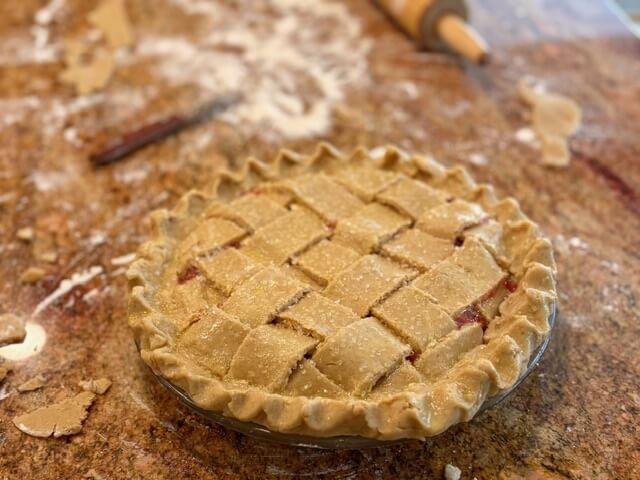
Here’s the background story on my journey to this fresh milled flour pie crust recipe.
When I first started getting to know my husband’s mom, I had a short but very important list of things I needed to learn from her. First, I wanted to learn how to knit. However, more importantly, I wanted my mother-in-law’s pie crust recipe. Priorities, right?
So, naturally, I waited until after we were married to ask her. And honestly, I’m glad I did, because she casually admitted something that stopped me mid-bite: she sometimes “forgets” an ingredient when sharing recipes. Convenient, right? But then she promised … hand over heart … that she told me everything this time.
And ever since then, I’ve been making pie. Because, quite frankly, once you’ve had a real fresh milled flour pie crust, the store-bought version just doesn’t stand a chance. It’s flat. It’s bland. It has zero personality. And honestly, if I’m going to eat pie, I want the real deal … not something that tastes like it came from a cardboard box with commitment issues.
Fresh Milled Flour Pie Crust vs. Store-Bought Pie Crust
Now then, let’s talk about the elephant in the grocery store freezer aisle. Because yes, you can absolutely grab a two-pack of pie crusts for $2. It’s quick, it’s easy, and it’s sitting right there waiting for you.
However… have you ever actually looked at the ingredient list? There are about 13 ingredients in there. Thirteen. And not the cozy, familiar kind either. I’m talking about things like “deodorized lard” (which, honestly, raises more questions than answers) and BHT preservative. And then, just for fun, let’s mention the bleached flour. Because the chemical sometimes used to bleach it … azodicarbonamide … is actually banned in parts of the world like the EU. Which naturally makes you pause and think … hmm.
So yes, you can go the store-bought route. However, when you realize how simple, delicious, and satisfying a homemade pie crust with fresh milled flour (or regular flour) really is, it starts to feel like a no-brainer. Because at the end of the day, if we’re going to make pie … we might as well make it something worth talking about.
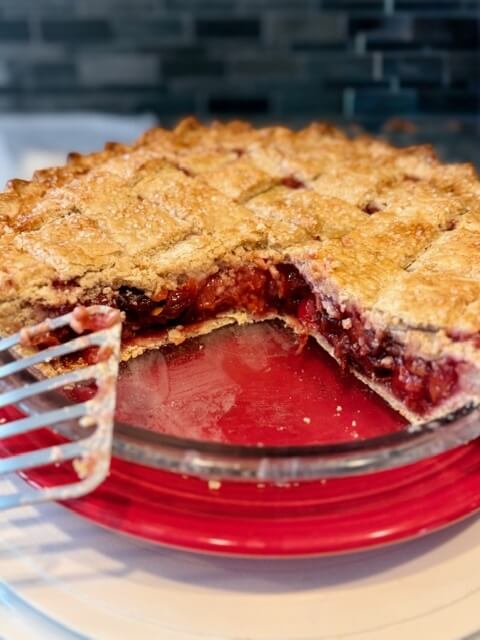
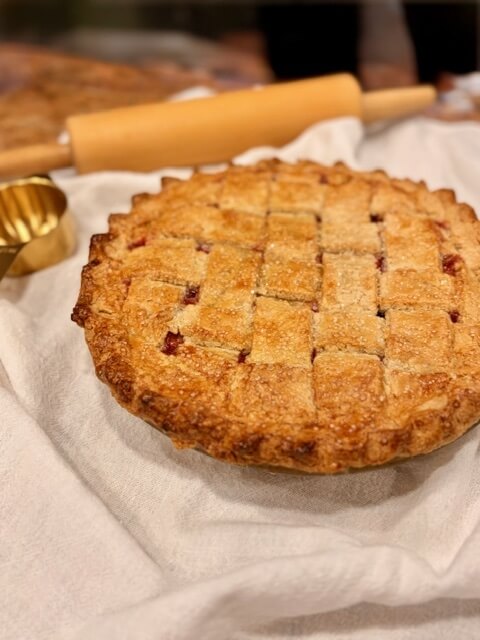
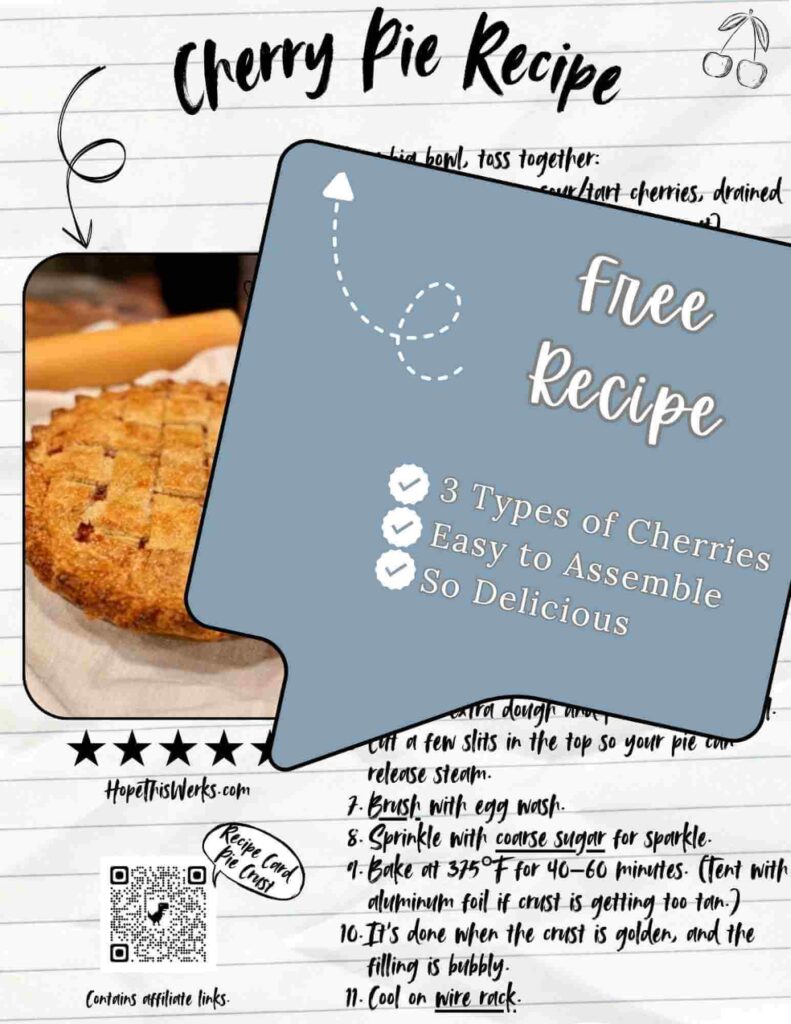
Also, before we even get started, let me just casually tempt you for a second … if you’re wondering what to fill this fresh milled flour pie crust with, I happen to have a famous cherry pie recipe I’d love to share. And yes, it involves that perfect balance of sweet, tart, and “just one more bite.” Click here for your free recipe card.
So yes, while a homemade pie crust with fresh milled flour does take a little more time, it is absolutely worth it. Because if we’re going to go through the effort of making pie… why settle for fake?
We tend to think of pie crust as strictly a dessert situation … berries, apples, maybe something with a crumb topping. However, this fresh milled flour pie crust is just as at home holding a savory filling.
For example, it makes an incredible base for chicken pot pie or quiche. And because pies travel so well, they’re perfect for bringing to a friend’s house, dropping off to a neighbor, or showing up with when someone says, “Oh, you didn’t have to bring anything…” (but secretly hopes you did).
And while we’re here … double the recipe. Because this 100% whole wheat pie crust (or if you are making it with regular flour) freezes beautifully, and future-you will be thrilled to find one waiting in the freezer.
Pie Crust Debate: Butter vs Lard vs Shortening
Ah yes, the great fat debate. Every baker has an opinion, and honestly … they’re all a little passionate about it.
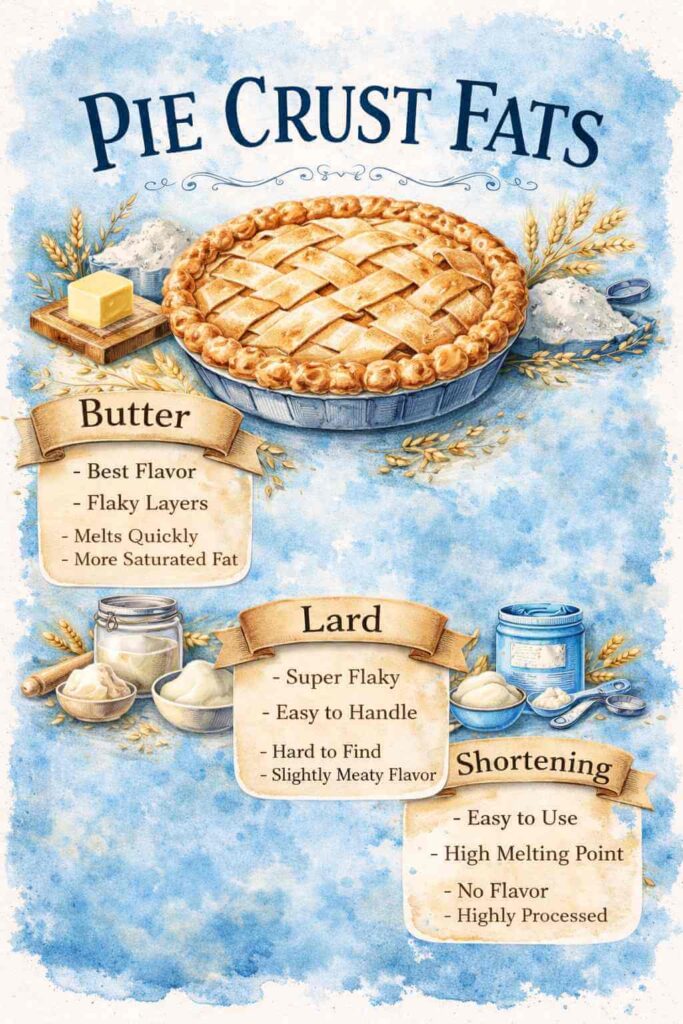
Butter in Fresh Milled Flour Pie Crust (Because Flavor Wins)
Let’s start with butter, because this is what I use in this easy fresh ground flour pie crust recipe.
Pros:
First of all, flavor. Butter just makes everything better … it’s basically a personality upgrade for your food. Also, because butter contains a bit of water, it creates those lovely steamy pockets that help form flaky layers. Additionally, it crisps up the bottom beautifully and works just as well for sweet pies as it does for savory ones.
Cons:
However, butter melts quickly, so you have to work a little faster to keep everything cold. And yes, it does contain more saturated fat than lard.
Lard in Fresh Milled Flour Pie Crust (The Old-School Favorite)
Pros:
Without a doubt, lard creates a flaky whole wheat pie crust from scratch. It’s also easier to handle since it stays solid longer and browns nicely.
Cons:
That said, good-quality lard can be hard to find. Also, it can have a slightly meaty flavor and sometimes leaves a bit of an oily finish in your mouth.
Shortening in Fresh Milled Flour Pie Crust (The Easy but Boring Option)
Pros:
It’s easy to work with and has a higher melting point, which makes handling simpler.
Cons:
But … it brings absolutely no flavor. None. Also, the crust tends to be pale, and since it’s highly processed and made with hydrogenated oils, it’s not exactly the star of a healthy pie crust recipe from scratch.
Which Pie Plate Wins?
Choosing a pie plate is a bit like choosing your favorite mug—you’ll have opinions.
I personally love a standard glass pie plate (hello, crispy bottom and visual progress checks). However, metal pans heat quickly and brown beautifully, while ceramic dishes are undeniably pretty but take a bit longer to bake. And then there’s the deep dish pie plate. I’ve officially retired mine. Because while I respect a towering pie, I don’t necessarily want to peel five pounds of apples just to fill it. But hey, if that’s your thing, go for it.
Which Wheat Berry Should You Use?
Now let’s slow down for a second, because this is one of those moments that can quietly make or break your fresh milled flour pie crust without you even realizing it.
When it comes to choosing the right wheat berry, not all wheat is created equal. And while it might be tempting to grab whatever you have on hand and just go for it, this is where a little intention goes a long way … especially if you’re aiming for that flaky whole wheat pie crust from scratch instead of something that could double as a doorstop.
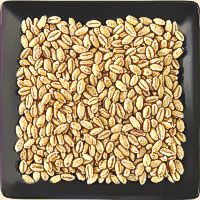
Personally, I always reach for soft white wheat berries when I’m making a homemade pie crust with fresh milled flour. They give you that tender, delicate structure that we’re after, without developing too much gluten. And since gluten is what can turn your crust tough and chewy, keeping it in check is kind of the whole game here.
Story About Fresh Milled Flour Pie Crust
Now, I’ll tell you this from experience … not theory, not guesswork, but a lived, slightly tragic experience. When my daughter and her family were moving back to Pittsburgh I decided part of the celebration was going to meet them at the door with a homemade pie (they had pie as their wedding dessert). I decided to use hard white wheat berries. I don’t even remember why. Maybe I was feeling adventurous. Maybe I wasn’t thinking clearly. Either way, I made the pie, baked it beautifully, and then … we tried to eat it. And let’s just say, it was not the best pie crust with freshly ground flour I’ve ever made. It was tough. It was chewy. It was the kind of crust that makes you politely eat the filling and leave the edges behind. Sure, I may have overworked the dough a little, but even so, that experience stuck with me.
So now, I stick with soft wheat. Because when you’re aiming for a soft whole wheat pie crust recipe or even a no-fail whole wheat pie crust, starting with the right grain makes all the difference.
And if you’re curious about branching out, ancient grains are actually a great option too. They tend to behave more like soft wheat than hard wheat, which makes them a fun and forgiving choice when you want to experiment without risking another “learning experience.”
If you are intrigued about wheat berries, I have an article to answer the most common questions. Check that out here.
Fresh Milled Flour Pie Crust or Store-Bought Flour (yes, you can do either)
Alright, now that we’ve chosen our wheat berry, let’s talk about how we’re actually getting that flour into the bowl. If you’re making a fresh milled flour pie crust, this is where the magic starts.
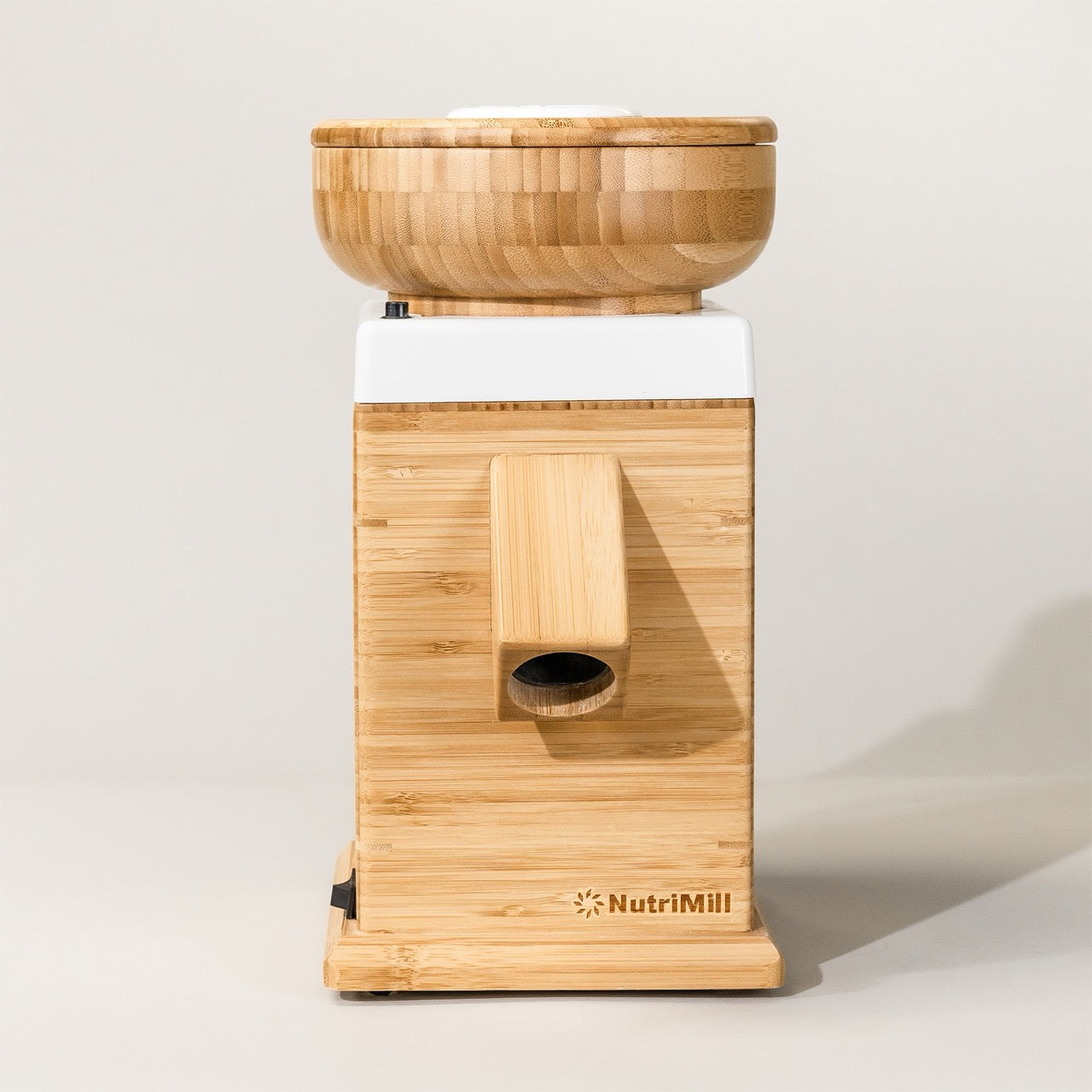
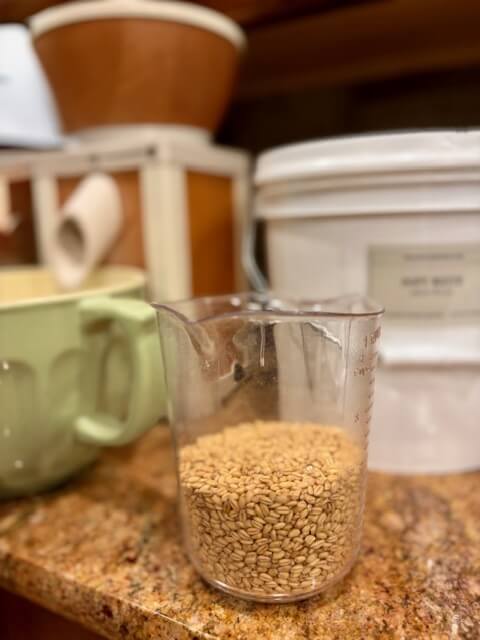
You’ll want to measure out 2 cups (or about 375 grams) of soft white wheat berries and grind them finely in your mill. And when I say finely, I mean you’re aiming for that soft, fluffy texture … not gritty, not coarse, but something that feels light and almost silky between your fingers.
Once you’re done, you’ll end up with just under 4 cups of flour, which is perfect for this 100% whole wheat pie crust.
However, you absolutely can use store-bought flour. This isn’t an all-or-nothing situation. If you’re using store-bought, go with 2 ½ cups of all-purpose flour for the best results. What you don’t want to use, though, is bread flour. While bread flour is amazing for chewy loaves and artisan sourdough, it brings too much protein to the party for a flaky pie crust recipe from scratch. And too much protein means too much gluten… which leads us right back to that tough crust we’re trying to avoid.
Mixing: Food Processor or Old-School Methods
Now we move into the mixing stage, which is where things start to come together … literally.
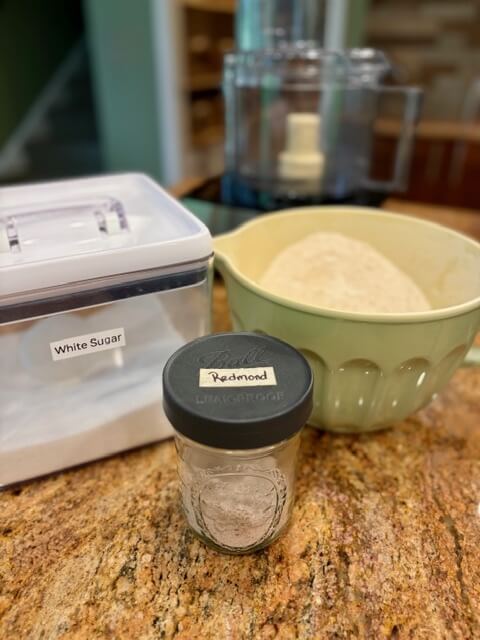
First, add your flour, 1 tablespoon of sugar, and 1 teaspoon of salt into your food processor. Then give it a few quick pulses just to combine everything evenly. Nothing fancy here, just a quick mix to get things started.
However, if you don’t have a food processor, don’t let that stop you. This is where you can go a little old-school. You can use a pastry cutter, two forks, or even your fingers. And honestly, there’s something kind of satisfying about doing it by hand … it feels a little more connected, a little more intentional.
That said, if you are using your hands, this is where you want to be mindful. Because your hands are warm, and warm hands can melt the butter before we’re ready. And once that butter melts into the flour, instead of staying in little pockets, you lose those flaky layers we’re working toward.
So, whether you’re using a machine or going fully hands-on, the goal stays the same: keep everything cool, don’t overmix, and remember that this is the foundation of your fresh milled flour pie crust.
Sugar for Fresh Milled Flour Pie Crust?
Why sugar? Right, I wondered the exact same thing the first time I saw it in a pie crust recipe. It felt a little out of place, like someone accidentally carried over an ingredient from a cookie recipe and just… left it there. However, as it turns out, sugar is actually doing a few very important things behind the scenes. First, it helps tenderize the dough by slowing down gluten development. Additionally, sugar helps the crust develop that beautiful golden-brown color as it bakes, thanks to caramelization. That said, if you prefer to leave it out, you absolutely can. So think of sugar as a helpful little bonus rather than a dealbreaker.
Butter Step: Cold, Colder, Coldest (No Exceptions)
Now comes one of the most important steps … and honestly, one of the easiest to underestimate.
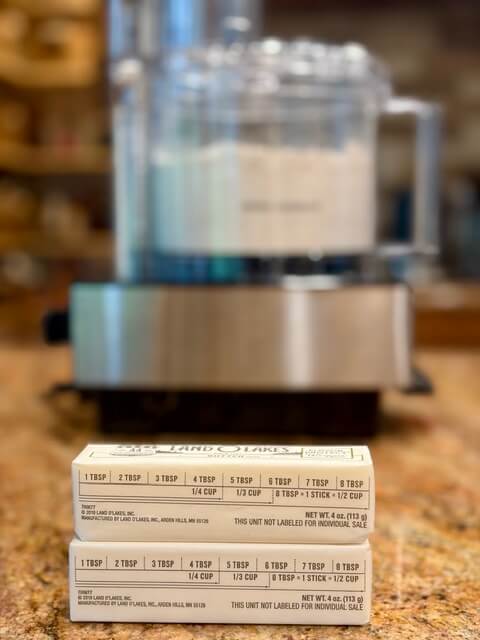
Add in your 2 sticks of butter, and they need to be cold. Not “I took them out five minutes ago” cold. Not “they’ve been sitting on the counter while I got distracted” cold. I’m talking straight-from-the-fridge, firm, and ready to go.
Go ahead and cube the butter before adding it in. This helps distribute it more evenly and makes the whole process smoother.
Then pulse until the butter breaks down into pea-sized pieces (it will look dry and crumbly). And yes, you want to actually see those little butter bits. Because those chunks of butter are what create steam in the oven, and that steam creates small, distinct layers in the dough.
If you mix it too much, you’ll end up with a paste. And while paste has its place in life, this is not it.
Icy Cold Water (Grandma Was Right)
Now let’s talk about something that might seem a little extra… but is actually essential.
Ice cold water.
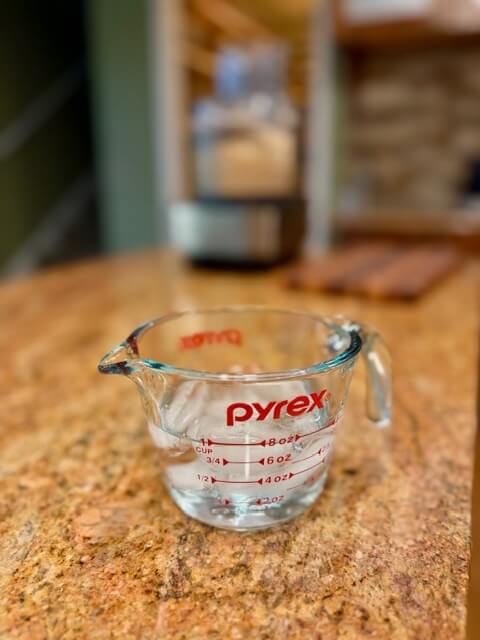
Go ahead and fill a cup with ½ cup of water, then add ice. And yes, I know it might feel like overkill. I used to think the same thing … a silly step that Grandma used to do. But as it turns out, this is one of those small steps that makes a big difference.
Because that cold water keeps your butter from melting while you mix, which helps preserve those little fat pockets. And as the crust bakes, those pockets release steam, creating layers that make your crust tender instead of dense.
Start by drizzling in 3 tablespoons.
And if you’re working with fresh milled flour pie crust dough, this is also where patience comes in. Let the dough rest for about 20 minutes so the bran has time to hydrate. Because unlike store-bought flour, fresh milled flour takes a little longer to fully absorb moisture.
Test: Is It Ready? (The Moment of Truth)
At this point, you might be wondering, “How do I actually know if this is enough water?”
And the answer is surprisingly simple.
Your dough should look crumbly, but when you squeeze it in your hand, it should hold together. Not sticky, not wet … just cohesive enough to stay put.
If it falls apart, it needs a little more water. However, if it feels sticky or overly soft, you’ve gone a little too far.
And this is where you start to develop that instinct … the one that makes a no-fail whole wheat pie crust actually feel doable every time.
Ball & Chill
Now dump everything onto your counter (no oil or flour required) and gently bring it together. And I do mean gently. This is not the time to knead like you’re making bread. Instead, you’re just folding it over itself until it becomes a rough, cohesive ball. It won’t be smooth, and that’s okay. In fact, it shouldn’t be.
If you are miserable at this point because it is just falling apart, then wet your fingers and that should help.
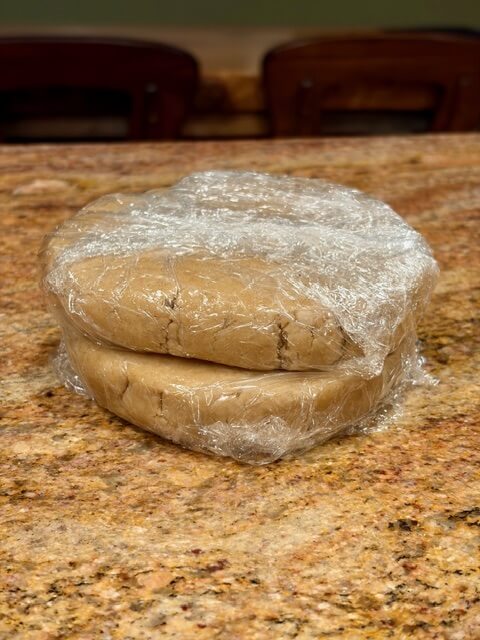
Then divide it in half, shape each piece into a disk about 1 inch thick, wrap them up, and pop them into the fridge.
Let them chill for at least an hour … but if life happens, they can stay there for up to four days. You can also freeze them for later, which is always a nice surprise for future-you.
Rolling: the Flour Party Begins (Controlled Chaos)
Now comes the part that can either feel incredibly satisfying … or mildly frustrating.
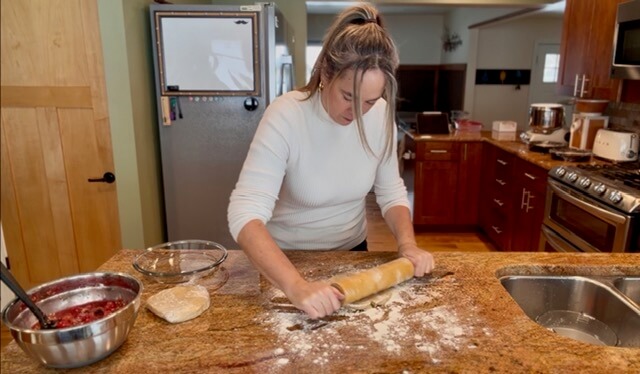
Throw a flour party. Flour everything: you, counter, rolling pin, dough, dog.
Here is a trick: I never quite cut my dough into equal-sized pieces. Therefore, I always start with the bigger dough because I need it to be a little larger to cover the bottom of the pie plate and go up the sides.
Now plop that dough in the middle of the flour on your counter.
Roll with gentle pressure (If the dough resists or cracks, let it rest for 10 minutes). Start right in the center and roll outward toward the north. Then, bring your rolling pin back to the center and head toward the east. After that, reset again in the middle and roll toward the south, and finally, go west, my friends. It may feel a little like you’re navigating with a compass, but this method helps keep your pie crust evenly shaped instead of turning into something … abstract.
As you go, take a moment to rotate the dough in the flour every so often. This step might seem small, however it makes a big difference. That light coating of flour underneath keeps everything moving freely and prevents sticking before it even has a chance to start.
Also, keep your surface, rolling pin, and dough lightly floured throughout the process. Not excessively, but enough to keep things cooperative. Because there are few things more heartbreaking in the world of baking than rolling out a perfectly beautiful pie crust … only to realize it has firmly attached itself to the counter like it has no intention of leaving. And at that point, you’re not transferring a crust … you’re negotiating with it in pieces.
Transfer: the Trust Fall Moment
Now we’ve arrived at the part of the process that feels just a little bit dramatic every single time … even if you’ve done it a dozen times before. This is the moment where your beautifully rolled fresh milled flour pie crust has to make the journey from counter to pie plate … in one piece. No pressure, right?
First, take a breath. Then, gently slide your hands under the edge of the dough to make sure it isn’t sticking anywhere. If it is, carefully loosen it now … because this is not the stage where we want surprises. Once you’re confident it’s moving freely, grab your rolling pin and slowly roll the dough up onto it. Start at one edge and roll it toward the other, keeping everything loose and relaxed.
Next, lift the rolling pin and position it over your pie plate. Then, starting at one side, begin to unroll the dough back off the pin, letting it drape gently into the dish. Try to center it as best you can, but don’t stress if it’s not perfect right away … you’ll have a chance to adjust it.
Once it’s in the pie plate, lightly press the dough into the bottom and up the sides, making sure it fits snugly without stretching it. And that part is important … stretching the dough can cause it to shrink later in the oven, which is one of those little baking frustrations we’re trying to avoid.
Rips in the Fresh Milled Flour Pie Crust
Now, let’s talk about the thing that everyone secretly worries about: what if it tears?
Because sometimes, despite your best efforts, your homemade pie crust with fresh milled flour decides to keep things interesting. Maybe it splits a little on the way over, or maybe there’s a small crack along the edge. And if that happens? It’s completely fine. Truly.
Just take a small piece of extra dough, dab a tiny bit of cold water on the tear, and gently press the patch into place. It’s like a little pie crust bandage. Once it bakes, you won’t even be able to tell where it was … and no one else will either.
FAQ: Because We’ve All Been There
Let’s be real for a second—no matter how many times you read through a whole wheat pie crust recipe or watch someone effortlessly toss dough around like they were born doing it, questions are going to pop up. And usually, they show up right in the middle of the process when your hands are covered in flour and you’re questioning at least one life decision.
So, instead of pretending everything always goes perfectly, let’s walk through the most common questions that come up when making a fresh milled flour pie crust … and more importantly, how to fix them.
Why isn’t my fresh milled flour pie crust flaky?
This is probably the number one question when it comes to making a pie crust from scratch. And while it can feel mysterious, it usually comes down to a couple of key things.
First, temperature matters more than you think. If your butter gets too warm before it hits the oven, you lose those little pockets of fat that create steam … and steam is what gives you those beautiful, flaky layers. So keeping everything cold (your butter, your water, even your dough during resting stages) is essential.
Secondly, overmixing can quietly ruin your efforts. The more you work the dough, the more gluten develops, and while gluten is great for bread, it is not your friend when you’re aiming for a soft whole wheat pie crust recipe. So, mix just until things come together, and then stop. It’s one of those times where less really is more.
How do I avoid a soggy bottom in my fresh milled flour pie crust?
Ah yes, the dreaded soggy bottom … every pie baker’s least favorite surprise.
To start, using a glass pie plate can really help, because it allows the bottom of your homemade pie crust to crisp up nicely. You can actually see how it’s baking, which takes a bit of the guesswork out.
Also, make sure your oven is fully preheated before your pie goes in. A hot oven helps set the crust quickly, which keeps it from absorbing too much moisture from the filling.
And then, for certain pies … especially custard or very juicy fillings … blind baking (pre-baking the crust) can make a huge difference. It gives your crust a head start so it stays firm instead of turning into a soft, sad situation underneath all that delicious filling.
How much water is “enough” in my fresh milled flour pie crust?
This is one of those things that feels tricky at first, but gets easier the more you do it.
You’re looking for a dough that appears crumbly at first glance, but when you squeeze a handful, it holds together. Not sticky, not wet … just cohesive enough to form a dough.
If it falls apart when you try to bring it together, it likely needs a little more water. However, add it slowly … just a teaspoon at a time … because it can go from perfect to overly wet very quickly.
And if it does get too wet, don’t panic. You can sprinkle in a tiny bit more flour to balance it out. This is all part of learning how to make pie crust with fresh milled flour, and honestly, every batch teaches you something new.
Can you use fresh milled flour for pie crust?
Short answer? Yes. Absolutely, yes.
Longer answer? Not only can you use it, but once you get the hang of it, you may never want to go back. A fresh milled flour pie crust has more flavor, more character, and a depth that’s hard to get from store-bought flour.
That said, it does behave a little differently. Because it contains the bran and germ, it takes a bit more time to hydrate and can feel slightly more delicate to work with at first. However, once you understand how it responds … and give it the rest time it needs … it becomes a reliable, go-to option for a healthy pie crust recipe from scratch.
And before long, what once felt intimidating starts to feel like second nature.
How can I stop the edges of my fresh milled flour pie crust from burning?
Ah, the classic “my crust edges are turning into little charred rings of despair” problem. Don’t worry … you’re not alone. The edges of your pie are more exposed to the heat, which means they can brown (or burn) faster than the rest of the crust.
Here’s what you can do: grab a pie shield … those handy rings or silicone covers made just for protecting crusts. Slide it over the edges, and voilà, golden-brown without the crunch-on-top-of-crust situation.
Don’t have a pie shield? No problem. Aluminum foil to the rescue! Tear off a strip or two, fold it gently over the edges, and create a little tent. This keeps the edges safe while the rest of the pie gets perfectly baked. Bonus: it makes you feel like a true baking engineer.
What if my fresh milled flour pie crust dough breaks?
Pie crust drama: the tear. Maybe your dough decided to be stubborn and crack when you transfer it. First: breathe. It happens to everyone. Seriously.
Fixing it is easier than it looks. Grab a little extra dough, dampen your fingers with cold water, and press the patch over the crack. Think of it like giving your pie a little band-aid. Smooth it gently so it blends in, and when it bakes, nobody will even notice.
Pro tip: if your dough is breaking a lot, it’s probably a little dry. Next time, add your water slowly, a tablespoon at a time, and test by gently squeezing … crumbly but holds together is your goal. Remember, pie crust is forgiving… it just likes a gentle hand and a little patience.
Crust Conclusion: You’ve Got This
This is one of those recipes that might feel a little awkward the first time you make it. In fact, you might second-guess yourself halfway through, wonder if the dough looks right, or question whether you added just a little too much water. However, that’s completely normal. Because like most good things in the kitchen, learning how to make pie crust with fresh milled flour is less about perfection the first time and more about getting a feel for it over time.
And once that moment clicks … when you understand what the dough should look like, how it should feel in your hands, and when to stop working it … everything changes. Suddenly, what once felt intimidating becomes second nature. And from that point on… rock on, my friend. You are golden forever. Because your desserts, your savory pies, and honestly, your entire baking game are about to get a serious upgrade.
Nasty Store Pie Crust
Now, let’s circle back for just a second to the alternative. Because yes, you can grab a two-pack of pie crusts from the grocery store for a couple of dollars. It’s convenient, it’s fast, and it gets the job done. However, if you take a quick look at the ingredient list, things start to feel a little less simple.
We’re talking about 13 ingredients … many of which don’t exactly sound like something you’d keep in your kitchen. Things like “deodorized lard,” which raises a few questions all on its own, and BHT preservative, which is added to extend shelf life. And then, of course, there’s the bleached flour. Because in some cases, chemicals like azodicarbonamide are used in the bleaching process … which, interestingly enough, is banned in parts of the world like the European Union. And while we’re not diving too deep into that rabbit hole today, it does make you pause and think… why is that?
So instead of going that route, let’s take on this little challenge together. Because making a fresh milled flour pie crust from scratch might take a bit more time, but it also gives you something better … something with real flavor, real texture, and ingredients you actually recognize. And honestly, that’s a pretty great trade.
Freebie for Your Fresh Milled Flour Pie Crust
Also, don’t forget … if you’re wondering what to fill that beautiful 100% whole wheat pie crust with, I’ve got you covered. My famous cherry pie recipe is waiting for you, and it’s one of those recipes that tends to follow people home after they try it. Be sure to grab your free recipe card … you’ll want to keep that one handy.
Before you crust out of here (I absolutely had to), take a minute to check out my other recipes and guides to keep your kitchen adventures fun, fearless, and maybe just a little bit flour-covered. And if you try this easy whole wheat pie crust recipe, I’d love to hear about it. Leave a comment, tag me on Instagram (@hopethiswerksdiy), or come find me on Facebook … I’ll be right there cheering you on… most likely with a few dough scraps in hand.
And if you’re ready for more from-scratch goodness, don’t forget to subscribe. I’ll even send you a printable recipe card for the best pancakes on earth as a little thank-you gift … because clearly, we’re the kind of people who don’t stop at just one homemade staple.
Until next time… may your crusts be flaky, buttery, and never, ever shrink in the oven.
Pie Crust with Fresh Milled Flour
Flaky, buttery, and just a little bit extra (in the best way), this fresh milled flour pie crust brings big, homemade energy. It’s tender, flavorful, and sturdy enough to hold all that juicy filling without falling apart.
Ingredients
- 2 cups (375 g) soft white wheat berries, grind finely
- 1 tbsp sugar
- 1 tsp salt
- 2 sticks butter, cold and cubed
- ¼-½ cup ice water
Instructions
- Grind wheat berries into fine flour (will make about 4 cups of flour). Add flour, sugar, and salt to a food processor and pulse a few times to combine. (No processor? No problem ... use a pastry cutter or two forks.)
- Add cold, diced butter and pulse until crumbly with a few pea-sized bits. Stop before it turns into a paste ... it should still look a little dry and powdery.
- Fill a cup with ½ cup of water and toss in some ice. Drizzle 3 tbsp of that icy water into the food processor. Let the dough rest for 20 minutes so it can hydrate and get its life together. Still looking dry? Add more ice water 1 tsp at a time. Test it: pinch some dough ... if it sticks together, you nailed it. Whatever you do ... don’t overmix!
- Turn the dough onto a clean surface and gently bring it together into a ball. Fold it over itself just enough to hold. Too crumbly? Dip your fingers in ice water and keep going. It shouldn’t be smooth. Be careful not to overwork it. Divide in half, flatten into two 1-inch disks, wrap, and chill for at least 1 hour (or up to 4 days ... or freeze for later use).
- Let the wrapped dough hang out on the counter for 10 minutes ... time to relax so it rolls out without putting up a fight. Lightly flour everything ... counter, rolling pin, hands, dough, dog. Roll with gentle pressure (this dough has done nothing to you). Start from the center and roll outward, turning the dough as you go. Rotate and twist it so it doesn't stage a sticky rebellion. Add a little flour if needed.
- To transfer ... roll the dough onto your rolling pin, lift it up, then gently roll it out over your pie dish like a pro.
- Finish your pie according to your recipe.
Notes
Can I use store-bought flour instead?
Yep! It’ll still be delicious … but fresh milled flour brings the main character energy.
Why is my dough crumbly?
It’s probably thirsty. Add a tiny bit more water until it chills out.
Why is my dough sticky?
Congrats, you made glue. Sprinkle in a little flour and carry on.
Do I really need to chill the dough?
Yes. Warm dough = melty mess. Cold dough = flaky perfection.
Can I freeze this pie crust?
Absolutely. Future you will be thrilled and slightly impressed.
Pie's favorite filling?
This cherry one. No contest. Click here.
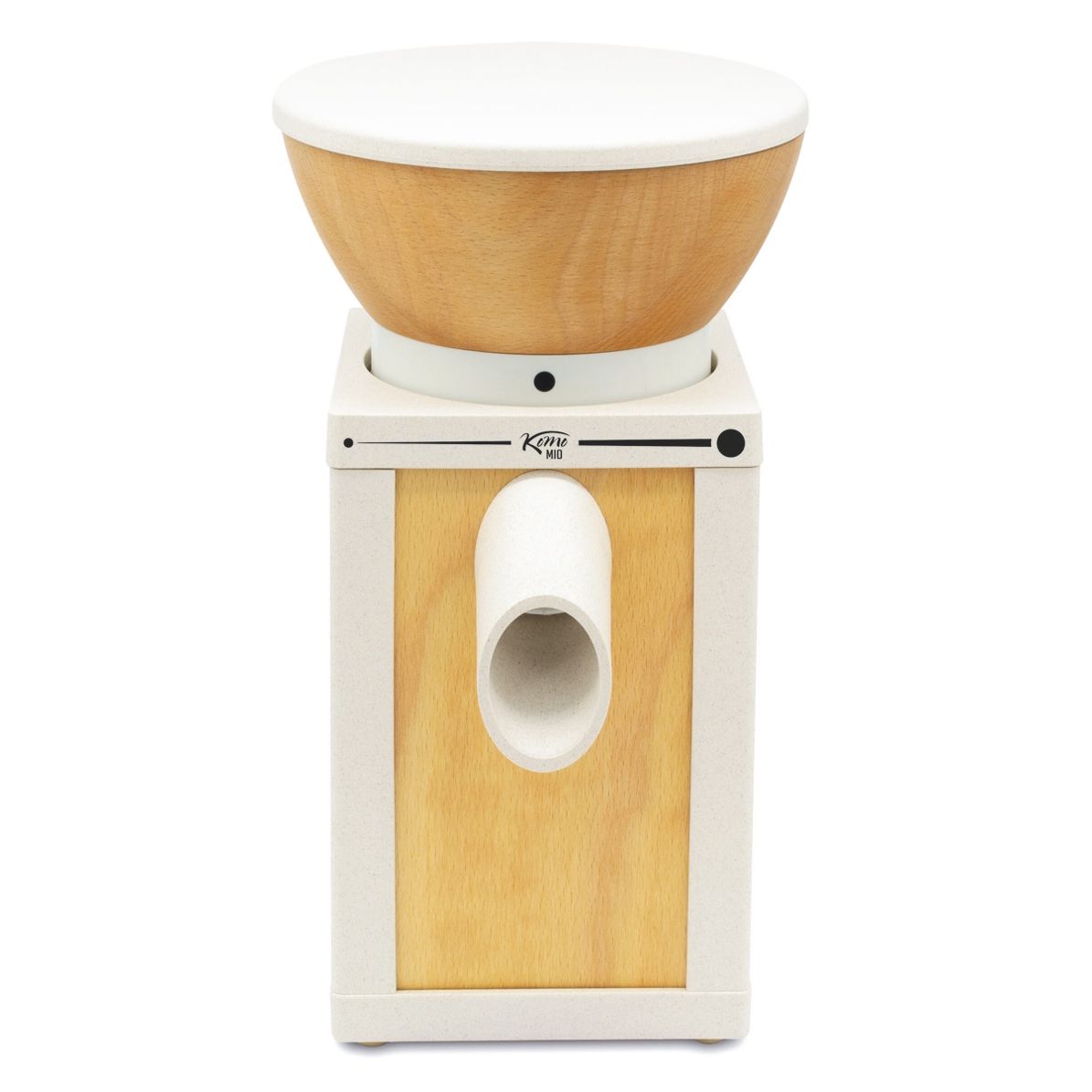
Recommended Products
As an Amazon Associate and member of other affiliate programs, I earn from qualifying purchases.
Pie Crust (with Store-Bought Flour)
Flaky, buttery, and perfectly fuss-free, this classic pie crust proves you don’t need anything fancy to make something amazing. Made with simple store-bought flour, it’s reliable, easy to work with, and ready to hold all your delicious pie dreams together.
Ingredients
- 2½ cups (300g) all-purpose flour
- 1 tbsp sugar
- 1 tsp salt
- 2 sticks butter, cold and cubed
- ¼-½ cup ice water
Instructions
- Add flour, sugar, and salt to a food processor and pulse a few times to combine. (No processor? No problem ... use a pastry cutter or two forks.)
- Add cold, diced butter and pulse until crumbly with a few pea-sized bits. Stop before it turns into a paste ... it should still look a little dry and powdery.
- Fill a cup with ½ cup of water and toss in some ice. Drizzle 3 tbsp of that icy water into the food processor. Still looking dry? Add more ice water 1 tsp at a time. Test it: pinch some dough ... if it sticks together, you nailed it. Whatever you do ... don’t overmix!
- Turn the dough onto a clean surface and gently bring it together into a ball. Fold it over itself just enough to hold. Too crumbly? Dip your fingers in ice water and keep going. It shouldn’t be smooth. Be careful not to overwork it. Divide in half, flatten into two 1-inch disks, wrap, and chill for at least 1 hour (or up to 4 days ... or freeze for later use).
- Let the wrapped dough hang out on the counter for 10 minutes ... time to relax so it rolls out without putting up a fight. Lightly flour everything ... counter, rolling pin, hands, dough, dog. Roll with gentle pressure (this dough has done nothing to you). Start from the center and roll outward, turning the dough as you go. Rotate and twist it so it doesn't stage a sticky rebellion. Add a little flour if needed.
- To transfer ... roll the dough onto your rolling pin, lift it up, then gently roll it out over your pie dish like a pro.
- Finish your pie according to your recipe.
Notes
Why is my dough crumbly?
It’s probably thirsty. Add a tiny bit more water until it chills out.
Why is my dough sticky?
Congrats, you made glue. Sprinkle in a little flour and carry on.
Do I really need to chill the dough?
Yes. Warm dough = melty mess. Cold dough = flaky perfection.
Can I freeze this pie crust?
Absolutely. Future you will be thrilled and slightly impressed.
Pie's favorite filling?
This cherry one. No contest. Click here.
Charts and Summaries About Fresh Milled Flour Pie Crust
| Fat Type (Butter vs Lard vs Shortening) | ||||
|---|---|---|---|---|
| Fat Type | Flakiness | Flavor | Ease of Use | Notes |
| Butter | High | ⭐⭐⭐⭐⭐ | Medium | Best overall choice |
| Lard | Very High | ⭐⭐⭐ | Easy | Traditional, slightly meaty |
| Shortening | Medium | ⭐ | Very Easy | No flavor, highly processed |
| Wheat Type | ||
|---|---|---|
| Wheat Type | Result in Pie Crust | Recommendation |
| Soft White Wheat | Tender, flaky | ✅ Best choice |
| Hard Wheat | Tough, chewy | ❌ Avoid |
| Ancient Grains | Softer, more forgiving | ✅ Optional |
Process Flow for Fresh Milled Flour Pie Crust
Grind Wheat → Mix Dry Ingredients → Cut in Cold Butter →
Add Ice Water Slowly → Rest Dough → Chill → Roll → Transfer → Bake
Temperature Control for Fresh Milled Flour Pie Crust
Cold Butter → Creates Steam → Forms Layers → Flaky Texture
Warm Butter → Blends into Flour → No Steam → Dense Crust
| Fresh Milled Flour Pie Crust Simple Breakdown | |||
|---|---|---|---|
| Category | Option | Result / Notes | Recommendation |
| Wheat Type | Soft White Wheat | Tender, flaky crust | ✅ Best choice |
| Wheat Type | Hard Wheat | Tough, chewy crust | ❌ Avoid |
| Wheat Type | Ancient Grains | Softer, forgiving crust | ✅ Optional |
| Fat Type | Butter | High flakiness, rich flavor | ✅ Best overall |
| Fat Type | Lard | Very flaky, slightly meaty | ✅ Traditional choice |
| Fat Type | Shortening | Medium flakiness, no flavor | ⚠️ Only if easy handling is priority |
| Water | Ice-cold | Keeps dough cohesive, prevents toughness | Add gradually, 3 tbsp to start |
| Baking Tips | Glass/metal pan | Prevents soggy bottom | ✅ Blind bake for juicy fillings |
If this post made you smile, help me keep my grain mill spinning and my apron permanently dusty … tip me with this link. Thanks, you’re the best!


4 responses to “Fresh Milled Flour Pie Crust: Easy, Buttery & So Good”
I am pumped about trying the all butter pie crust. I have been a lard fan for years—and you are correct, the flakiness is second to none, but time for a change. Now for the perfect filling. Okay, so maybe someone will hand a big bunch of rhubarb soon, since it is the season. When I get some, I will be on a mission. Don’t like rhubard? That’s okay, I can manage a whole pie all by myself!
Butter convert loading … if rhubarb shows up, its destiny!
I always made my crust with lard. This recipe is so much better. The butter makes it amazing.
I respect the lard era… but butter definitely came in and stole the spotlight 😄 So happy you loved it!