
Welcome to

Hope this Werks

Fresh milled. Real Food. Pure energy.

How to Make Fresh Milled Flour Dinner Rolls (yeast)

Updated: March 24, 2026

Dinner rolls may have the word “dinner” in their name, but honestly, these fresh milled flour dinner rolls show up for every meal. Breakfast? Absolutely. Lunch? Of course. Snack? Don’t even ask … just grab one. And when holidays roll around, these freshly milled flour dinner rolls quietly become the star of the table while the turkey wonders what happened..

So yes, this fresh milled flour dinner roll recipe is versatile. However, it’s also dangerously good. They’re fluffy, golden, and just begging for butter … or to be turned into sliders, breakfast sandwiches, or a “just one more” situation.

If you’re aiming for “people hovering around the appetizer table all night” status, you have to try my daughter’s cheeseburger sliders made with these fresh milled flour dinner rolls (perfect for football watching!). They’re ridiculously easy, completely over-the-top delicious, and honestly… a little dangerous because you will eat more than you planned. Grab the free recipe card here and see what I mean.

Now, before you overthink it, let me say this: make them once. That’s it. Because once you do, these dinner rolls with freshly milled flour will start popping into your brain at the most random times … like “this soup needs a roll” or “my toddler would happily eat a roll at lunch.” And honestly, these thoughts are valid.

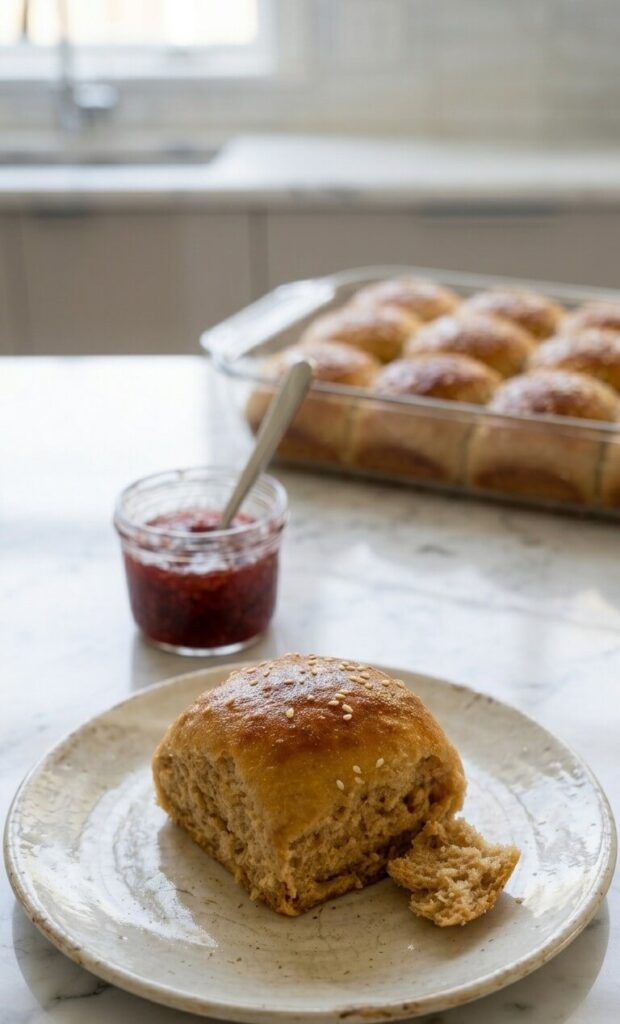
fresh milled flour dinner roll on a plate with jam and the rest of the rolls behind it

Let’s Mix the Wet Stuff for Fresh Milled Flour Dinner Rolls

Now that I’ve convinced you these fresh milled flour dinner rolls are about to become a regular in your life, let’s actually make them. And don’t worry … we’re not diving into anything complicated here. Instead, we’re starting with the easiest, coziest step: mixing up the wet ingredients and getting this whole thing rolling.

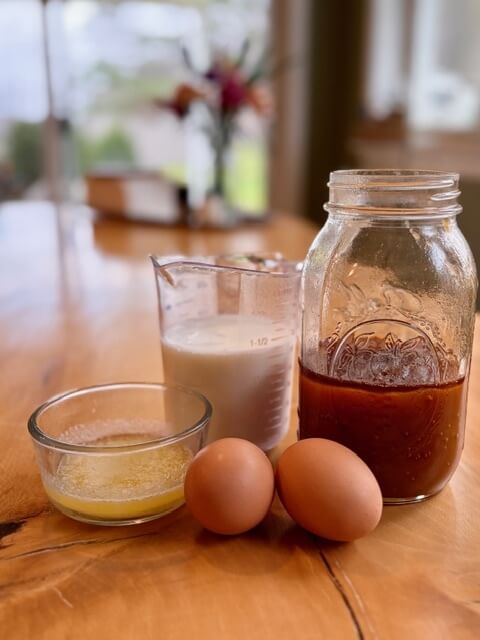
First things first, into your mixing bowl … add:

  • 1 ⅓ cup warm whole milk
  • 2 eggs
  • ¼ cup honey
  • 3 tbsp butter

Now, while that’s coming together, let’s chat substitutions … because life happens.

Whole milk makes these dinner rolls with fresh milled wheat softer, slightly sweet, and beautifully golden. However, water works just fine if that’s what you have. 

Similarly, honey brings moisture and keeps freshly ground dinner rolls fresher longer, but you can swap in sugar or maple syrup if needed. 

And butter? It gives that classic dinner roll flavor. That said, olive oil can absolutely step in and save the day.

So, as you mix, just know you’ve got options. And thankfully, these freshly ground dinner rolls are pretty forgiving.

eggs, melted butter, honey and milk for the fresh milled flour dinner rolls

Freshly Milled Flour

Now let’s talk flour … the heart of this fresh ground dinner roll recipe.

If you’re here, you’re probably already sold on fresh milled flour. However, if you’re still on the fence, let me gently nudge you over. Freshly milled flour uses the entire wheat berry … bran, germ, and endosperm … which means more nutrients, more flavor, and yes, a little more personality.  Here is an article you just might want to check out.  

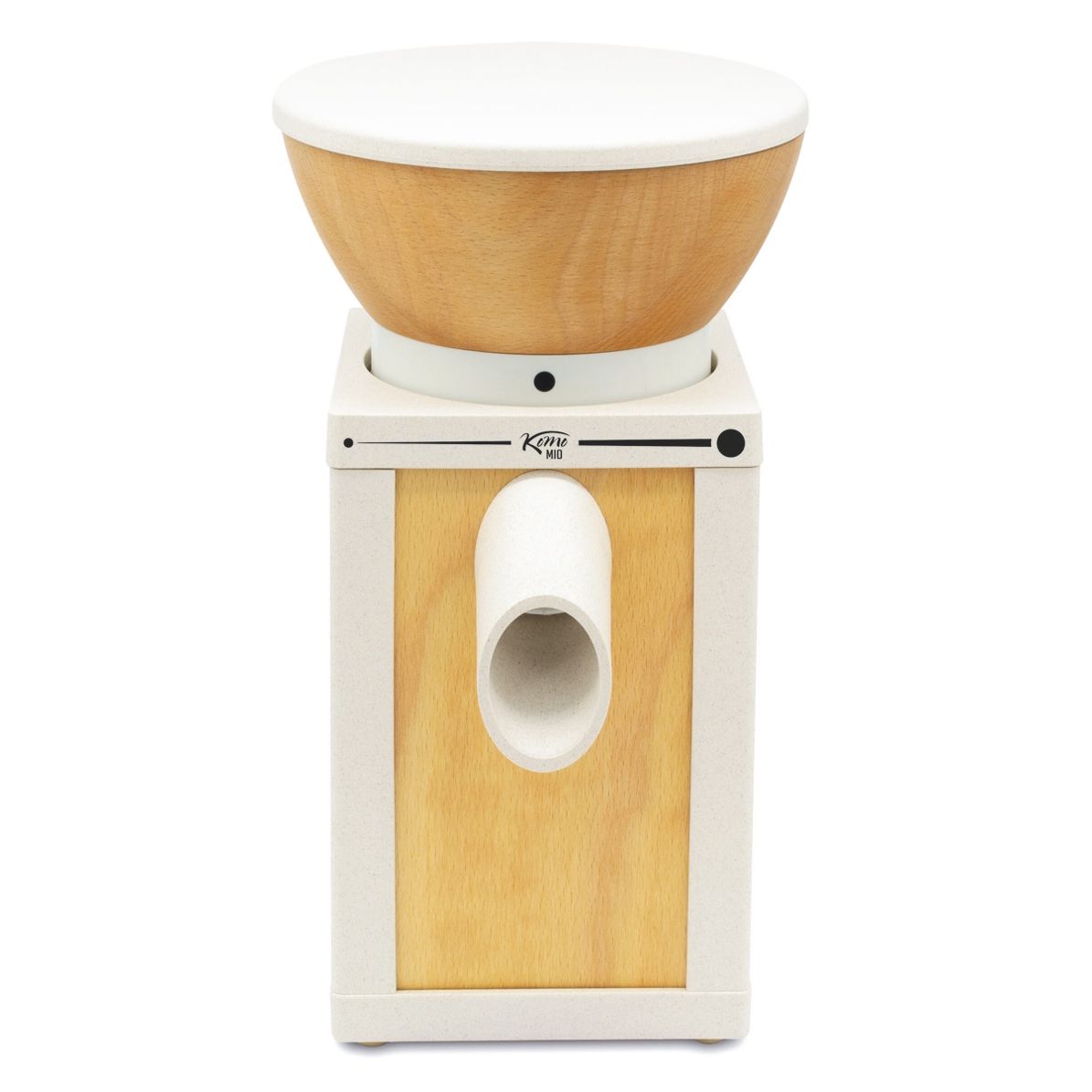
Also, if you haven’t yet taken the plunge and bought a grain mill, don’t worry … you’re not alone. However, before you spiral down a late-night “which one do I even need?” rabbit hole, go check out this article. It’ll walk you through everything so you can confidently pick a mill without second-guessing yourself.

Now, here’s the quick wisdom:  “Yeast/sourdough likes it hard. Baking soda/powder likes it soft.” Translation? Bread (like these dinner rolls) wants the strength of hard wheat, but cakes and cookies … prefer the gentle touch of soft wheat. Here’s a whole article waiting to guide you through the wheat-choosing process.

Personally, I usually go with hard white wheat berries because it keeps the rolls light and fluffy. However, if you want a deeper, heartier flavor, hard red wheat is a great choice. Just don’t invite soft wheat to this party … it belongs in cakes and muffins.

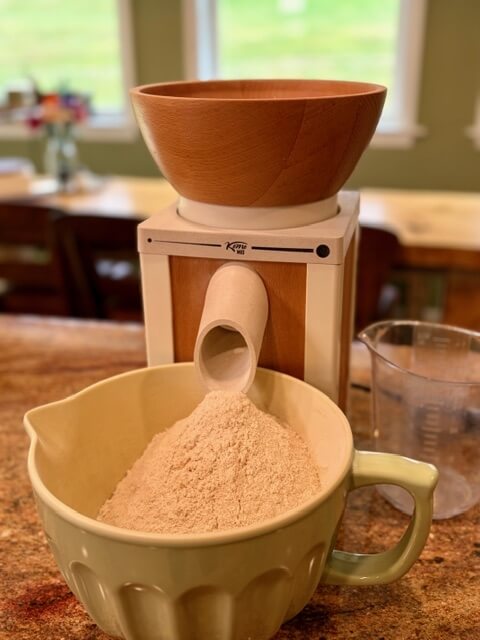
So, measure out 600 grams (about 3 cups) of wheat berries. Then mill them finely, and you’ll end up with about 5 cups of fresh, fluffy flour.

Next, add 3½ cups of that fluffy flour into your wet ingredients. Knead for 6 minutes. Then … and this is important … let the dough rest for 30 minutes.

Yes, we are letting dough nap. Because freshly milled flour needs time to hydrate. And skipping this step? Not today.

grain mill with bowl full of freshly ground flour

Adding a Little More Flour

After the dough has rested, it’s time to bring in the rest of the team.

Add:

Give that a mix, and then slowly add more flour until the dough starts pulling away from the bowl.

Now, here’s the key: you want it sticky. Not chaotic, not soup … but sticky and cohesive. Think “I have my life together, but I’m still fun.”

Because if you add too much flour too fast, your dinner rolls with freshly ground flour can turn dense. And we are aiming for fluffy clouds, not paperweights.

The Secret 6-30-6 Plan

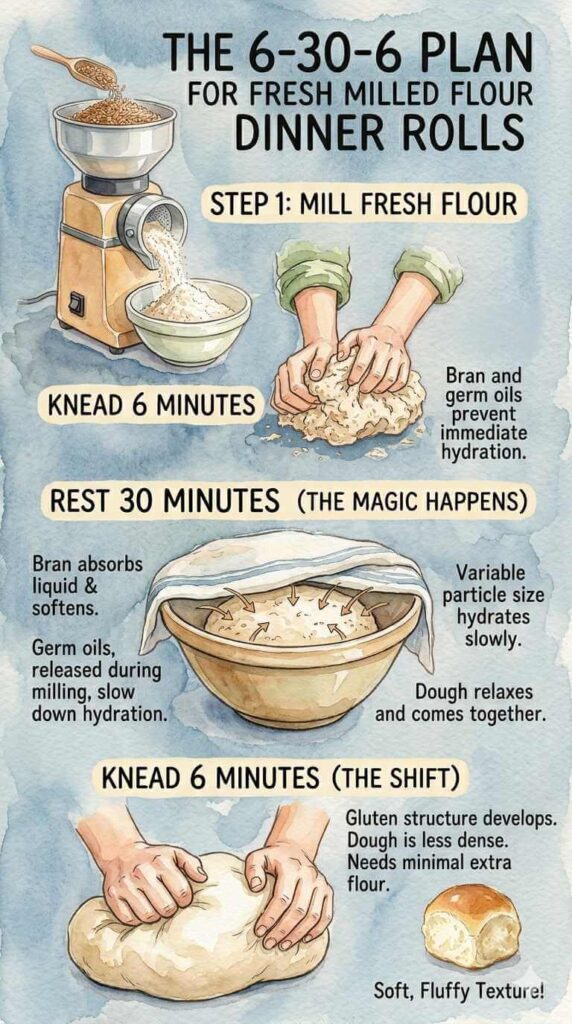
Alright, let me introduce you to the method that quietly changes everything in this fresh milled flour dinner roll recipe. I call it the 6-30-6 plan. 

Here’s how it goes. First, you knead the dough for 6 minutes. Then, you let it rest for 30 minutes. Finally, you come back and knead it again for another 6 minutes.

Now, at first glance, it might feel a little extra. However, there’s a very good reason for it.

Why let it rest for 30 minutes? 

  • Fresh milled flour is working with the whole wheat berry … bran, germ, and endosperm … unlike store-bought flour, which only uses the endosperm. Because of that, the bran takes longer to absorb liquid and soften. 
  • Meanwhile, the germ contains natural oils, and once those oils are released during milling, they coat some of the flour particles. As a result, that coating slows down how quickly water can fully hydrate the flour.
  • Additionally, when you mill at home, your flour will naturally have a bit more variation in particle size compared to industrial milling. So, while some particles hydrate quickly, others … just slightly larger … need more time to catch up.

Because of all that, freshly ground dinner rolls simply need more time to fully come together. That 30-minute rest isn’t just a pause … it’s when the magic starts happening. The flour hydrates, the bran softens, and the dough begins to relax.

Then, when you return for the final 6 minutes of kneading, something shifts. At this point, you’ll often find that you don’t need to add much more flour, if any. However, if the dough still feels too sticky, you can add a little at a time.

Why the second kneading for 6 minutes? Freshly milled flour takes a little bit longer to develop gluten. That last knead helps develop the gluten structure. Since the oils from the germ coat the flour particles and slow down gluten bonding … and since you’re working with the entire grain, which makes the dough naturally more dense and resistant to structure … this extra kneading time helps build strength and structure.

In other recipes, like artisan bread, I’ll use an 8-30-8 version for stronger gluten development. However, for dinner rolls with freshly ground flour, I stick with 6-30-6. That way, you still get structure, but you also keep that soft, fluffy texture we’re after.

Chart that shows the stages of the 6-30-6 plan

Rise and Shine (Literally)

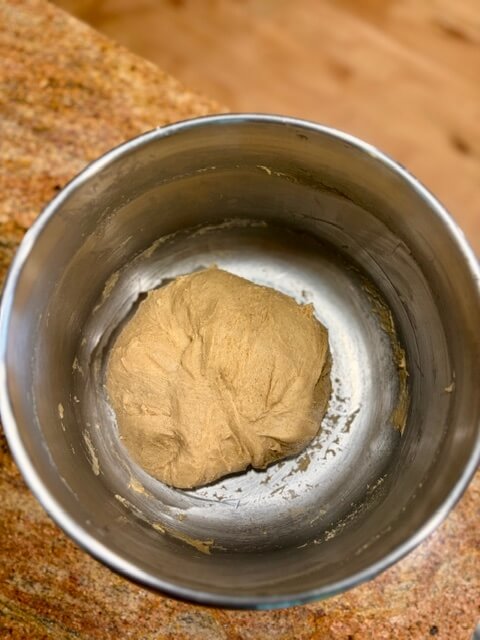
Now your dough is looking like a proud little dough ball. So, cover it and place it somewhere warm.

Should you oil the bowl? Technically yes. Do I always? Absolutely not. And yet, we move forward.

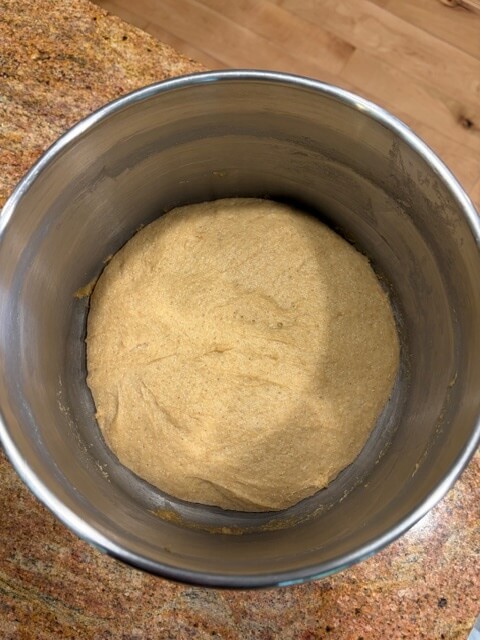
Let the dough rise until it nearly doubles (about an hour). However, keep in mind … this isn’t a timed event. Temperature matters. Warm dough rises faster, cold dough takes its sweet time.

Additionally, ingredients matter. Milk, butter, and hydration levels all play a role. So instead of watching the clock, watch the dough.

Dough before it rises in the mixing bowl
Give me a minute...
dough that has fully risen in the mixing bowl
Okay, I'm ready ...

Roll Call

Once your dough is puffy and ready, lightly oil your countertop. You can use flour, but I prefer oil because it keeps these freshly milled flour dinner rolls extra light.

Divide the dough into 12 equal pieces. Now, if you want to use a kitchen scale … go for it. If not, eyeballing works just fine.

Then shape each piece into a ball. Gently pull and roll it to create surface tension. This step helps the rolls rise beautifully.

If the dough fights you, let it rest for 5 minutes. Then come back. It will be much more cooperative … like a toddler after a snack.

Puff, Part Two (The Sequel We Needed)

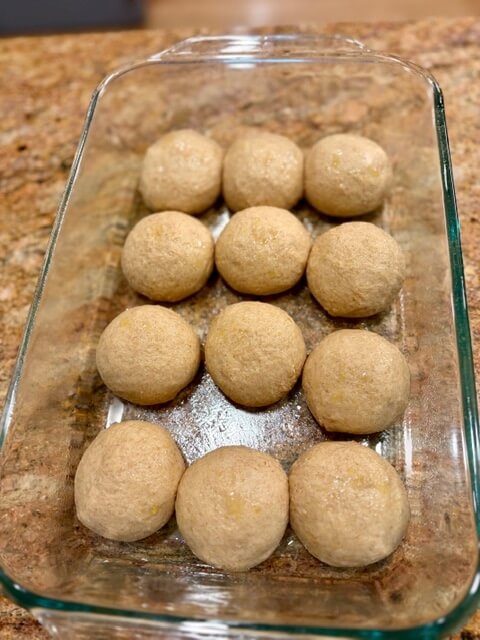
Place your rolls into a greased 9×13 pan.

Glass, metal, or cast iron all work. However, metal and cast iron will give you slightly darker, firmer edges. Glass keeps things softer (my preference).

Now, here’s your fork in the road.

If you want to bake tomorrow, cover and refrigerate overnight. When you return, let the dough come back to life before baking.

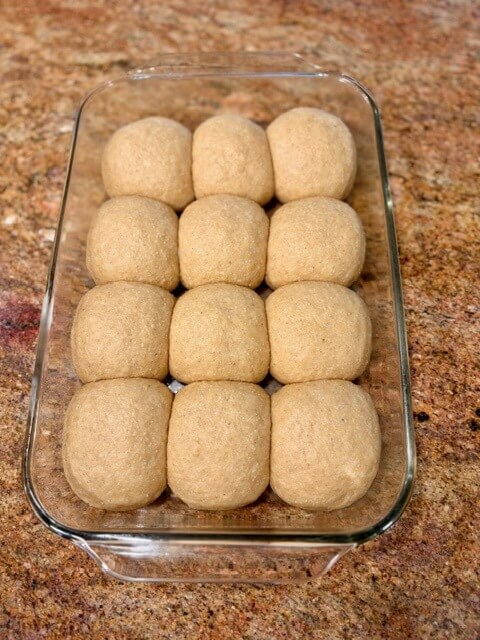
Otherwise, cover and let the rolls rise again until almost doubled. This usually takes about an hour, but again … watch the dough (not the clock).

12 dinner rolls in a glass 9x13 pan before they rise
Trust the process ...
9x13 glass pan of dinner rolls that are fully risen
Behold ... the process

Into the Oven (The Grand Finale)

Preheat your oven to 375°F.

Bake for 18–24 minutes, until lightly golden. If you want to be precise, check for an internal temperature of 190°F.

If you’re serving immediately, set that pan right on the table and enjoy the applause. However, if you’re waiting, transfer the rolls to a wire rack so they don’t get soggy bottoms.

Because nobody worked this hard for soggy bottoms.

Options for Fresh Milled Flour Dinner Rolls: (Because We Like Variety)

Once your fresh milled flour dinner rolls come out of the oven, golden and smelling like you absolutely have your life together, it’s officially time to zhuzh. And honestly, this is where things get really fun.

First, let’s start simple. Brush those warm, freshly milled flour dinner rolls with melted butter. Always. No hesitation. Not only does it add flavor, but it also gives them that soft, shiny finish that makes people reach for a second roll before they’ve even finished the first. Then, if you’re feeling a little fancy, go ahead and sprinkle sesame seeds over the top. It’s a small touch, but somehow it makes your dinner rolls with freshly milled flour look like they came straight from a bakery (but much yummier and healthier).

However, if you want to take things up a notch, you’ve got options. For a slightly sweet twist, mix melted butter with a bit of honey and brush it over the tops. This adds a gentle sweetness that pairs beautifully with these freshly ground dinner rolls without turning them into dessert. If you want to lean even further into cozy flavors, you can add a pinch of cinnamon or nutmeg right into the dough before baking.

On the other hand, if savory is calling your name, try mixing melted butter with a clove of pressed garlic and chopped parsley. Then brush it on right when the rolls come out of the oven. The warmth of the rolls will bring that flavor to life immediately, and suddenly, your fresh ground dinner roll recipe just became the star of the meal.

Additionally, you can mix herbs or other yummies directly into the dough before baking. Think rosemary, thyme, sun-dried tomatoes, or even a little shredded cheese if you’re feeling bold. This is an easy way to customize your dinner rolls with freshly ground flour, depending on what you’re serving.

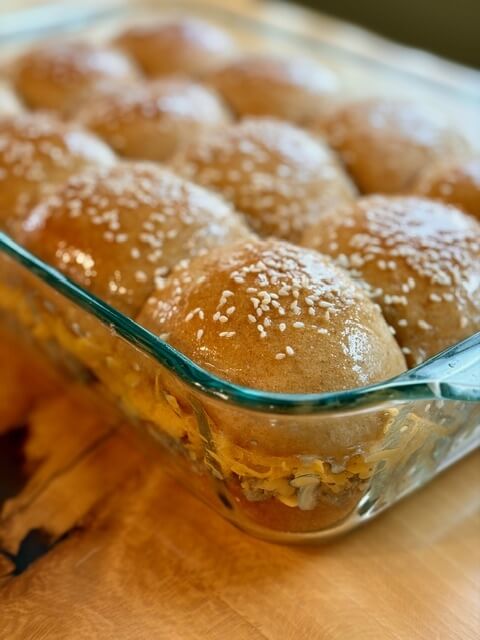
Cheeseburger sliders in a 9x13 pan made with fresh milled flour dinner rolls

Something New

And then, of course, there’s the real fun … turning these dinner rolls with fresh milled wheat into something completely different. 

  • Slice them open and make hamburger sliders. My daughter’s recipe is simply amazing … click here to get your free recipe card.
  • Or, layer in eggs and bacon for a breakfast sandwich that feels a little too good for a weekday. 
  • You can also stuff them with mozzarella and pepperoni for a quick pizza roll moment.
  • Pile them high with pulled pork, barbecue sauce, and crispy onions.
  • If you’re leaning fresh and herby, try pesto and chicken tucked inside. 
  • You’re in a sweeter mood, split them open and add butter and jam for a simple, perfect treat.

So, whether you dress them up or keep them classic, these freshly milled flour dinner rolls are ready for IT. Because at the end of the day, this fresh milled flour dinner roll recipe isn’t just about making rolls … it’s about making them work for whatever you need, whenever you need them.

FAQ: Fresh Milled Flour Dinner Rolls

Let’s be honest … making fresh milled flour dinner rolls can sometimes feel like a mix of science experiment and kitchen magic. So, if something seems off, don’t panic. Let’s walk through it together.

Why didn’t my rolls rise?
Usually, it comes down to three things: yeast, temperature, or time. First, your yeast might be inactive (it happens to the best of us). Next, your dough could be too cold … yeast loves a cozy environment. Finally, it may simply need more time. Patience really is part of the recipe. So, if they’re taking their time, let them.

How do I know they’ve risen enough?
Instead of watching the clock, watch the dough. Your dinner rolls with freshly milled flour should roughly double in size and feel puffy to the touch. If they still feel dense or tight, give them a little longer.

Why are my rolls dense instead of fluffy?
There are a few possible culprits here. You may have added too much flour, which can weigh down your freshly ground dinner rolls. Or, the dough may not have risen long enough. Additionally, gluten might not have fully developed … especially important in a fresh ground dinner roll recipe. On the flip side, over-kneading can also tighten things up. So, balance is key.

Can I make them ahead of time?
Yes, and it’s a great option. After shaping your dinner rolls with freshly milled wheat, cover them and place them in the fridge overnight. The next day, let them come back to room temperature and finish rising before baking. It’s like hitting pause on your dough.

How do I keep fresh milled flour dinner rolls soft?

Softness comes from enriching ingredients like milk, butter, and honey. These help create tender dinner rolls with freshly ground flour. Also, be careful not to overbake … this is one of the biggest factors in keeping them pillowy.

Can I freeze them?
Absolutely. Once your freshly milled flour dinner rolls have cooled completely, place them in an airtight bag and freeze. When you’re ready to use them, thaw at room temperature and warm them in the oven to bring back that fresh-baked feel.

How do I know they’re done baking?
The most reliable way is to check the internal temperature. Your dinner rolls with fresh milled wheat should reach about 190°F. Additionally, the tops should be lightly golden and set.

How long do they last?
For the best texture and flavor, enjoy your freshly ground dinner rolls within two days. After that, they may start to stale a bit. However, a quick warm-up in the oven can bring them back to life.

Can I scale the recipe?
Yes, this fresh milled flour dinner roll recipe scales beautifully. You can double it for a crowd or halve it for a smaller batch. Just keep in mind that rise and cook times may vary slightly, so continue to watch the dough rather than the clock.

So, if something goes a little sideways, you’re not alone. Because in the world of dinner rolls with freshly milled flour, a little patience and a few tweaks go a long way.

The Final Word About Fresh Milled Flour Dinner Rolls

This fresh milled flour dinner roll recipe is simple, flexible, and honestly a little bit wonderful. At first, it might feel like you’re learning a new rhythm … because freshly milled flour does like to do things its own way. However, once you get the hang of it, everything starts to click. Suddenly, you’re reading dough like a pro, casually talking about hydration, and wondering why you ever settled for anything less than freshly milled flour dinner rolls.

Even better, this recipe is incredibly beginner-friendly. It walks you through each step, gives you room to adjust, and still manages to deliver results that look and taste impressive. So, whether this is your first time making dinner rolls with freshly milled flour or your fiftieth, you’ll find that it meets you right where you are. And then, before you know it, you’re pulling a pan of golden, fluffy rolls out of the oven like it’s no big deal.

Meanwhile, the flexibility of this fresh ground dinner roll recipe means it fits into real life. You can make them the same day, or you can prep ahead and bake later. You can keep them classic, or you can dress them up depending on the meal. And because these dinner rolls with freshly ground flour are so versatile, they quickly become one of those recipes you rely on again and again.

Stay Connected

So, before you roll out … yes, that pun is absolutely staying … I really hope you give these freshly ground dinner rolls a try. Then, when you do, come back and tell me how it went. Share your creations on Instagram (@hopethiswerksdiy), find me on Facebook, or simply enjoy that quiet moment in your kitchen when you realize you just made something really, really good.

Because if we’re being honest, that’s the goal here. Not perfection, not pressure … just warm, homemade dinner rolls with fresh milled wheat that make you and the people around you happy.

Don’t forget to grab your free recipe card for the best sliders ever … because these fresh milled flour dinner rolls were basically born to hold juicy ground beef and make you look like a kitchen genius. Seriously, click here for the recipe … and everyone you feed will be very grateful.

Want to make sure you never miss a recipe like this? Subscribe here … I’ll even send you a printable recipe card for the best pancakes on earth as a thank-you gift.

And until next time, may your dinner rolls always be pillowy, beautifully golden, and generously slathered with butter.

Yield: 12 rolls

Dinner Rolls with Fresh Milled Flour (yeast)
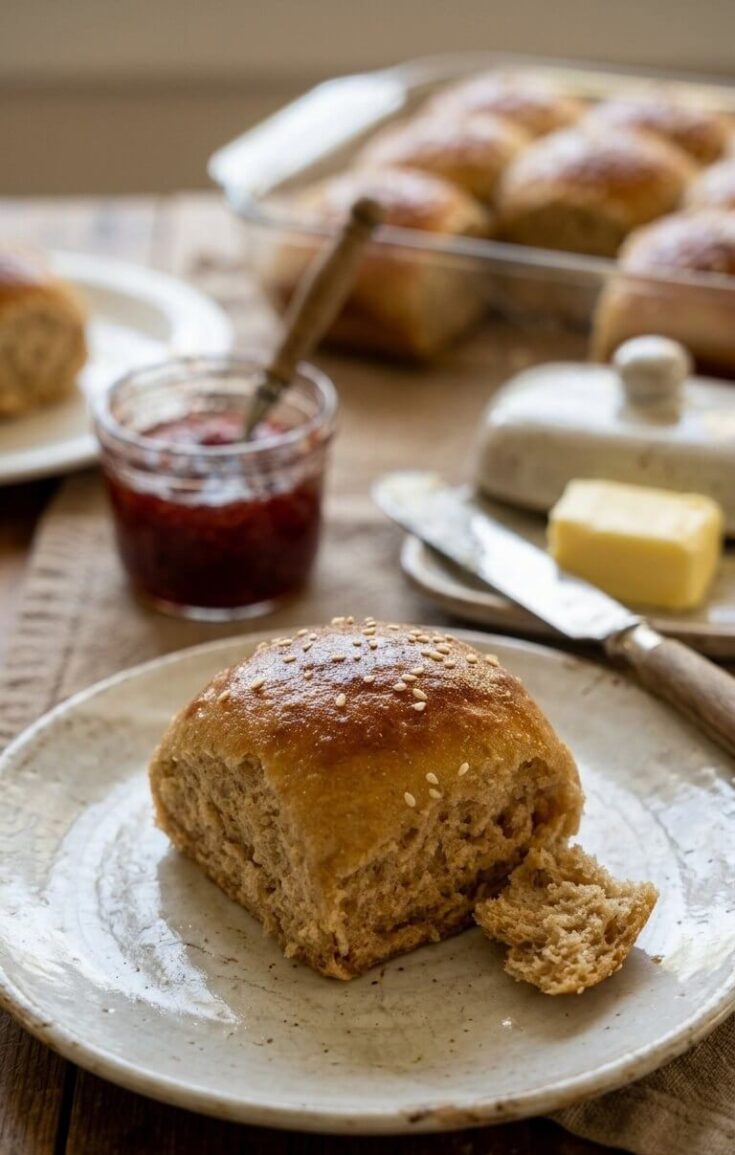
fresh milled flour dinner roll on a plate with butter and jam behind it and more rolls

Fluffy, buttery dinner rolls made with fresh milled flour ... so good you’ll “just try one” and accidentally eat three.

Ingredients

Instructions

    1. Combine Wet Stuff: In the bowl of a mixer, add the milk, eggs, honey, and butter. Give it a mix and admire how wholesome this already feels. (1⅓ cup milk, 2 eggs, ¼ cup honey, 3 tbsp butter)
    2. Flour & Rest: Finely grind wheat berries. Add 4 cups of flour, knead for 6 minutes, then let the dough take a 30-minute hydration nap. (3 cups hard white wheat berries ... which, after ground, will turn into 5 cups of fluffy flour)
    3. Just a Little More Flour: After the rest ... add the yeast, salt, and if needed the remaining flour (1 cup) a little at a time until the dough starts pulling away from the sides of the bowl. It should come together but still be a little sticky ... clingy, not desperate. (2¼ tsp yeast, 2 tsp salt)
    4. Work That Dough: Knead for 6 more minutes.
    5. Rise and Shine: Cover the dough and place it in a warm spot to rise until doubled in size, about 1 hour. It should look puffy and proud.
    6. Roll Call: Once puffy, turn the dough out onto an oiled surface and divide into 12 equal pieces. Shape each piece into a ball, making sure to create surface tension so they bake up nice and smooth.
    7. Puff, Part Two: Place the rolls into a greased 9×13-inch baking dish. (You can pop them in the fridge at this point if you want to bake them tomorrow.) Cover and let them rise again until doubled, about an hour.
    8. Into the Oven: Preheat the oven to 375°F. Bake for 15–22 minutes, until the rolls are lightly golden and your kitchen smells amazing. Brush with butter and sprinkle with sesame seeds if you’re feeling fancy (optional).

Notes

Fully Baked (No Guessing Games):
Wondering if the rolls are done? Grab a thermometer ... when the centers hit 190°F, they’re officially baked and ready to impress.

Storing (For Later Snacking):
Store leftover rolls in a bread box or an airtight container at room temperature for up to 2 days.

Freezing (Future You Will Be Grateful):
Let the rolls cool completely, then freeze in an airtight container or freezer bag for up to 3 months. To enjoy, thaw at room temperature.

Can I Double or Halve the Recipe? (Math-Friendly Dough):
Absolutely! This recipe scales beautifully.

Can I make ahead?

Yes! Shape, refrigerate overnight, then let rise at room temperature before baking. Pause now, bake later.

Recommended Products

As an Amazon Associate and member of other affiliate programs, I earn from qualifying purchases.

Charts & Summaries About Fresh Milled Flour Dinner Rolls

Fresh Milled Flour Dinner Rolls Process Flow (Step-by-Step Map)

  1. Mix wet ingredients
  2. Mill wheat berries into flour
  3. Add 3½ cups flour → knead 6 minutes
  4. Rest dough → 30 minutes (hydration phase)
  5. Add yeast + salt
  6. Slowly add flour until cohesive
  7. Knead again → 6 minutes
  8. First rise → until doubled
  9. Shape into 12 rolls
  10. Second rise → until puffy
  11. Bake at 375°F → 18–24 minutes
Fresh Milled Flour Dinner Rolls: The 6-30-6 Method
Phase Time Purpose
Knead #1 6 min Initial gluten formation
Rest 30 min Hydration + bran softening
Knead #2 6 min Final gluten development
Fresh Milled Flour Dinner Rolls: Flavor Variations Matrix
Style Add-In When to Add
Sweet Honey butter glaze After baking
Savory Garlic + parsley butter After baking
Herb Rosemary, thyme During mixing
Cheesy Shredded cheese During kneading

Fresh Milled Flour Dinner Rolls: Quick Guide

Fresh milled flour dinner rolls are soft, fluffy yeast rolls made using freshly ground whole wheat flour. Because the flour contains bran and germ, the dough requires longer hydration and slightly extended kneading.

  • Best flour: Hard wheat (white or red)
  • Key method: 6-30-6 (knead, rest, knead)
  • Why it works: Allows full hydration of whole grain particles
  • Texture goal: Soft, slightly sticky dough
  • Rise tip: Dough rises slower than white flour—watch the dough, not the clock
  • Bake temp: 185–190°F internal

These dinner rolls with freshly milled flour are ideal for sliders, sandwiches, and holiday meals.

If you enjoyed this article and want to help me buy more wheat berries (or maybe a broom for my kitchen), you can click this link. Thanks, you’re the best!

Share the Post:

4 responses to “How to Make Fresh Milled Flour Dinner Rolls (yeast)”

Leave a Reply

Your email address will not be published. Required fields are marked *

Skip to Recipe