Welcome to

Hope this Werks

Fresh milled. Real Food. Pure energy.

Easy Fresh Milled Cinnamon Rolls with Yeast (store flour works too)

Updated: May 7, 2026

For as long as I can remember, these fresh milled cinnamon rolls have been part of our Christmas morning tradition. And while the smell of cinnamon and butter drifting through the house is basically magic … waking up at 3:00 a.m. to make it happen? Not quite as magical.

So over the years, I’ve made it my personal mission to figure out how to make a fresh milled flour cinnamon rolls recipe that delivers all the cozy, nostalgic goodness … without requiring sleep deprivation as a prerequisite.

And thankfully, whether you’re making cinnamon rolls with freshly milled flour or going the store flour route (both recipe cards can be found below), these turn out exactly how you want them: soft, fluffy, loaded with gooey filling, and reliable enough that you won’t be side-eyeing your dough the entire time.

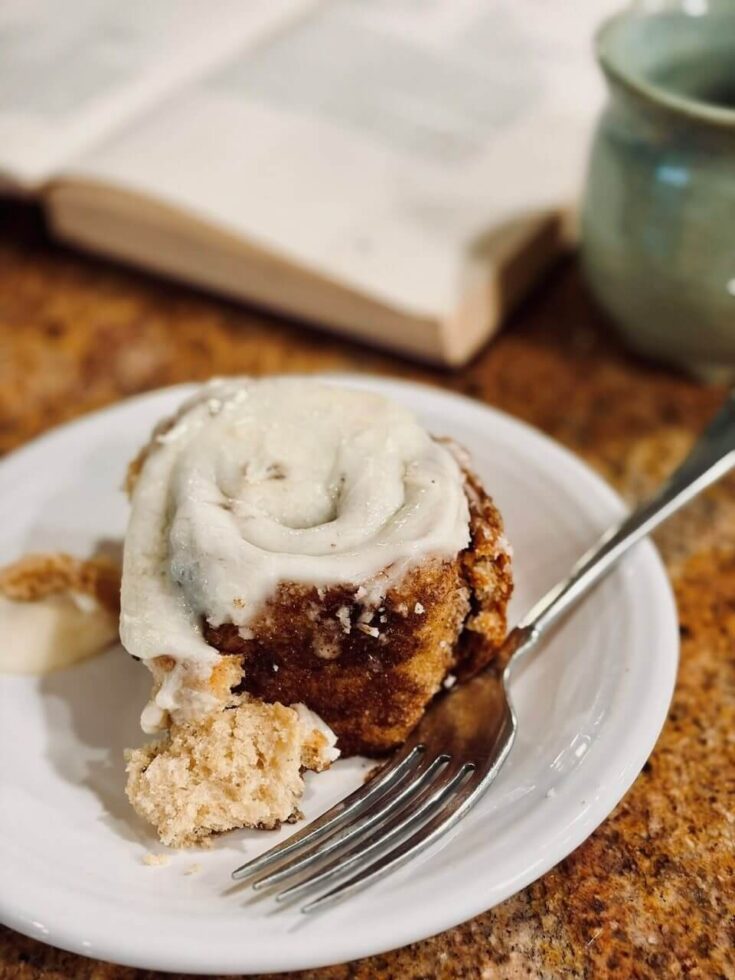
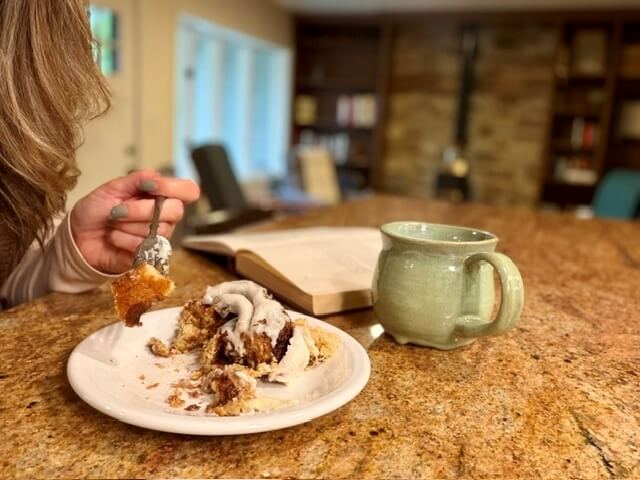
Fresh Milled Cinnamon Roll on a white plate next to a book and cup of coffee

The Day Fresh Milled Cinnamon Rolls Changed Everything

Now, here’s the part that still makes me laugh a little … these freshly milled flour cinnamon rolls are actually the reason I started milling flour in the first place.

So one day, I went over to my friend Arielle’s house. Everything seemed normal until she casually opened a kitchen drawer. And instead of utensils, it was filled with wheat berries. Just a drawer of grains … like that’s something everyone has. Then, without making a big deal out of it, she scooped some into a grain mill and … almost instantly … out came flour.

And then she made cinnamon rolls. Not just any cinnamon rolls, but cinnamon rolls with freshly milled wheat. And honestly, that first bite changed everything. They were softer, richer, more flavorful … like the cinnamon rolls I’d been eating my whole life had suddenly been upgraded.

So naturally, I went home, fell down the rabbit hole of freshly milled flour … and never looked back. And that’s how freshly ground cinnamon rolls became a regular thing in my kitchen. (If we all dropped a quick “Thanks, Arielle!” in the comments, I have a feeling she’d get a pretty good belly laugh out of it.)

Why These Cinnamon Rolls Are Worth Every Minute

Now, if you’ve ever gone searching for a fresh milled flour cinnamon rolls recipe (or with regular store flour) and ended up with something that looked promising … but baked up into dense, slightly disappointing spirals, then you already know the struggle. However, that’s exactly why these fresh milled cinnamon rolls are different. Because these cinnamon rolls with freshly milled flour (or regular flour) are:

  • Soft and pillowy (not heavy or dry)
  • Packed with oodles of rich, gooey cinnamon filling
  • Built on a dough that’s forgiving and reliable
  • Flexible enough to work with fresh milled or store-bought flour

Now, as if that wasn’t enough, let’s talk frosting … because obviously, that’s a very important decision.

First, there’s the classic cream cheese frosting, which you’ll find right on the recipe cards below. It’s rich, tangy, and what most people expect when they think of cinnamon rolls.

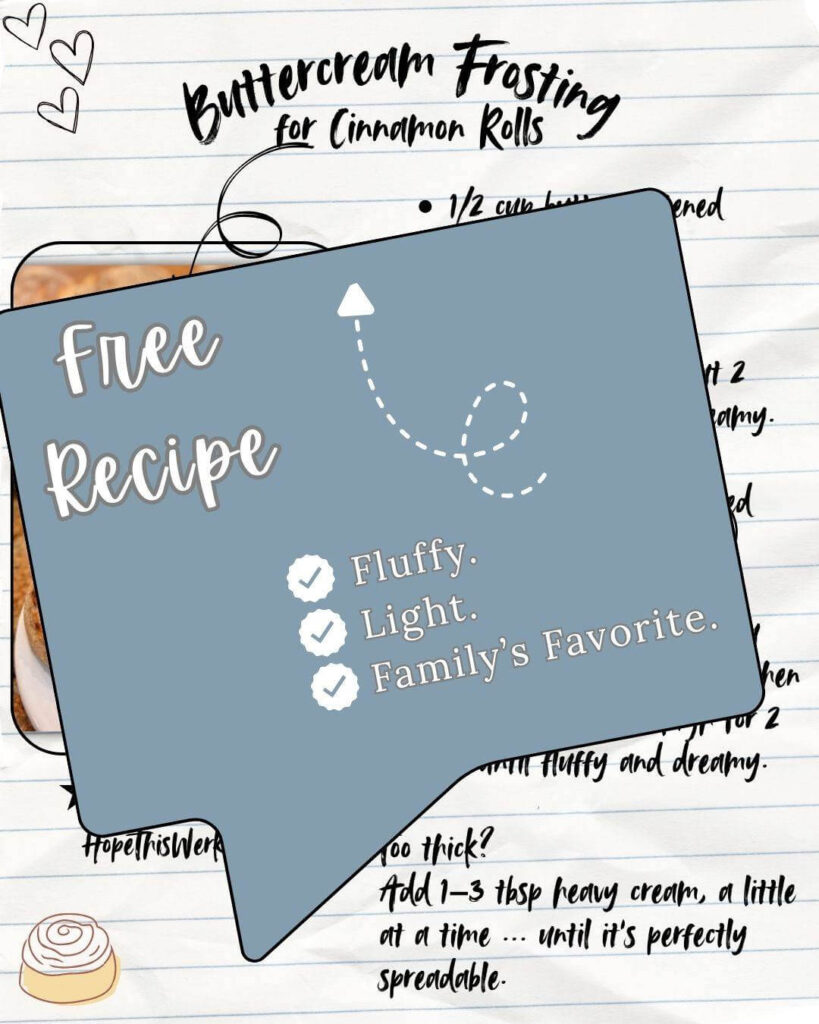
However, in my house, we lean a little differently. Our absolute favorite is a buttercream frosting. It’s light, smooth, and just sweet enough to complement the warm cinnamon-sugar layers instead of overpowering them. In other words, it lets the flavor of these cinnamon rolls with fresh milled wheat shine instead of competing with it. So really, you get to choose your own adventure here … classic and tangy, or light and dreamy. And if you want that buttercream frosting recipe (which I highly recommend), you can grab it for free right here.

Activate Yeast

Before anything else, we need to talk about yeast … because while it’s small, it’s doing a lot of heavy lifting in these fresh milled cinnamon rolls.

Thankfully, modern yeast has made life much easier. These days, you can use active dry or instant yeast interchangeably, which means fewer rules and less stress. And technically, you don’t even have to proof it anymore. However, I still like to take this step, because I want to know … without a doubt … that my yeast is alive, happy, and ready to do its job. So, if you also like a little peace of mind (and fewer baking surprises), here’s how to do it …

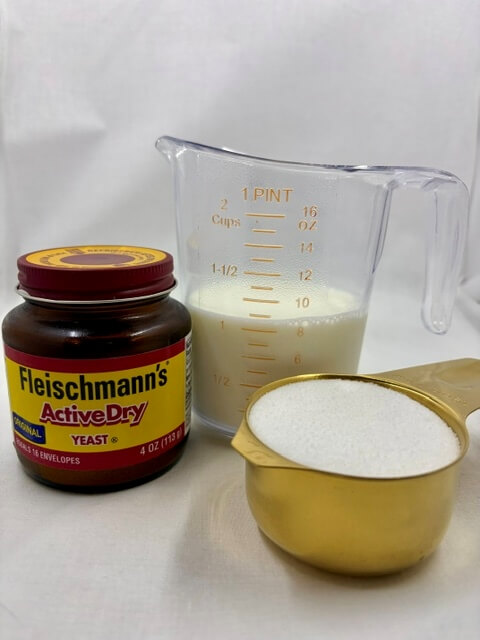
Start by adding ½ cup sugar and 1 cup warm milk to a large mixing bowl. You’re aiming for your milk’s temperature to be about 110–115°F … think warm and cozy, not hot and aggressive. If you’re using a microwave, this usually takes about 1 to 1½ minutes at 50% power. However, it’s best to heat in 30-second intervals, stirring in between, so you don’t accidentally overdo it.

Next, sprinkle in 2½ teaspoons of yeast. Give it a gentle swirl, and then let it sit for 5–10 minutes.

Now, here’s what you’re looking for: if the mixture starts to look foamy, bubbly, and slightly reminiscent of a frothy latte, then congratulations … your yeast is alive and ready to go. If it just sits there looking flat and unimpressed, then it might be time to grab a fresh batch.

And while we’re here, a quick little bonus tip: buying yeast in bulk is way cheaper. I finally made the switch a few years ago, and honestly, I wish I had done it sooner.

Add More Yummies

Now that your yeast is awake and doing its thing, it’s time to bring in the ingredients that make these fresh milled cinnamon rolls rich, soft, and worth every bite.

First up … butter. And once again, I’m heading straight for the microwave. I am, at this point, very familiar with the “melt butter” setting, and honestly, I highly recommend becoming friends with yours too. Once you figure it out, it feels like unlocking a tiny kitchen superpower.

So go ahead and toss ⅓ cup of butter into a bowl and melt it until smooth. Not boiling, not sputtering … just nicely melted and ready to join the party.

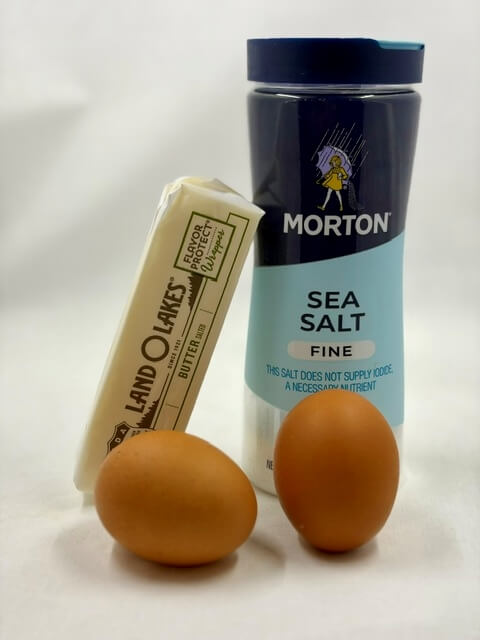
Next, add in your 2 eggs. 

Now, you’ll notice I suggest using room temperature eggs, and while that might sound like a small detail, it actually makes a difference. If your eggs are cold, they can firm up the melted butter, which makes your mixture a little less smooth and cooperative. However, if planning ahead isn’t your thing (no judgment here) … there’s an easy fix. Just place your eggs in a bowl of warm water for about 10–15 minutes. It works like a charm and saves you from waiting around.

Now, can you use cold eggs anyway? Yes, you absolutely can. Your dough will still come together, but it might be just slightly less airy, or it may take a bit longer to rise. So, it’s not a dealbreaker … just something to keep in mind.

Finally, add 1 teaspoon of salt to the mixture and give everything a good mix until it’s fully combined. 

At this point, things should be looking very promising … which is exactly what we want before moving on to the flour stage of these freshly milled flour cinnamon rolls.

Fresh Milled Flour for Fresh Milled Cinnamon Rolls

Now we’ve arrived at my favorite part of this entire fresh milled cinnamon rolls process … grinding the wheat berries. And honestly, there’s just something deeply satisfying about turning little grains into fresh flour right in your own kitchen. It feels a little old-fashioned and also like you’re sneaking some serious nutrition into something that is, at its core, a frosted cinnamon roll.

So yes, while we’re not going to pretend these are health food … we are going to quietly celebrate the fact that freshly milled flour brings along a whole lineup of nutrients (in fact, 40 out of the 44 essential nutrients our body needs … click here for more info) that don’t usually make it into store-bought flour (they usually only have 4 synthetically added nutrients). Balance, right?

To get started, grab 3 cups (about 620 grams) of hard white wheat berries. Then, go ahead and toss in an extra 1½ tablespoons (about 25 grams) for the filling … you’ll thank yourself later for not having to drag the mill back out. Grind everything finely in your mill until you have beautiful, fresh flour ready to go.

Now, you might be wondering why we’re using hard white wheat instead of something like soft white, einkorn, or another ancient grain. And while those all have their place, here’s the simple rule that keeps things easy: yeast breads (like these cinnamon rolls with freshly milled flour) prefer hard wheat because it gives the dough strength and structure. Meanwhile, softer wheats are better suited for cakes, muffins, and other tender baked goods. In other words, yeast likes it strong … and these freshly milled flour cinnamon rolls are definitely a yeast situation. 

Now, if you’ve ever struggled with what wheat berry to choose for freshly ground flour …. I have some help for you right here.

Once your flour is ready, start adding it to your dough slowly. And this part matters more than you might think. Fresh milled flour doughs should start out loose, soft, and even a little wet. That’s because the flour continues to absorb liquid over time, which means the dough will naturally firm up as it rests.

So, if you add too much flour at the beginning, you’ll end up with dough that’s dry, crumbly, and a little stubborn … which is not the goal here. 

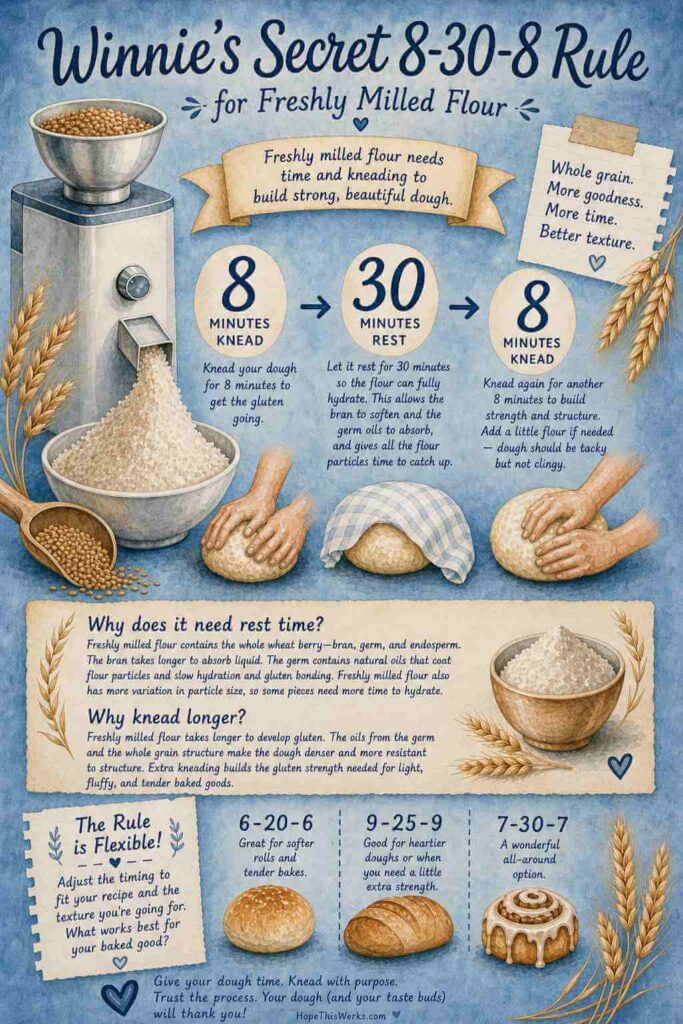
The 8-30-8 Rule for Freshly Milled Flour Cinnamon Rolls (My Not-So-Secret Secret)

This is the trick I come back to again and again, not just for these cinnamon rolls with fresh milled wheat, but for a lot of my baking.

Knead your dough for 8 minutes to get the gluten going. Then let it rest for 30 minutes so the flour can fully hydrate. After that, knead it again for another 8 minutes to build strength and structure.

This simple rhythm … 8-30-8 … makes a huge difference in the final texture. 

After the second knead, check your dough. If it’s still sticking too much when you touch it, go ahead and add a little more flour … but just a little. You’re aiming for dough that’s tacky but not clingy to your finger, soft but still manageable.

Chart for Fresh Milled FLour - 8-30-8 Trick

A Quick Note on Kneading (and Saving Your Mixer’s Life)

Now, I’m not going to lie … this process involves a fair amount of kneading. And if you’re using a stand mixer, this is where things can get interesting.

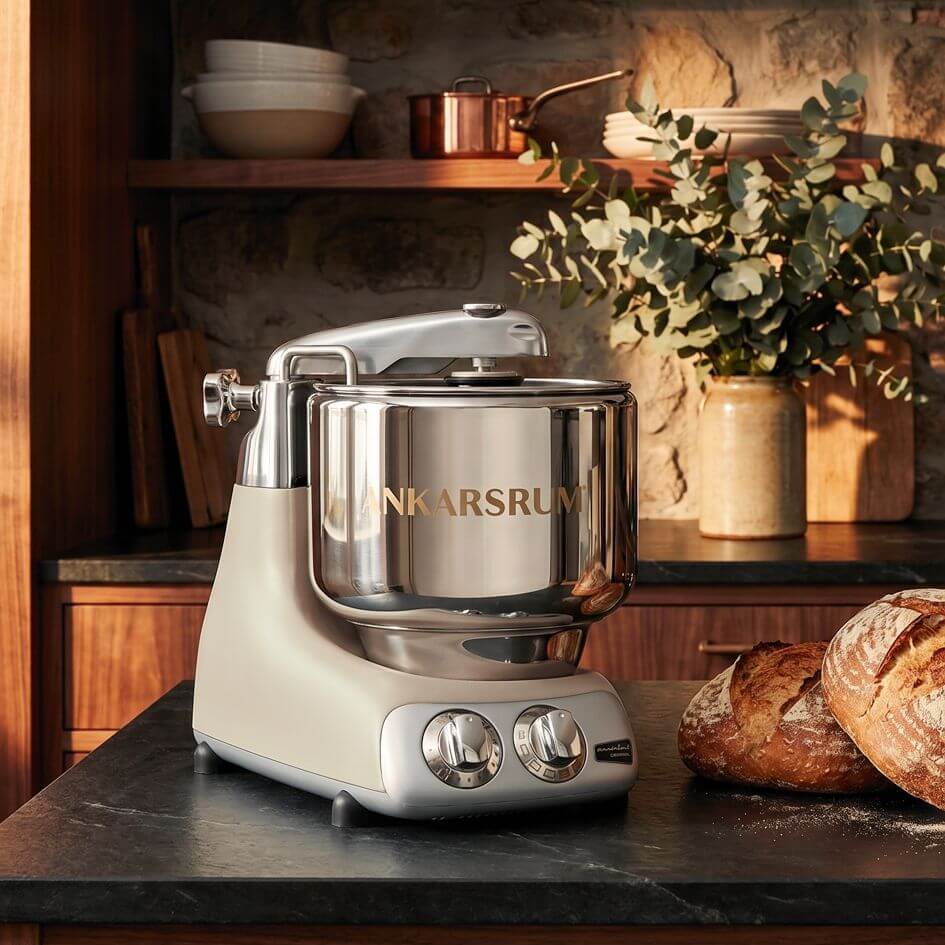
I may or may not (tehehe) have gone through a few KitchenAid mixers learning this lesson the hard way. My KitchenAid mixer recommended mixing on speed 2 for a maximum of 4 minutes … which doesn’t always align with the needs of freshly milled flour dough … or with many store-bought flour recipes either.

So, eventually, I switched to an Ankarsrum mixer (you can check out the one I use here … this is an affiliate link, and it gets you free shipping on qualified purchases), and it has been an absolute workhorse. If you bake often … especially breads or recipes like this fresh milled flour cinnamon rolls recipe, it’s definitely worth looking into.

That said, whether you’re kneading by hand or using a mixer, the goal is the same: develop a dough that’s strong, smooth, and ready to rise into something amazing.

Store-Bought Flour (Yes, You’ve Got Options)

Now, while I am clearly a big fan of freshly milled flour cinnamon rolls … I also fully believe that baking should work for your kitchen, your time, and your pantry. So, if you don’t have freshly milled flour on hand, you can absolutely make this recipe using store-bought flour.

In that case, you’ll want to use about 4½ cups of bread flour

And yes, you can use all-purpose flour if that’s what you have. However, bread flour will give you a stronger structure and a slightly chewier texture, which is especially helpful since these cinnamon rolls are loaded with gooey filling. Basically, the sturdier the dough, the better it can hold all that cinnamon-sugar goodness without collapsing into a sticky situation.

Now, one of the nice perks of using store-bought flour is that it doesn’t require quite as much patience. Unlike freshly milled flour, it absorbs liquid quickly, which means you can skip the 30-minute rest period entirely. So, instead of following the 8-30-8 method, you’ll simply knead the dough for about 8 minutes total.

That said, you’re still looking for the same end result … a dough that’s smooth, elastic, and strong enough to hold its shape, while still being soft enough to bake up into those classic, fluffy rolls.

And if you’re curious about making the jump to freshly milled flour, there’s a whole world waiting for you. Whether you want to learn about the nutritional benefits, figure out how to choose a grain mill, or just understand how it all works, I’ve got resources that walk you through it step by step.

The Puffening: Part One

Now that your dough is officially looking like a real dough and not just a hopeful bowl of ingredients, it’s time for its first big moment: the rise.

So, go ahead and cover your mixing bowl. Then place it somewhere warm and cozy where it can relax and do its thing without being disturbed. Think of it as sending your dough on a little spa retreat.

Now, you can oil your bowl if you want to. That’s the classic, by-the-book approach. However, I’ll be honest … I usually don’t bother. My dough has survived either way. That said, if you’re the type who likes to play it safe, go ahead and lightly oil it.

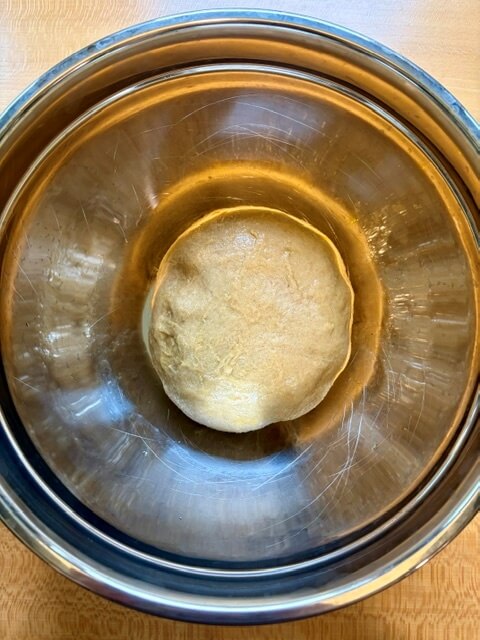
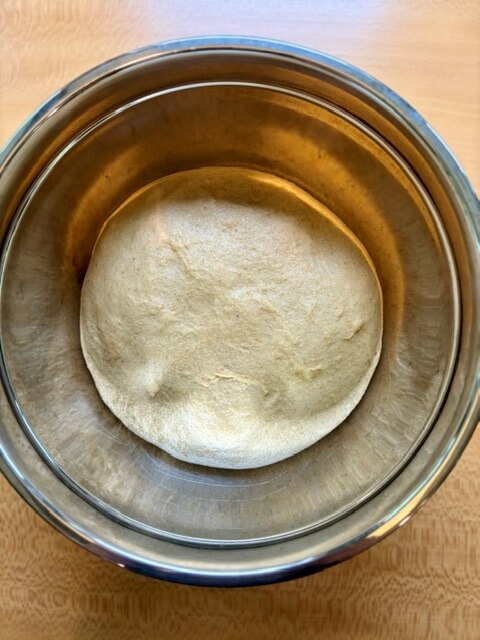
At this point, your goal is simple: let the dough double in size. No rushing, no peeking every five minutes like it’s going to magically finish early. Typically, this takes about 1–2 hours, but honestly, your kitchen gets a vote here too. Because temperature, humidity, and general kitchen “vibe” all matter more than we like to admit. If your kitchen is warm and cozy, things move faster. If it’s chilly, the dough will take its time. If it’s drafty, well… it’s just being dramatic. And if you live at high altitude, it might have its own set of opinions entirely.

So instead of watching the clock, just watch the dough. When it’s doubled, puffy, and looking proud of itself, you’re ready for the next step in your fresh milled cinnamon rolls journey.

Not Puffy Yet ... But Give It Time
fresh milled flour dough after first rise
Now That's What We Were Waiting For

The Gooey Good Stuff (Filling)

Now, while your dough is happily doing its thing and doubling in size, this is the perfect moment to shift your attention to something equally important … the filling. 

So, first things first, grab ½ cup of butter and melt it. 

Go ahead and add:

  • 1¼ cups (250 g) brown sugar
  • 3 (20 g) tablespoons cinnamon
  • a pinch of salt
  • 2½ tablespoons (25 g) flour

Now, if you’re using freshly milled flour, this is where that extra 1½ tablespoons of hard white wheat berries you ground earlier comes back into play. Once milled, it gives you exactly the amount you need for this step … so nothing wasted, everything intentional.

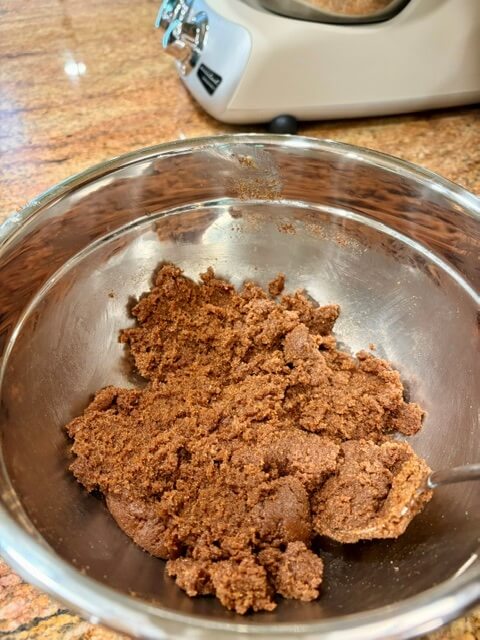
Next, stir everything together until it transforms into a thick, spreadable paste. 

Now, let’s talk about why we’re doing it this way.

First, mixing the filling directly into the butter instead of just sprinkling everything over the dough is intentional. Because when you create a paste, it helps keep all that buttery, cinnamon-sugar goodness inside the roll where it belongs. Otherwise, if you just sprinkle and hope for the best, some of that butter and filling tends to sneak out … and we’re not trying to lose any of the good stuff here.

And second, that small amount of flour in the filling might seem unnecessary, but it actually helps more than you’d think. It gives the swirls just enough structure to cling together, which means your cinnamon rolls with freshly milled flour or store flour stay beautifully layered instead of separating or sliding apart.

So, by the end of this step, you should have a thick, cinnamon-sugar paste that smells absolutely irresistible … and a strong urge to “taste test” it more than once.

Rollin' Rollin' Rollin'

Now, this is the part where things usually get a little predictable in most recipes. Typically, you’ll be told to lightly flour your countertop and call it a day. However, I’m going to gently redirect you here… because I don’t actually do that.

Instead, I skip the extra flour entirely. Not because I’m trying to be difficult, but because I don’t love adding more flour into the dough than necessary … especially when we’ve already worked this hard to get the texture just right for these fresh milled cinnamon rolls. And honestly, I also find that there’s a better way to get a smoother roll-out.

So here’s what I’ve been doing for years.

First, lightly spritz your countertop with a bit of oil. Nothing dramatic … just enough to create a thin, slick surface. Then, place your dough directly on top of it.

And this is where the magic happens. Because instead of sticking, tearing, or fighting you the whole way, the dough glides. It rolls out more evenly, more smoothly, and with a lot less frustration. It’s one of those small kitchen tricks that quietly makes a big difference in how your cinnamon rolls with freshly milled flour or store flour turn out.

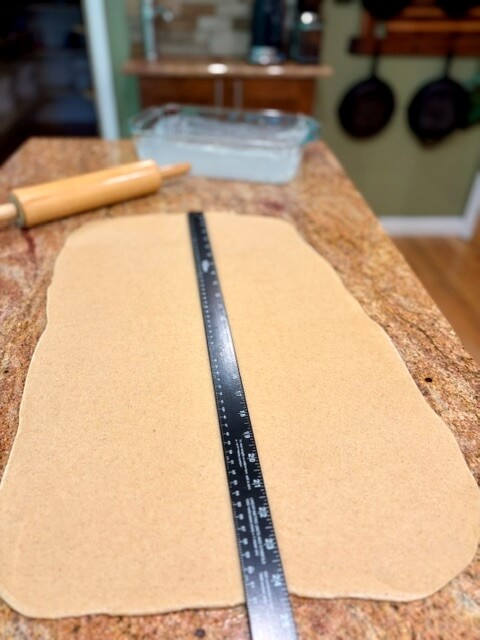
Now, once your dough is resting happily on that lightly oiled surface, go ahead and roll it out into a 15” x 24” rectangle. It doesn’t have to be perfect like a geometry lesson … but try to get it reasonably even so your cinnamon rolls bake up consistently.

Dough rolled out on counter with a yardstick on top to show the length and rolling pin and pan in the background

Fill and Cut (The Cinnamon Burrito Moment)

Now that your dough is beautifully rolled out and behaving itself, it’s time for the best part: the filling. 

So first, go ahead and blop your filling paste randomly over the surface of your dough. Yes, “blop” is the technical term here. 

Next, grab an offset spatula and spread everything out evenly. Make sure it reaches all the edges so every bite gets that cinnamon-sugar goodness. However, leave about a ½-inch clean border along one of the long 24-inch sides. This little strip is important because it will act as your sealing edge later, kind of like closing an envelope … but much more delicious.

Once everything is evenly spread and looking beautifully messy in the best way, it’s time to roll. Start at the long side that does have filling on it, and begin rolling the dough up tightly. Think steady, confident, and slightly firm … this isn’t a loose scroll, it’s more like a cinnamon roll burrito situation. You can do a bit of a back-roll motion as you go, which helps keep the layers tight and structured so they bake up into those gorgeous swirls we’re all here for.

When you reach the end, gently tuck that clean edge over and seal the roll closed. Give it a little pinch along the seam to make sure everything stays together. Now you’ve got a full cinnamon log ready to become rolls.

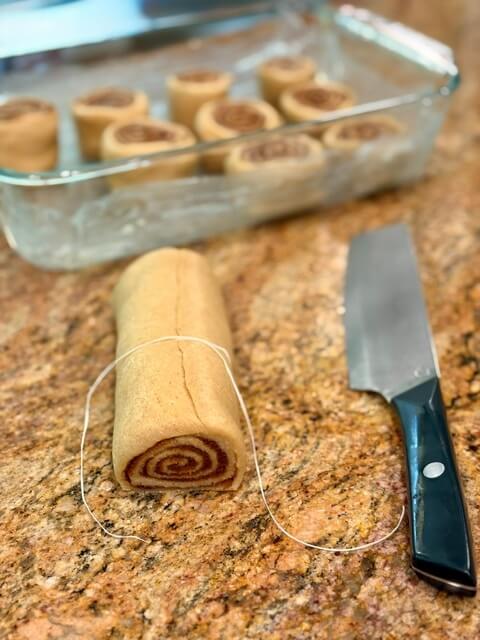
Next, slice it into 12 even pieces, each about 2 inches thick. You can absolutely use a sharp knife for this. 

However, if you want a fun little old-school trick, you can also use unflavored dental floss or string. It cuts through the dough cleanly without squishing those beautiful layers. If you’re curious, I’ve even demonstrated this in my YouTube video because watching it in action makes it way less intimidating the first time.

And just like that, your cinnamon roll log officially becomes individual rolls … ready for their next rise into something very, very exciting.

Second Rise & Make Ahead Options

Now that your rolls are sliced and looking beautiful, it’s time for the second rise … the stage where everything puffs up and starts looking dangerously delicious.

So first, grab a 9×13-inch baking pan and generously grease it with butter. And when I say generously, I mean don’t be shy here. This is not the moment for restraint.

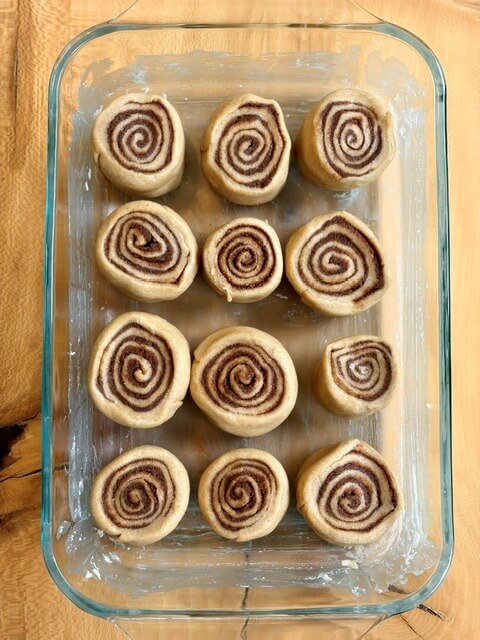
Next, take your 12 glorious rolls and gently place them into the pan. “Plop” is actually the correct technique here. 

Now, from here, you get options. 

Option 1: Same-Day Bake (for Fresh Milled Cinnamon Rolls)

If you’re baking these fresh milled flour cinnamon rolls the same day, then cover the pan and let them rise at room temperature.

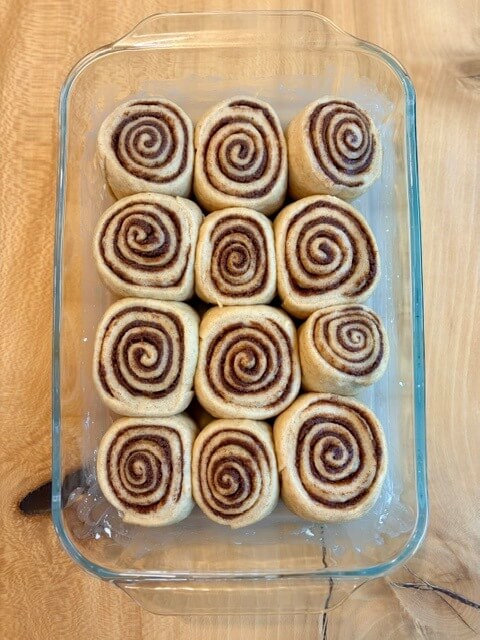
You’re looking for them to become noticeably puffy, doubled, and lightly touching each other. This usually takes about 1-2 hours, depending on how warm your kitchen is feeling.

Remember, they’re going to expand even more in the oven, so you don’t need them to look like finished rolls just yet. If anything, slightly under is better than over-proofed here.

Option 2: Make Them Tomorrow (Fresh Milled Cinnamon Rolls)

If you want to bake these in the morning, this is your moment to pause and prep ahead.

Simply cover the pan and place it directly into the refrigerator. That’s it … you’re done for now. The dough will chill out overnight and slow its second rise, which is exactly what we want.

Then, when morning arrives, and you’re ready to bake, take the pan out of the fridge and remove the cover. Place it into a cold oven … yes, cold is important here.

Next, turn the oven to 350°F. As the oven gradually heats up, the rolls will continue to rise slowly, which helps them finish that final puff without rushing.

Once the oven reaches 350°F, set your timer for about 30ish minutes. From there, it’s business as usual until they turn golden, fluffy, and impossible to ignore.

Option 3: Freeze for Later (Fresh Milled Cinnamon Rolls)

If you want to freeze your cinnamon rolls with freshly milled wheat (or store flour) before baking, you absolutely can.

Let the rolls rise in the pan until they are about 75% puffy … soft, slightly expanded, but not fully doubled. Then, instead of baking, place the covered pan directly into the freezer. 

When you’re ready to bake them later, move them to the counter the night before (about 12-14 hours) so they can slowly thaw.  If your house is warm then they will need less time on your counter.

Then in the morning, remove the cover and place in a 350°F oven.  Set your timer for about 30ish minutes, and wait for that moment when they turn golden, fluffy, and unmistakably irresistible.

fresh milled cinnamon rolls before second rise in a pan
Freshly Rolled & Ready to Rise
fresh milled cinnamon rolls in a pan that are nicely puffed up from a second rise
Puffy, Happy & Ready to Bake

Into the Oven They Go

Now we’ve officially reached the moment everything has been building toward … baking your fresh milled cinnamon rolls.

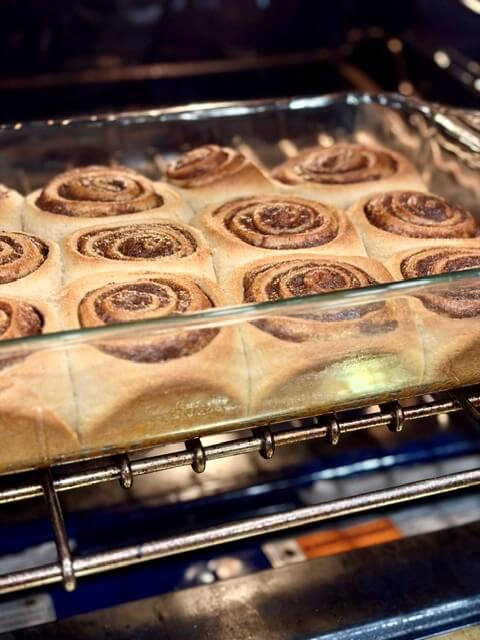
So first, go ahead and preheat your oven to 350°F. Once the oven is ready, bake the rolls for about 30ish minutes. However, and this is important, the time is really just a guideline. What you’re actually looking for is color and doneness.

The tops should be a deep, golden brown, and the centers should be fully baked through. Now, here’s where things can get a little tricky: there’s a very real temptation to pull them out early because they smell incredible and you’re absolutely ready to eat them immediately. But resist that urge just a little longer.

Because underbaking is the one mistake that tends to sneak in here. I’ve done it more times than I care to admit, and every time it’s the same story … you pull them out, let them cool slightly, and then realize the centers are still too doughy. And while gooey filling is the goal, raw dough in the middle is not the vibe.

So instead, if you want to be sure, check the thickest part of the bread portion (not the cinnamon filling) with a thermometer. You’re aiming for about 180–185°F. That’s your sweet spot for fully baked, soft, and structurally sound cinnamon rolls with freshly milled flour.

To Flip or Not to Flip: The Dilemma

Once they’re done, take them out of the oven and pause for a moment … because now comes a very real philosophical decision.

There are basically two schools of thought here.

One group (and I’ll admit, I often fall into this category) prefers to leave the cinnamon rolls right in the pan. It keeps them warm, contained, and easy to frost without any drama.

The other group likes to immediately flip them out onto a serving tray. The idea here is that any caramelized, buttery gooeyness on the bottom gets a chance to drip down the sides, making them even more decadent.

However, if you choose the flip method, timing matters. You want to do it right away while everything is still hot and the sugar is still soft and liquid. Otherwise, things can start sticking … and nobody wants to lose any of that goodness to the pan.

Either way you choose, you end up with the same result: a pan of golden, soft, gooey, fresh milled cinnamon rolls that are very, very difficult to wait for.

Frosting (The Very Important Final Decision)

Now, while your fresh milled cinnamon rolls are baking away and your kitchen slowly starts smelling like something people would happily line up for, this is the perfect time to get the frosting ready. Because cinnamon rolls without frosting are just … sweet bread with potential. And we’re not here for “potential.” We’re here for the full experience.

On the recipe card below, you’ll see the classic cream cheese frosting. And to be fair, there’s a reason it’s so popular … it’s rich, tangy, and very dependable. It shows up, it does its job, and nobody is surprised by it.

But if I’m being completely honest with you, it’s not my personal favorite.

I’m more of a buttercream person when it comes to cinnamon rolls with freshly milled flour. It’s lighter, smoother, and a little gentler with the flavor. Instead of competing with the warm cinnamon-sugar filling, it just kind of … hugs it. Cream cheese frosting tends to bring a stronger, tangy personality to the party, while buttercream quietly lets everything else shine.

So in my kitchen, buttercream usually wins. If you want to try my FAVORITE frosting instead, you can click through for that recipe too.

But for now, let’s walk through the cream cheese frosting version … because it deserves its moment, and honestly, this one has a little extra something that makes it better than most.

Making the Cream Cheese Frosting for Fresh Milled Cinnamon Rolls

Start by adding your softened cream cheese and softened butter to a mixing bowl. And yes, I fully support using the microwave here if that’s what gets you through life. No judgment … just smooth frosting.

Once everything is in the bowl, mix it for about 2 minutes until it starts coming together. Then scrape down the sides of the bowl (because somehow everything always climbs upward), and mix again for another 2 minutes. What you’re aiming for here is a smooth, unified mixture. Not streaky, not lumpy … just creamy and cohesive, like it finally decided to behave itself.

Next, add:

  • 3 cups powdered sugar
  • 1 teaspoon vanilla extract (I use homemade … here is my recipe)
  • 1 teaspoon ground cinnamon
  • a pinch of salt

Then mix everything together until it becomes a thick, fluffy frosting situation that looks like it belongs on something very important.

Now, add milk or heavy cream one tablespoon at a time. And I do mean one tablespoon at a time … not a hopeful splash and a prayer. You will probably need 2-4 tablespoons.

Mix thoroughly after each tablespoon before deciding if it needs more. Because frosting has a funny way of going from “too thick” to “why is this basically soup” in about 12 seconds.

So go slowly and stop when it looks light, fluffy, and perfectly spreadable.

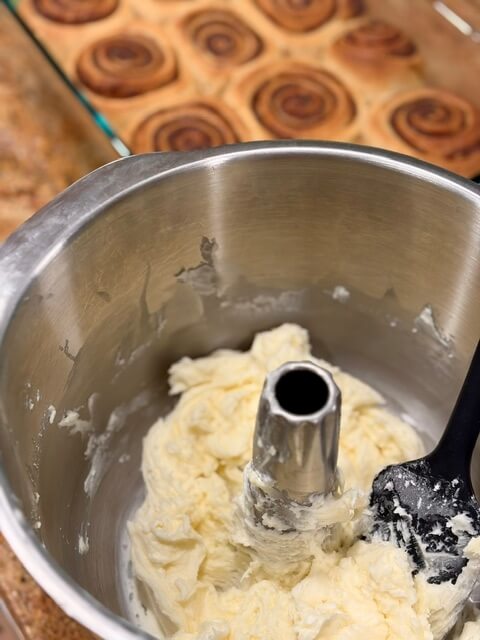
A bowl of frosting in front of a pan of fresh milled cinnamon rolls

Frosting Strategy

Now that your fresh milled cinnamon rolls are baked, golden, and basically begging for attention, it’s time to make one of the most important decisions of the entire recipe: how you’re going to frost them. This part is a little like choosing your own ending in a very buttery story.

So instead of rules, think of this as options … each one slightly different, all of them delicious.

Option 1: Hot Rolls + All Frosting = Glaze Mode

First up, you can frost the rolls while they’re still hot and use all of the frosting at once.

If you go this route, just know what you’re signing up for: your frosting will melt into the rolls and turn into a glossy, sweet glaze that sinks right into all those swirls and cracks.

It’s warm, gooey, and slightly chaotic in the best possible way. Not really “frosted” in the fluffy sense … more like fully coated in cinnamon roll magic.

Option 2: Cooled Rolls + All Frosting = Classic Fluffy Frosting Situation

Next, you can wait until the rolls are completely cooled and then spread all the frosting at once.

This gives you that thick, soft, bakery-style frosting layer that sits right on top and holds its shape. It’s sweet, fluffy, and very much in the “birthday cake frosting but make it cinnamon rolls” category.

In other words, this is the clean, structured, slightly more traditional approach.

Option 3: The Best of Both Worlds (a.k.a. My Personal Favorite)

Now, if you want to know what I usually choose … combine both approaches.

Start by spreading half the frosting over the hot rolls straight out of the oven. It will melt and soak in, creating a light glaze that locks in moisture and makes everything extra gooey.

Then, once the rolls have cooled down a bit, go back in with the remaining frosting and spread it on top. This second layer stays fluffy and thick, giving you that classic frosting finish.

So what you end up with is the perfect balance: a little glaze, a little frosting, and a lot of “why did I not make a double batch of these fresh milled cinnamon rolls” energy.

Time to Dig In! (The Best Part, Obviously)

Alright. This is it. The moment everything has been leading up to: the baking, the waiting, the smelling-it-from-another-room level of anticipation. Now, finally, it’s time to eat.

So go ahead and grab a roll. No ceremony needed, but also… a little ceremony is kind of encouraged.

If you want to, gently unwind it as you eat. There’s something oddly satisfying about watching all those soft, buttery layers stretch out as you go. It’s basically edible theater.

Then, of course, take that first bite.

And just like that, everything makes sense.

At this point, it’s also completely acceptable to casually offer them to anyone nearby … although if you happen to whisper it so no one actually hears, I understand that too.

FAQ

What’s the best wheat or store flour for fresh milled cinnamon rolls?

Freshly milled hard white wheat berries or store-bought bread flour give the best structure and chew. Soft white wheat berries or all-purpose flour will also work, but the rolls may turn out a bit softer and less structured. Hard red wheat berries are another option, though it has a stronger, nuttier flavor that brings another flavor profile to your cinnamon rolls.

Can I substitute fresh milled flour 1:1 for store-bought flour?

Not exactly. Fresh milled flour behaves differently. It’s not a straight one-to-one swap. If you want to learn how to convert recipes, here is an article (with a free cheat sheet) that will help you. 

Can I use instant yeast instead of active dry yeast in my fresh milled cinnamon rolls?

Yes! You can use instant or active dry yeast interchangeably in this fresh milled cinnamon rolls recipe. Either yeast can be mixed right in without proofing, but many bakers still like to proof it anyway, just to make sure everything is alive and ready to go.

Why is my dough for my fresh milled cinnamon rolls so sticky? Is that normal?

Yes, this is completely normal. Freshly milled flour starts off stickier than traditional flour because of how it absorbs liquid. The dough will become smoother and easier to handle after kneading and resting. The key is resisting the urge to add too much extra flour too early.

Do I need to let the dough for my fresh milled cinnamon rolls rest?

Yes, and this step is a game-changer. Letting the dough rest for about 20–30 minutes after mixing/kneading allows the bran to soften and the flour to fully hydrate. This makes a noticeable difference in softness and helps prevent dense cinnamon rolls.

How do I know when the dough for my fresh milled cinnamon rolls is kneaded enough?

Your dough should feel smooth, elastic, and slightly tacky. When you press it lightly, it should spring back a bit. If it feels rough, tears easily, or won’t hold together, it likely needs more kneading time.

Why are my fresh milled cinnamon rolls dense?

Density usually comes from one of a few things: not enough hydration, under-kneading, or skipping the rest period. Fresh milled flour needs time to absorb liquid and develop structure. Keeping the dough soft and slightly sticky (not dry) helps avoid heavy rolls.

Why didn’t my fresh milled cinnamon rolls rise?

The most common issue is yeast-related. It may have expired, the milk may have been too hot (which kills yeast), or too cold (which slows activation). A chilly kitchen can also slow things down. Always make sure your yeast gets foamy during activation and give your dough a warm, draft-free place to rise.

Do fresh milled cinnamon rolls rise the same as regular ones?

They usually rise a bit slower because the bran in freshly milled flour affects gluten development and hydration. The key is patience … focus on the dough doubling in size rather than watching the clock too closely.

How do I keep the filling from leaking out of my fresh milled cinnamon rolls?

The trick is leave a small clean border along one edge of the dough, and roll it tightly when shaping. Also, my trick of mixing the butter with the filling ingredients tends to keep everything locked inside those beautiful swirls.

How do I know when fresh milled cinnamon rolls are done baking?

They should be golden brown on top and fully set in the center. If you want to be precise, the internal temperature of the dough (not the gooey filling) should reach about 180–185°F. This ensures the rolls are fully baked without being dry.

Can I make fresh milled cinnamon rolls ahead of time?

Yes, absolutely. You can assemble them the night before, skip the final rise, and refrigerate the pan. In the morning, place them into a cold oven, turn it on to 350°F, and let them finish rising as it heats. Then bake as usual. For more steps, you can refer to the above.

Can I freeze fresh milled cinnamon rolls?

Definitely. You can freeze them before baking (after shaping and partial rise) or after baking. If freezing unbaked, thaw overnight on the counter (12-14 hours or shorter if your house is warm) before baking. If freezing baked rolls, you can frost them after reheating or freeze them already frosted for convenience. For more steps, see above.

How should I store fresh milled cinnamon rolls with cream cheese frosting? 

Ah, yes… the very optimistic idea that you’ll have leftovers. Because of the cream cheese frosting, these cinnamon rolls need to be stored in the fridge. Just pop them into an airtight container (or cover the pan tightly), and they’ll stay happy there for about 3–4 days. Now, when you’re ready to bring one back to life, just warm it up in the microwave for about 30 seconds. 

Roll Credits

So here we are … the end of the cinnamon roll journey. And honestly, this is the part where I just say it plainly: you should make these.

They’re soft, gooey, and absolutely the kind of bake that disappears faster than you expect. They also make surprisingly good gifts. Neighbors, friends, teachers, anyone within smelling distance … let’s just say people remember who shows up with fresh milled cinnamon rolls.

And beyond the compliments (which will absolutely happen), there’s something really satisfying about making them yourself. Homemade cinnamon rolls have a completely different personality than store-bought ones. The dough is softer, richer, and more pillowy. The texture stays airy and tender instead of dense or gummy … and the aroma alone is basically a reward before you even take a bite.

Even better, you get full control over what goes into them. Real butter, good cinnamon, simple ingredients … no preservatives, no mystery additives, just real food that tastes like it was meant to exist. And because you’re in charge, you can customize everything from the filling to the frosting, whether you go classic cream cheese, vanilla buttercream, or something entirely your own.

And of course, cinnamon rolls with freshly milled flour take that experience even further. They add a depth of flavor and freshness that makes the whole kitchen feel like something special is happening … because it is.

Final Tidbits: Fresh Milled Cinnamon Rolls

Now, before you go (and before you accidentally eat the last one straight from the pan without sharing), make sure to check out my other recipes and guides. They’re all about keeping baking fun, doable, and just a little bit addictive in the best way.

And if you make these fresh milled cinnamon rolls (or the store flour version), I genuinely want to hear about it. Leave a comment, tag me on Instagram (@hopethiswerksdiy), or find me over on Facebook. I’ll be cheering you on … probably with frosting on my fingers and zero regrets.

If you want more recipes like this that actually work in real kitchens, you can subscribe here, and I’ll send you a printable recipe card for the best pancakes on earth as a thank-you gift.

And don’t forget … if you want my absolute favorite frosting for these rolls, you can grab it here too.

Until next time… may your rolls be fluffy, your filling be gooey, and your frosting always be just enough (but never too little).

Yield: One Dozen Cinnamon Rolls

Cinnamon Rolls with Fresh Milled Flour

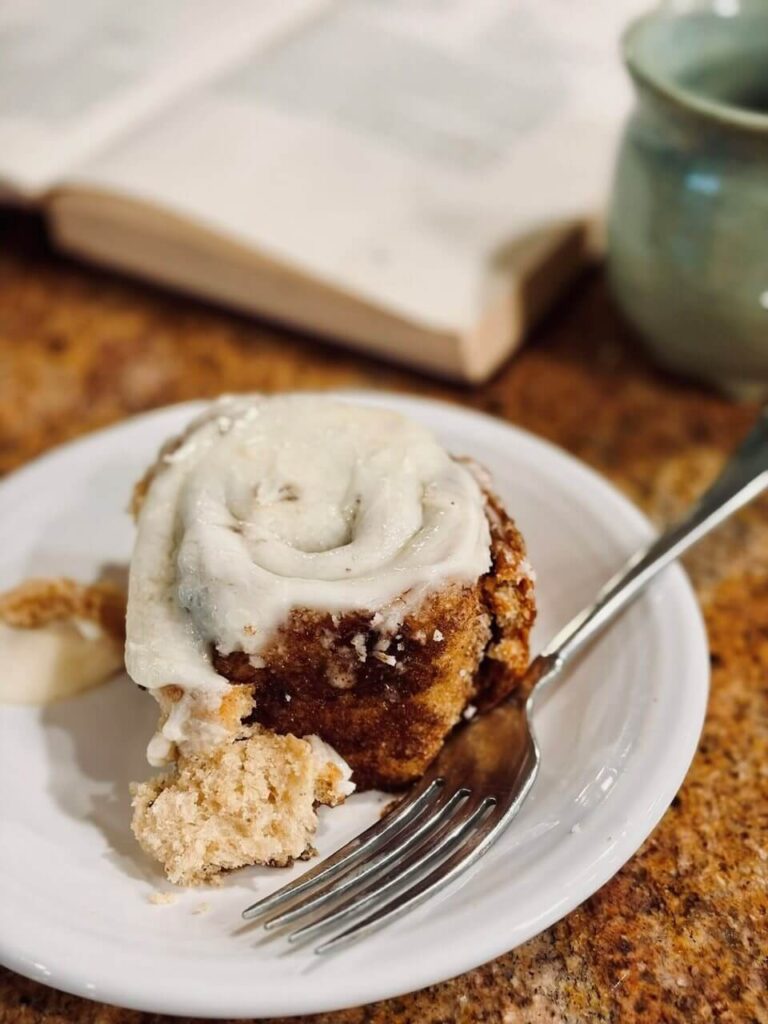
Fresh Milled Cinnamon Roll on a white plate next to a book and cup of coffee

Soft, fluffy cinnamon rolls made with freshly milled flour ... filled with a rich, gooey cinnamon swirl. This easy, reliable yeast dough uses simple pantry ingredients and includes freezer and overnight options for stress-free baking.

Ingredients

Dough

Filling

Frosting

Instructions

  1. Yeast: Mix sugar into warm milk. Stir in yeast and let it sit 5–10 minutes until it looks foamy and feels important.
    1 cup milk, ½ sugar, 2½ tsp yeast
  2. More Yummies: Mix in melted butter, eggs, and salt until combined. 
    ⅓ cup butter, 2 eggs, 1 tsp salt
  3. Flour Power: Slowly add the freshly milled flour. Stop when the dough is still very soft and a little sticky (not a rock, not pancake batter). You may not need all of it ... go by how it looks, not just the measurement. Knead 8 minutes → rest 30 minutes (it’s hydrating, not being lazy) → knead another 8 minutes. Add a little more flour at this point if needed ... goal is “tacky but not clingy” to your finger. 
    3 cups (620 g) hard white wheat berries, finely ground
  4. First Rise: Cover and let rise in a warm spot until doubled (1–2 hours, depending on kitchen vibes).
  5. Make the Filling: Put melted butter in a medium bowl. Mix in brown sugar, cinnamon, salt, and flour until it becomes a thick, spreadable paste. Set aside. Try not to eat it.
    ½ cup butter, 1¼ cups brown sugar, 3 tbsp cinnamon, pinch salt, 2½ tbsp flour
  6. Roll It Out: Lightly spritz the counter with oil. Punch dough down (emotionally satisfying step). Place dough on the counter and roll it into a 15” x 24” rectangle.
  7. Fill: Spread filling evenly, leaving a ½” clean edge on one long side so it can seal it. Roll tightly (think: cinnamon roll burrito). Cut into 12 pieces (with sharp knife or dental floss), about 2 inches each.
  8. Second Rise: Place rolls in greased 9x13 pan. (See note below if you want to cook tomorrow.) Cover. Let rise 1-2 hours until puffy, lightly touching and looking doubled again. Remember that they will rise more in the oven. (See note below if you want to freeze them.) Note: Skip the oven’s bread proof setting ... it’s too hot and will melt the butter (and nobody wants that).
  9. Bake: Bake at 350° for about 30ish minutes until golden brown. If you like being precise, the center of the bread should hit 180–185°. You can immediately flip the rolls out to let the buttery goodness soak down into them … or just leave them right where they are. No wrong choices here.
  10. Frosting: Beat cream cheese and butter for 2 minutes. Scrape the bowl, then beat 2 more minutes until light and dreamy. Add powdered sugar, vanilla, cinnamon, and salt. Mix it up. Scrape bowl. Splash in milk if needed to loosen things. Beat 2 more minutes at medium-high speed until fluffy. Or click here for my fav buttercream frosting recipe.
    4 oz cream cheese, ½ cup butter, 3 cups powdered sugar, 1 tsp vanilla, 1 tsp cinnamon, Pinch of salt, Milk
  11. Frosting Strategy: Glaze with part of the frosting when they are hot so it melts in, then use the rest of the frosting once cooled so it actually stays on the rolls instead of becoming a puddle of regret.
  12. Eat (Yay!): Grab one while it’s warm, pull it apart dramatically, admire your swirls, and take a bite. Try to share… or don’t. I won’t tell.

Notes

  • Buttercream Frosting instead of Cream Cheese? Oh, I've got you. Click here for the FREE recipe ... because in my house, buttercream wins. It’s light, dreamy, and disappears suspiciously fast … almost like someone keeps “taste testing” it.
  • Reheat? Put them in the microwave for 30 seconds. I stand there and watch, and as soon as the frosting starts to move ... I pull it out and eat!
  • Make Ahead? Absolutely. Make the rolls the day before and place them in your 9x13 pan ... skip the second rise. Next morning, pop them into a cold oven, turn it to 350°, and let them warm up with the oven (they’ll finish rising like overachievers). Once the oven hits 350°, bake for 30 minutes until golden and glorious.
  • Freeze Unbaked? Yes. Let rolls do their second rise in the pan until about 75% puffy, then freeze. When ready to bake, move them to the counter 12-14 hours before (shorter if your house is warm). In the morning → turn oven to 350° → bake 30 minutes once preheated.
  • Freeze Cooked? Sure thing. Freeze them baked and unfrosted ... then thaw, warm briefly in the oven for a few minutes, and frost while cozy. OR freeze them fully frosted and ready to grab when the craving hits.
  • Storage? If (somehow) you have leftovers, store them in an airtight container in the fridge for 3–4 days—cream cheese frosting needs to stay chilled. When you’re ready to enjoy one, just pop it in the microwave for 30 seconds until it’s soft, warm, and gooey again.

Yield: One Dozen Cinnamon Rolls

Cinnamon Rolls with Store-Bought Flour

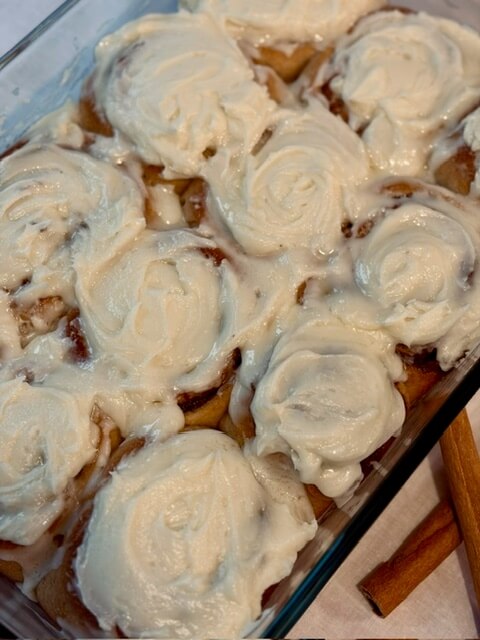
9x13 pan of fresh milled flour cinnamon rolls that are frosted

Soft, fluffy cinnamon rolls with a rich, gooey filling and a dough you can count on every time. Made with simple pantry ingredients and easy-to-follow steps, plus make-ahead and overnight options for stress-free baking.

Ingredients

Dough

Filling

  • 1¼ cups (250 g) packed brown sugar
  • 3 (20g) tablespoons ground cinnamon
  • Pinch of salt
  • 2½ tablespoons flour
  • ½ cup butter, melted

Frosting

Instructions

  1. Yeast: Mix sugar into warm milk. Stir in yeast and let it sit 5–10 minutes until it looks foamy and feels important.
    1 cup milk, ½ sugar, 2½ tsp yeast
  2. More Yummies: Mix in melted butter, eggs, and salt until combined. 
    ⅓ cup butter, 2 eggs, 1 tsp salt
  3. Flour Power: Slowly add the flour. Stop when the dough is still very soft and a little sticky (not a rock, not pancake batter). You may not need all of it ... go by how it looks, not just the measurement. Knead for 8 minutes. Add a little more flour at this point if needed ... goal is “tacky but not clingy” to your finger. 
    4½ cups bread flour
  4. First Rise: Cover and let rise in a warm spot until doubled (1–2 hours, depending on kitchen vibes).
  5. Make the Filling: Put melted butter in a medium bowl. Mix in brown sugar, cinnamon, salt, and flour until it becomes a thick, spreadable paste. Set aside. Try not to eat it.
    ½ cup butter, 1¼ cups brown sugar, 3 tbsp cinnamon, pinch salt, 2½ tbsp flour
  6. Roll It Out: Lightly spritz the counter with oil. Punch dough down (emotionally satisfying step). Place dough on the counter and roll it into a 15” x 24” rectangle.
  7. Fill: Spread filling evenly, leaving a ½” clean edge on one long side so it can seal it. Roll tightly (think: cinnamon roll burrito). Cut into 12 pieces (with sharp knife or dental floss), about 2 inches each.
  8. Second Rise: Place rolls in greased 9x13 pan. (See note below if you want to cook tomorrow.) Cover. Let rise 1-2 hours until puffy, lightly touching and looking doubled again. Remember that they will rise more in the oven. (See note below if you want to freeze them.) Note: Skip the oven’s bread proof setting ... it’s too hot and will melt the butter (and nobody wants that).
  9. Bake: Bake at 350° for about 30ish minutes until golden brown. If you like being precise, the center of the bread should hit 180–185°. You can immediately flip the rolls out to let the buttery goodness soak down into them … or just leave them right where they are. No wrong choices here.
  10. Frosting: Beat cream cheese and butter for 2 minutes. Scrape the bowl, then beat 2 more minutes until light and dreamy. Add powdered sugar, vanilla, cinnamon, and salt. Mix it up. Scrape bowl. Splash in milk if needed to loosen things. Beat 2 more minutes at medium-high speed until fluffy. Or click here for my fav buttercream frosting recipe.
    4 oz cream cheese, ½ cup butter, 3 cups powdered sugar, 1 tsp vanilla, 1 tsp cinnamon, Pinch of salt, Milk
  11. Frosting Strategy: Glaze with part of the frosting when they are hot so it melts in, then use the rest of the frosting once cooled so it actually stays on the rolls instead of becoming a puddle of regret.
  12. Eat (Yay!): Grab one while it’s warm, pull it apart dramatically, admire your swirls, and take a bite. Try to share… or don’t. I won’t tell.

Notes

  • Buttercream Frosting instead of Cream Cheese? Oh, I've got you. Click here for the FREE recipe ... because in my house, buttercream wins. It’s light, dreamy, and disappears suspiciously fast … almost like someone keeps “taste testing” it.
  • Reheat? Put them in the microwave for 30 seconds. I stand there and watch, and as soon as the frosting starts to move ... I pull it out and eat!
  • Make Ahead? Absolutely. Make the rolls the day before and place them in your 9x13 pan ... skip the second rise. Next morning, pop them into a cold oven, turn it to 350°, and let them warm up with the oven (they’ll finish rising like overachievers). Once the oven hits 350°, bake for 30 minutes until golden and glorious.
  • Freeze Unbaked? Yes. Let rolls do their second rise in the pan until about 75% puffy, then freeze. When ready to bake, move them to the counter 12-14 hours before (shorter if your house is warm). In the morning → turn oven to 350° → bake 30 minutes once preheated.
  • Freeze Cooked? Sure thing. Freeze them baked and unfrosted ... then thaw, warm briefly in the oven for a few minutes, and frost while cozy. OR freeze them fully frosted and ready to grab when the craving hits.
  • Storage? If (somehow) you have leftovers, store them in an airtight container in the fridge for 3–4 days—cream cheese frosting needs to stay chilled. When you’re ready to enjoy one, just pop it in the microwave for 30 seconds until it’s soft, warm, and gooey again.
Charts and Summaries: Fresh Milled Cinnamon Rolls

Quick Summary of Fresh Milled Cinnamon Rolls

  • Texture: Soft, fluffy, pillowy
  • Flavor: Rich, gooey cinnamon filling
  • Flour Options: Fresh milled OR store-bought
  • Skill Level: Beginner-friendly
  • Make Ahead: Yes (overnight + freezer options)
  • Frosting Options: Cream cheese OR buttercream
Ingredient Comparison Chart
Component Fresh Milled Version Store Flour Version
Flour Type Hard white wheat berries Bread flour (best)
Amount ~3 cups (620g) ~4½ cups
Hydration Slower absorption Faster absorption
Kneading 8-30-8 method ~8 minutes total
Texture Slightly richer, deeper flavor Classic soft rolls

Frosting Decision Tree for Fresh Milled Cinnamon Rolls

Choose Your Ending …

Option 1: Melted Glaze Style

  • Frost while hot
  • All frosting at once
  • Result: Gooey glaze

Option 2: Classic Frosted Rolls

  • Cool completely
  • Frost once
  • Result: Thick, fluffy layer

Option 3: Hybrid (Best of Both)

  • Half frosting hot
  • Half frosting cooled
  • Result: Gooey + fluffy combo

Fresh Milled Cinnamon Rolls: Simple Breakdown

  • Best Flour: Fresh milled hard white wheat or bread flour
  • Texture: Soft, fluffy, pillowy rolls with gooey filling
  • Key Method: 8-30-8 kneading for optimal structure
  • Hydration: Fresh milled flour absorbs liquid slowly
  • Bake Temp: 350°F until golden brown (180–185°F internal)
  • Make Ahead: Refrigerate overnight or freeze before baking
  • Frosting Options: Cream cheese (classic) or buttercream (lighter)

Summary: These cinnamon rolls are soft, gooey, and reliable, whether using freshly milled flour or store-bought flour. The dough stays tender by avoiding excess flour and using proper kneading and resting techniques.

Resources: King Arthur

If you enjoyed this article and want to help me buy more wheat berries (or maybe a broom for my kitchen), you can click this link … thanks a latte!

Share the Post:

2 responses to “Easy Fresh Milled Cinnamon Rolls with Yeast (store flour works too)”

  1. I can eat cinnamon rolls any time of the day and any time of the year. These look amazing! I’m going to make them this weekend. Thank you for the option to make ahead. I am going to do that.

    • The make-ahead trick (night before or freezer) is my absolute favorite for Christmas Day! It makes the morning feel way more magical and way less “why am I awake this early?” Hope you enjoy!

Leave a Reply

Your email address will not be published. Required fields are marked *

Skip to Recipe