
So, you just bought a grain mill and now you’re staring at it like it’s an alien spaceship. First of all … congratulations! You’ve officially taken a giant step toward eating the healthiest bread, pancakes, and baked goods of your life. Not only that, but your kitchen is about to smell like a bakery on steroids. But of course, now comes the real question: what fresh milled flour recipes should you make first?
I’ve been there. Most people rip open the box, plug in the mill, and immediately think, “Yes, sourdough boule here I come.” I get it … Instagram has ruined us all with those perfectly scored loaves. But trust me: don’t start there. Fresh milled flour has a few quirks you’ll want to get used to before you attempt the Mount Everest of bread baking.
Instead, let’s start simple. Finish unboxing your mill, run a few cups of rice through it (to clear out any factory dust), and then roll up your sleeves. We’re about to dive into the first five fresh milled flour recipes every beginner should master.

What Wheat Berries to Buy for Fresh Milled Flour Recipes
Before we talk recipes, you need ingredients. Specifically, wheat berries. Think of them as the raw material your mill transforms into fluffy gold.
If you can buy all three of these wheat berries, do it. If not, buy them in this order:
- Hard White: perfect for yeast or sourdough breads, pizza, and rolls.
- Soft White: best for non-yeast bakes like pancakes, muffins, and biscuits.
- Hard Red: also for yeast or sourdough, but nuttier and richer. It’s like the fancy cousin who brings wine to dinner.
Sticking to just one wheat berry (like Hard White)? Totally doable. It’ll work for everything. Just know that your cakes and cookies might come out a little more ‘hearty farmhouse treat’ and a little less ‘delicate French patisserie.’
Want to see the wheat berries I hand-picked just for you? Check out my shopping page. (contains affiliate links)
For more detail about wheat berries, I’ve got a full guide (including the mysterious “ancient grains” you keep hearing about). But for now, these three will take you far.
Where to Buy Wheat Berries for Fresh Milled Flour Recipes
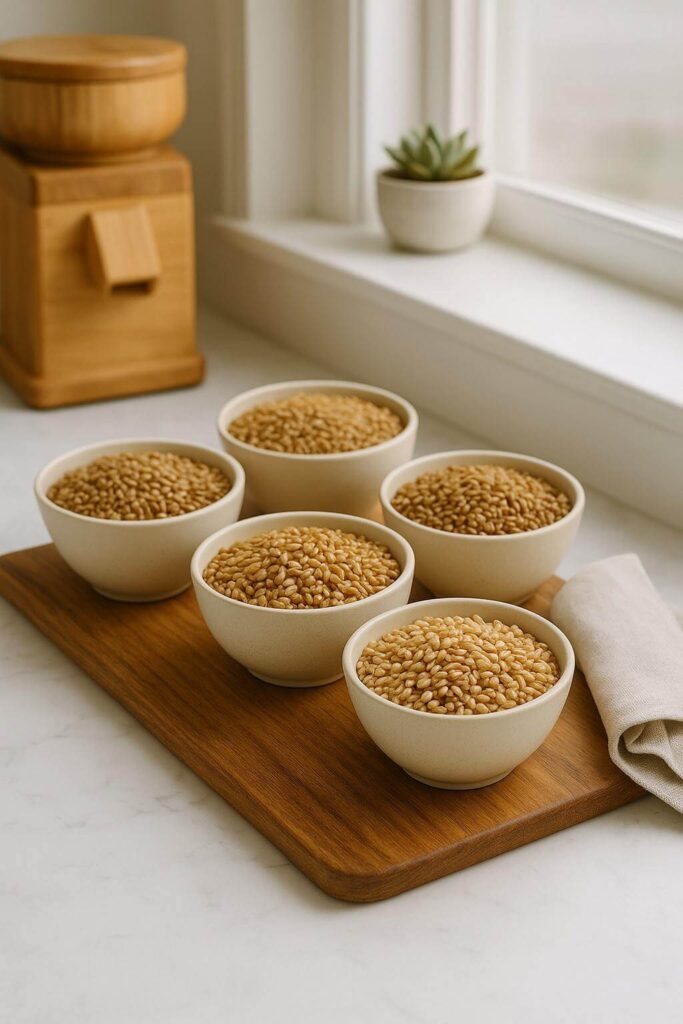
So, you have your mill, you know you need wheat berries. Where do you find them … especially if the grocery store only sells mystery “whole wheat” flour in dusty bags?
Start Local First
Ideally, buy local. A nearby farm is absolute gold because you get the good feels of supporting small farmers and you don’t have to pay shipping fees. For example, if you’re in the Pittsburgh area, check out Frankferd Farms … they grow and source excellent wheat berries. Maybe you’re lucky enough to have a farm store near you. If so, that’s your jackpot.
Try Specialty Stores
If you don’t have a local farm connection, your next best bet is to check places like:
- Amish general stores: they have been known to stock bulk bags of grains. Plus, who doesn’t want to walk out with a shoofly pie while you’re at it?
- Health food stores: sometimes pricier, but can be a reliable source for hard white or soft white wheat berries.
Order Online for Convenience
And of course, we live in the golden age of ordering online. A few solid options:
- Pleasant Hill Grains: they carry a wide variety of grains, have excellent quality, and with my affiliate link, you can get free shipping on orders over $75.
- Amazon: two-day shipping is a gift to us carb lovers. Bags show up on your porch, ready for your next round of fresh milled flour recipes. On my shopping page, I have hand picked a variety of wheat berries for you to check out. (#ad)
- Azure Standard: their prices are fantastic, and lots of people rave about them. Just know the pickup system is a little quirky, and not every product is always in stock. Think of it like joining a secret club where your “initiation” might involve waiting in a parking lot for a big blue semi-truck that you help unload. Some folks swear by it for the savings and quality, while others find it a bit … well, it’s not everyone’s cup of tea.
Wherever you buy, the key is quality. Fresh, clean (hopefully organic) wheat berries are the foundation of every single recipe you’ll make. And once you get a good supplier, you’ll feel like you’ve unlocked the secret stash that makes your bread, muffins, and pancakes taste better than anything from a store.
Quick Tips for Buying & Storing Wheat Berries
- Buy in bulk (25–50 lbs) if you bake often … cheaper per pound.
- Store in airtight buckets (gamma lids are a great option) for long-term storage.
- For short-term: keep in glass jars or food-grade bins.
- Mill only what you need → flour loses nutrition quickly.
Why Fresh Milled Flour Recipes Feel Different
Okay, quick reality check: fresh milled flour is not store-bought flour’s identical twin. It’s more like the high-maintenance but brilliant sibling … you have to give it a little extra attention, but in return you get unmatched flavor, nutrition, and texture. And if you’re going to be baking fresh milled flour recipes, it’s important to understand why the experience feels different right from the start.
Hydration Takes Longer
Fresh milled flour takes longer to hydrate than store-bought flour. As a result, your batters and doughs need more time to hydrate. So when a recipe says “let the dough rest for 10 minutes,” you’ll want to give it 30 instead. This simple pause makes a huge difference in how tender your pancakes, muffins, and breads turn out.
You’ll Use More Flour
When you convert recipes (like your great-great-grandma’s famous cookies) from store-bought flour to fresh milled flour, expect to add a little extra. Why? Because fresh milled flour contains the bran, germ, and endosperm, while most commercial flour only keeps the endosperm. Bran and germ don’t behave the same way in dough, so you’ll need a touch more flour to get the consistency right. The upside? That bran and germ are full of fiber, vitamins, and minerals … so you’re not just filling your stomach, you’re fueling your body.
Also, freshly milled flour comes out of the grinder light, airy, and fluffy. Store-bought flour, on the other hand, has been on a long road trip: warehouse, semi-truck, store shelf, your pantry… by the time it gets to your bowl, it’s compacted. Here’s an article that will walk you through converting any recipe to fresh milled flour … so you can turn your old favorites into masterpieces.
Gluten Development Takes Longer
Another thing you’ll notice in fresh milled flour recipes: your dough needs more kneading. Gluten doesn’t develop as quickly, so give your dough extra encouragement. Think of it as a mini arm workout … you’ll thank yourself when your bread has the structure it needs.
Bread in Denser (but in a good way)
Will your bread rise as high as a balloon? Probably not. Fresh milled flour breads are a little denser, but in a hearty, satisfying way. Don’t think of it as a flaw … it’s just part of the charm. You’ll still get a soft crumb and chewy texture, but with more substance.
Measuring Flour by Weight is Dandy
Here’s where things get tricky: one cup of fresh milled flour does not weigh the same as one cup of store-bought flour. Fresh flour is fluffier because it hasn’t been sitting in a warehouse, in a bag, then compacted on a grocery shelf. To keep your baked goods consistent, ditch the measuring cups and switch to using a kitchen scale (grams). A good rule of thumb is 120 grams per cup, which matches King Arthur’s weights for all-purpose and bread flours. Curious about the nitty-gritty? Check out this article.
Start with a Blend if You’re Nervous
Not quite ready to dive in 100%? No problem. You can start with a 50/50 blend of fresh milled and store-bought flour in your recipes. This gives you a gentler introduction to the differences while still letting you enjoy some of the nutritional perks. From there, you can slowly increase the percentage of fresh milled flour until you’re baking with it exclusively.
Freshness Matters
Unlike store-bought flour, which can sit around for months, fresh milled flour is best used within 24 hours after grinding for maximum nutrition. That’s when the vitamins, minerals, and oils are at their peak. If you don’t use it right away, that’s okay … just know the nutrient levels decrease the longer it sits.
Store Extras
Finally, let’s talk about storage. If you mill more flour than you need, don’t panic … just freeze the extra in an airtight container. That way, you preserve freshness without waste, and you’ll have flour ready to go the next time you want to whip up fresh milled flour recipes.
Now that you understand the quirks …and the perks … of fresh milled flour, you’re ready to start baking. Once you get the hang of these adjustments, you’ll never want to go back to store-bought flour again.
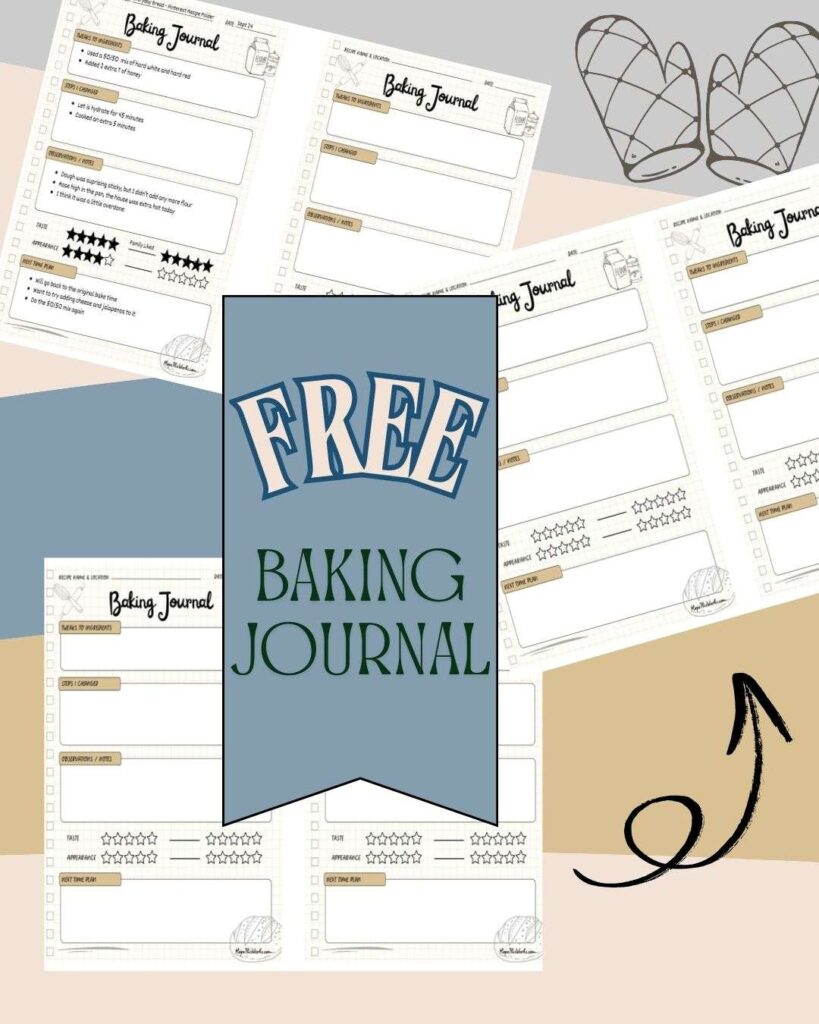
Starting your fresh milled flour adventure? I made you a FREE baking log! It’s the perfect place to jot down what worked, what flopped, and all those ‘next time I’ll…’ notes. Trust me, you think you’ll remember … but you might not. Grab the baking log here for free.
Order of Fresh Milled Flour Recipes
Trust me on this … here’s the beginner-friendly lineup:
- Pancakes
- Muffins
- Tortillas
- Everyday Bread with Yeast … and if you’re a sourdough fan, add on step 4b … Everyday Bread with Sourdough
- Artisan / Boule Bread (yeast or sourdough)
This order isn’t random … it’s designed so you build skills without crying into a failed sourdough blob.
Pancakes … the 1st of our Fresh Milled Flour Recipes

Start here. Why? Because pancakes are forgiving, fun, and delicious. Plus, nobody in your family will know you snuck nutrition into their syrup delivery system.
Reasons to love pancakes as your first recipe:
- Everyone likes them (yes, even your picky kid).
- They work for breakfast, dinner, or “oops, forgot to grocery shop” nights.
- Fresh milled flour makes them more filling. You’ll actually hear, “Wow, I’m full,” after three instead of seven pancakes.
- You will have immediate fresh milled flour success!
Two steps make them different from regular pancakes made with store-bought flour:
- Mill the wheat berries.
- Let the batter rest for 30 minutes.
That’s it. Try my recipe here. Honestly, they’re better than any diner stack … and if you’re into sourdough, there’s even a discard version. If you aren’t into sourdough, just leave it out. Full disclosure: the original recipe didn’t contain sourdough … I just added it to use up some discard. They are phenomenal either way!
Muffins: the 2nd of our Fresh Milled Flour Recipes

Next stop: muffins. Why? Because they’re ridiculously easy, freezer-friendly, and make you look generous when you gift a dozen to a friend.
Fresh milled tweaks? Same as pancakes:
- Mill wheat berries.
- Let the batter rest for 30 minutes.
My blueberry muffin recipe makes 24 muffins (because 12 disappear in a blink). Use fresh or frozen berries … both work. These muffins are moist, fluffy, and pretty much guaranteed to impress.
You’re going to crush this recipe. It’s easy, it’s delicious, and honestly … it’s a total win. I’m starting you off with recipes that are basically foolproof, because nothing builds confidence faster than a recipe that actually werks. Additionally, this recipe utilizes soft white wheat berries, providing a great opportunity to compare them with hard wheat berries (used in yeast/sourdough baked goods) and observe the differences.
Now, I know what you’re thinking: “But I want to bake the fancy, Instagram-worthy bread right away!” And hey … you might nail it on the first try (and if you do, I’ll cheer you on). But if you’re anything like me… my first “showstopper loaf” was more of a “doorstopper loaf.” My family was not impressed. That’s why I wish I’d started with something simple, something guaranteed to turn out great. Once your crew is hooked on how amazing fresh milled flour tastes, then even if you flop later … they’ll still be begging you to keep baking.
Tortillas: the 3rd of our Fresh Milled Flour Recipes

This recipe is inching closer to bread. Homemade tortillas are a game-changer. Once you try them, you’ll wonder how you ever survived on store-bought “cardboard circles.”
Why do I want you to make tortillas?
- They use hard wheat berries (welcome to the bread-adjacent world).
- They’re versatile … wraps, quesadillas, burritos, naan, pitas… all from this one recipe.
- Leftovers? Toast them into pita chips (secretly tortilla chips).
Extra steps (since you are using fresh milled flour … not store-bought):
- Mill wheat berries.
- Knead 8 minutes.
- Rest 30 minutes.
- Knead 8 more minutes.
That’s it. No tortilla press required. Just 6 ingredients … and you’ll have soft, bendy tortillas ready for action.
Burritos? Wraps? Quesadillas? Pinwheels? Pizza? Pita chips? Naan? Breakfast burritos? Yup … these tortillas are up for all of it. And the best part? You will have success making tortillas.
Everyday Bread: the 4th of our Fresh Milled Flour Recipes

We’ve finally arrived at the co-main event … the real reason you bought your grain mill. You want homemade, healthy, ridiculously delicious bread. Well … it’s time!
Why am I having you make bread now? Because everyone wants bread. Bread is happiness. It is also comfort. Bread is that magical smell that makes your whole house feel like a bakery. And honestly, you’re going to be shocked at how good this bread is.
If you’ve ever tried whole wheat bread from store-bought flour, you probably remember that dense, dry, “is-this-cardboard?” taste. Now, imagine biting into your first slice of bread made from fresh milled flour. It’s like a totally different food group. You won’t even believe it’s still “whole wheat.”
And here’s the beauty of it:
- You can use this bread for every single meal.
- Make multiple loaves and stash them in the freezer.
- You’re officially stepping into the “hard wheat” world.
- If you’ve struggled with gluten intolerance, there’s even a chance you can finally enjoy bread again!
A few fresh milled tweaks… yes, baking with fresh milled flour comes with a few extra steps:
- Grind your hard wheat berries.
- Knead for 8 minutes.
- Let the dough hydrate for 30 minutes.
- Knead again for another 8 minutes.
That’s it … nothing scary, just a little extra TLC.
Two recipe options … this time, I’m giving you two different Everyday Bread recipes to choose from:
I highly recommend starting with yeast. Why? Because sourdough is a whole different beast … it’s moody, quirky, and comes with its own personality. I bake with sourdough all the time, but the other day I made a yeast loaf and thought, “Wow… I forgot how EASY this is!” I started and finished it in just a couple of hours.
Learning fresh milled flour already comes with a few new nuances, so I want you to stack the deck in your favor and start with yeast. Think of it as practice … delicious practice.
Quick Refresher: Fresh-Milled Nuances:
- You have to mill the grain.
- The dough needs more time to hydrate.
- You knead a little longer (fresh flour needs encouragement to develop gluten).
- Bulk fermentation should be shorter (to keep it from overproofing).
And if you’re a sourdough fan … once you’ve nailed the yeast loaf, go for sourdough! It brings its own personality to the party. But starting with yeast lets you clearly see which quirks come from fresh milled flour and which quirks come from sourdough itself.
Artisan / Boule Bread: the 5th of our Fresh Milled Flour Recipes

Finally … the Instagram bread. This is your showstopper loaf, complete with fancy scoring and bragging rights. Why do I want you to bake an artisan boule loaf? Because this is where beauty, skill, and confidence collide.
- They’re gorgeous. Even when you keep them plain and simple, they look like a masterpiece.
- They feel fancy. Pulling one of these out of the oven makes you feel like a true gourmet baker.
- They’re impressive. This is the loaf you post on Instagram (and secretly watch the likes roll in).
But here’s the real reason: this boule builds on everything you’ve learned in the last four recipes. If you can perfect this loaf, you’ll feel like you’ve conquered the nuances of fresh milled flour. This is your bread confidence moment.
You’ll be doing the same process you mastered with Everyday Bread:
- Grind hard wheat berries.
- Knead for 8 minutes.
- Let the dough hydrate for 30 minutes.
- Knead for another 8 minutes.
Once again, I’ve linked two versions:
Since you’ve already made Everyday Bread with yeast, this is your chance to branch out. Make it with yeast or sourdough … it’s your choice. Either way, you’ll end up with a gorgeous, impressive loaf that says, “Yes, I mill my own flour, no big deal.”
If you don’t nail it the first time … totally normal. No one walks into the kitchen and turns out a bakery-perfect boule on their first try. That’s why I keep a bread log. Every bake, I jot down what I did, what worked, and what I’d tweak next time. Small notes lead to big improvements. Click here to grab your FREE log.
Conclusion: Welcome to the Fresh Milled Flour Club
I’ve given you these recipes in this order for a reason … because I want you to start with easy wins (and avoid early bread heartbreak). Baking with fresh milled flour has a learning curve, but when you begin with approachable recipes and work your way toward the more advanced loaves, you’ll build confidence and momentum. Once you master these five recipes, you’ll have the foundation to bake anything with fresh milled flour.
If you have questions or tips for the rest of us, please drop a comment below. We’d all love to learn from your experience. And if you have baking victories, show me the pictures on Instagram … I’ll be cheering you on and feeling so proud of you!
Don’t forget to grab my free bread-making log. It’s the perfect tool to track your recipes, experiments, and tweaks so you can grow as a baker. Click here to get it for free. You’ll thank me later when you realize you remember approximately zero details from yesterday’s bake.
Want to know what fresh milled flour recipes I’m working on next? Be sure to join my newsletter so you don’t miss a thing. Click here to sign up.
From my kitchen to yours … welcome to the club … enjoy your new journey!

Fresh Milled Flour Recipes: Why They Behave Differently
| Feature | Fresh Milled Flour | Store-Bought Flour |
|---|---|---|
| Hydration | Takes longer to absorb liquid — dough needs extra rest time | Hydrates quickly |
| Flour Amount | Needs a little more flour (bran + germ add bulk) | Less flour needed |
| Gluten Development | Slower; requires more kneading | Develops more easily |
| Bread Texture | Slightly denser, hearty crumb | Lighter, airier crumb |
| Measuring | Fluffier → weigh flour | More compact |
| Nutrition | Includes bran + germ → more vitamins, minerals, fiber | Endosperm - least healthy part |
| Freshness | Best within 24 hours of milling | Shelf-stable: no vitamins or oils |
| Storage | Freeze extras in an airtight container | Store in pantry |
| Ease of Use | Slight learning curve ... but worth it | Easy and traditional |
Where to Buy Wheat Berries
1. Local Farms (Best Choice)
Fresher and often organically grown.
Supports your local farming community.
Example: If you’re near Pittsburgh, PA, check out Frankferd Farms—they grow and source excellent wheat berries.
2. Amish General Stores
Typically carry bulk bags of wheat berries.
Often more affordable than health food stores.
Great option if you live near Amish or Mennonite communities.
3. Health Food Stores
May stock smaller quantities of organic wheat berries.
Perfect for beginners who want to test a small batch.
4. Online Retailers
Amazon → Fast shipping (sometimes you just need 2-day carbs). On my shopping page I have hand-picked a variety for you. (#ad)
Azure Standard → Affordable in bulk, though their drop-site pickup system can be quirky.
Pleasant Hill Grain → Wide variety of grains, excellent quality, with my affiliate link you can get free shipping on orders over $75.
Need more inspo? Check out these beginner-friendly recipes from some of my favorite blogs (because sharing is caring :).
portions of this content may have been generated or refined using AI





4 responses to “Fresh Milled Flour Recipes for Beginners: First 5 to Master”
This is so smart! It is very overwhelming at first and it is so hard to know what to do when doing something new. You are the one that has helped me learn all I know about fresh milled flour! Hopefully everyone comes to this blog when they want to learn!
Aww, you just made my day! I’m so glad my ramblings have been helpful!
I am going to give this a try. I just got my mill and feel overwhelmed about where to start. Thanks for the help! Now to go make pancakes for the fam.
Pancakes are the perfect place to start … they forgive all our early milling mistakes (and also because butter and syrup cover everything). You got this!