Welcome to

Hope this Werks

Fresh milled. Real Food. Pure energy.

Freshly Milled Challah (or store-bought flour … sourdough or yeast)

Updated: December 29, 2025

My husband’s absolute favorite bread on this green earth is freshly milled CHALLAH. Honestly, he doesn’t just like it … he swoons. Every single time. And frankly, I get it.  That buttery flavor, fluffy texture, that warm-hug feeling … it’s elite bread!

Two Loave of Freshly Milled Challah bread on a cooling rack on a wooden countertop

Because freshly milled challah (or challah made with store flour) feels fancy, many people save it for holidays or special occasions. However, I fully believe that bread joy should not be rationed. Therefore, we eat this whenever we want. Tuesday? Challah. Random Thursday? Challah again.

Since this loaf is so deeply loved, I included four different recipe cards at the bottom of this post. Because obviously, I want you to make this. Like… badly.

Here’s your choose-your-own-adventure lineup:

  • Freshly milled challah with sourdough
  • Freshly milled challah with yeast
  • Challah made with store-bought flour & sourdough
  • Challah made with store-bought flour & yeast
  • One more option:  Want to make your kitchen smell even better?  Click here to grab your FREE Cranberry Orange Challah recipe card … plus coordinating gift tags for gifting glory.

Because of that, this post reads a bit like a bread adventure novel. Consequently, you get options. Meanwhile, I cheer you on.

Why Make Freshly Milled Challah? (or challah made with store-bought flour)

Fortunately, this bread is actually simple to master. In fact, it’s not much harder than a standard loaf, yet it feels wildly impressive. Therefore, you get maximum bragging rights with minimal extra effort. 

Additionally, challah is highly versatile. For example:

  • Plain … because it’s already perfect
  • Toasted … because we love it when butter happens
  • The best french toast of your life
  • Bread pudding that makes people emotional
  • Gourmet grilled cheese
  • Fancy burger buns
  • Buttery croutons
  • Savory strata … think eggs, sausage, and cheese
  • Thanksgiving-style stuffing (my personal favorite … and a major crowd-pleaser)

Because of all that, this recipe makes two loaves. Ultimately, one loaf is for immediate joy. Meanwhile, the other loaf becomes croutons, stuffing, or what makes your heart happiest.

Sourdough - Freshly Milled Challah (or store-bought flour)

This section applies to sourdough (not the yeast option), freshly milled flour, and store-bought flour.

If you’re choosing the sourdough route for your freshly milled challah (or store-bought flour), you’ll start the night before. First, grab 3 tablespoons of sourdough starter and place it in a container. Next, add ½ cup room-temperature water and ¾ cup flour.

Then, stir briskly until combined. After that, cover it and let it sit for 8–12 hours, until bubbly and active. In other words, you want it alive and ready to party.

Meanwhile, you can sleep peacefully knowing tomorrow’s bread is already plotting greatness.

Bottle of Freshly Milled Flour Levain next to a grain mill.

Yeast - Freshly Milled Challah (or store-bought flour)

This section applies to yeast (not sourdough), freshly milled flour, and store-bought flour.

If you’re using yeast for your freshly milled challah (or store-bought flour), congratulations … you get to go to bed early (no need to wake up sourdough).

In the morning, mix 1 cup of warm water, 2 teaspoons of yeast, and ¼ cup of honey in your large mixing bowl. Then, let it sit for about 5 minutes …  until frothy.

However, if frothiness doesn’t happen, your yeast may have expired. Alternatively, if your water was too hot, you may have accidentally committed yeast murder. Either way, froth equals success.

Mixing Up a Beautiful Dough Mess

This section applies to all of the options (sourdough, yeast, freshly milled flour, and store-bought flour).

Once your leavening is ready, dump all of the ingredients … except the flour into a large mixing bowl. 

You will have more ingredients than a standard bread, because challah is an enriched dough; it includes eggs, sugar, and butter … unlike basic bread (which contains just flour, water, salt, and leavener).

As a result, it feels richer, softer, and far more indulgent. Therefore, expect a slightly stickier start to your dough. That’s normal. Trust the process.

Fancy making your challah a little zesty and gift-ready?  Don’t forget to get your FREE Cranberry Orange Challah recipe card plus cute gift tags to make your loaves look extra fabulous.

Butter, eggs, freshly milled flour, sugar, milk, salt, starter on a countertop

Freshly Milled Flour - Challah

This section applies to sourdough, yeast, and freshly milled flour (not store-bought flour).

For freshly milled challah, measure:

  • If using sourdough: 485 grams of wheat berries. I use 415g of hard white and 70g of hard red. Quick Note:  You’ll need fewer wheat berries (than the yeast version) because your sourdough starter already brought some flour to the party.
  • If using yeast: 800 grams of wheat berries. I use 615g of hard white and 185g of hard red.

Using a mixture of hard white and hard red gives you a light flavor with just enough depth.  Although, feel free to use all hard white or all hard red.

Important: Use only hard wheat berries. Soft wheat berries will not work here.

Now for a little grain gossip from the kitchen: yeast and sourdough like it hard … baking soda and baking powder like it soft. Scandalous? Maybe. Helpful? Absolutely. Here’s the translation in plain English: bread … like this freshly milled challah … thrives on the muscle of hard wheat. It needs that strength to rise tall, stay fluffy, and hold its shape. Cakes, on the other hand, prefer soft wheat, which keeps things tender, delicate, and politely crumbly.

If you think of yourself as a wheat matchmaker, your job is simple: pair bold, hardworking grains with bread, and save the gentle ones for cake and cookies. If you’re curious to go full matchmaking mode, I’ve got an entire article ready to walk you through choosing the perfect wheat berries for every bake.

Now … grind your wheat berries finely, then slowly add the flour to your dough. Keep it wet at first. Here is a video that demonstrates how wet the dough should be. Then use my secret 8-30-8 hydration hack:

  • Knead 8 minutes
  • Rest 30 minutes (freshly milled flour needs extra time to hydrate)
  • Knead another 8 minutes (freshly milled flour takes a little longer to build that strong gluten structure)

If it’s still too wet after the second knead, add flour one tablespoon at a time.

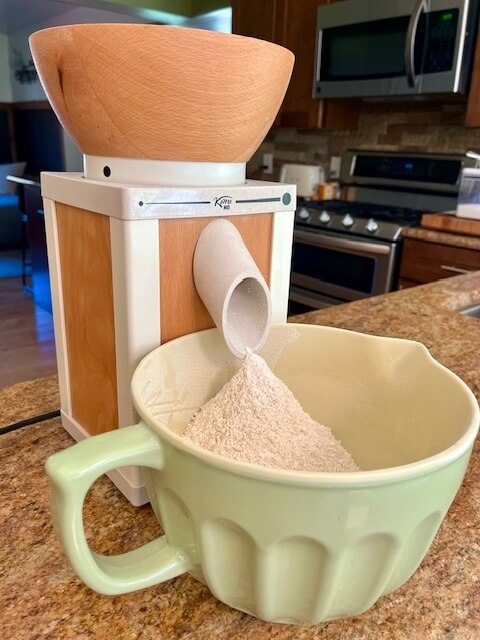
Freshly Milled Challah flour in a green mixing bowl coming out of an electric grain mill

Store-Bought Flour - Challah

This section applies to sourdough, yeast, or freshly milled flour.

If you’re using store-bought flour for challah, add it slowly and keep the dough slightly sticky. I prefer mostly bread flour with some all-purpose flour.  Bread flour provides the structure in this loaf, while a portion of all-purpose flour helps keep it tender. You can use all bread flour for a sturdier loaf, or go with 100% all-purpose flour for a softer, less structured result.

Then, knead for 10–15 minutes. As you knead, the dough tightens. Therefore, resist adding too much flour early. If needed, add more flour after kneading.

Freshly Milled Challah dough in a mixer bowl with beaters

The Great Stretch and Fold for Sourdough Freshly Milled Challah (or Store-Bought Flour)

This section applies to sourdough (not yeast), freshly milled flour, or store-bought flour.

If you’re making sourdough challah, perform stretch-and-folds until the windowpane structure develops. This is not necessary if you are using yeast for your leavener.

What is a stretch-and-fold?  Imagine a compass.

  • Grab the North side of the dough, stretch it up high, pull over the center, and tuck it under the South side.
  • Next, do this with the East side …
  • South side will then follow …
  • End with the West side …

Cover and rest 20 minutes. That’s one set. Repeat 4 times or until windowpane stretchy and strong.

Let Your Freshly Milled Challah (or store flour) Nap Peacefully

This section applies to all of the options (sourdough, yeast, freshly milled flour, and store-bought flour).

Now, rest time. Yeast dough … jumps straight here (no stretch-and-folds for you). Sourdough rests once windowpane is reached.

Cover and let rise for 30 minutes to 2 hours, until slightly puffy. Choose your adventure.  This step is flexible and respects your busy schedule.

Shaping & Braiding Your Freshly Milled Challah (or store-bought flour)

This section applies to all of the options (sourdough, yeast, freshly milled flour, and store-bought flour).

Now comes my favorite part of making freshly milled challah: shaping and braiding!

First, gently turn the dough out onto a lightly oiled work surface. Then, divide it into two equal large portions, because yes, this recipe makes two glorious loaves. Next, take one portion and divide it into three equal smaller pieces. Repeat this with the second portion … which means you’ll end up with six pieces total.

After that, it’s time to channel your inner kid-with-Play-Doh. One at a time, roll each piece into a long, skinny strand (in Play-Doh language we called them snakes) about 14 inches long. If the dough keeps shrinking back, don’t panic. Instead, let it rest for five minutes, then come back and roll again. The dough just needs a quick breather.

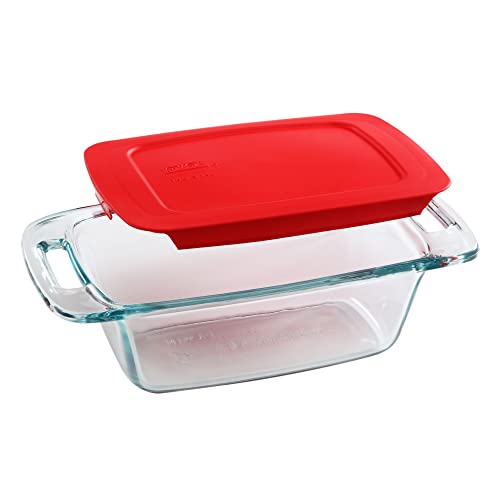
Now for the braid. Take three strands, line them up, and pinch them together firmly at one end. Then, braid just like you would hair … over, under, repeat … until you reach the other end. Pinch that end together, too … because nobody wants a rogue braid unraveling in the oven. Tuck both ends neatly underneath and gently transfer the braid into a greased loaf pan. (I love this Pyrex 1.5-quart glass loaf pan.)  If you prefer a free-form loaf (or don’t own a loaf pan), simply line a cookie sheet with parchment paper and place the dough right on top. This pan-free approach is actually very popular for challah and gives it that beautifully rustic look.

Then, repeat the entire process with the remaining three strands to shape your second loaf.

And if today’s energy level is more “chill” than “skill,” you can absolutely skip the braid. Simply shape the dough into a standard loaf, pop it into the pan, and call it a win. Your challah will still be beautiful … and delicious … no matter what.  Can you make 2, 3, 4, or 5-strand braids? Yes, please. Go wild! Just tag me on Instagram … I’m obsessed with your beautiful creations.

Final Rise for (store flour or) Freshly Milled Challah: Fridge or Counter?

This section applies to all of the options (sourdough, yeast, freshly milled flour, and store-bought flour).

At this stage of the freshly milled challah (or store-bought flour) journey, your loaves are shaped, braided, and looking downright impressive. Now, they just need one last rest before heading into the oven. Think of this as the calm-before-the-bake moment.

First, cover the loaves so they don’t dry out. A clean kitchen towel or plastic wrap works perfectly here. From this point, you get to choose what works best for your schedule … because challah is generous like that.

If you want more flavor and a little extra flexibility in your day, slide the covered pans into the refrigerator and let them rise slowly overnight. This cold fermentation deepens the flavor, improves texture, and makes tomorrow-you very happy. When you’re ready to bake, simply pull the loaves out and let them sit at room temperature until they look tall and proud.

On the other hand, if you want to bake the same day, just let the loaves rise right on the countertop. Ideally, they should sit in a warm spot until they double in size (and crest above the pan). Depending on the temperature of your kitchen (and if you are using yeast or sourdough), this usually takes anywhere from 45 minutes to a couple of hours.

You’ll know your challah is ready when the dough looks soft and airy. Once you see that, it’s officially go-time. The oven is calling, and your freshly milled challah is ready to shine.

Bake Your (store flour or) Freshly Milled Challah: High Heat, Big Drama

This section applies to all of the options (sourdough, yeast, freshly milled flour, and store-bought flour).

This is the moment where freshly milled challah (or store flour) goes from cute to show-stopping. Before anything else, preheat your oven to 425°F. Challah likes a hot start because:

  • that initial blast of heat gives you a strong oven spring to make the loaf light and airy,
  • the braids can get a fabulous upward rise, making lofty braids (low heat can flatten out each strand), and 
  • that unmistakable bakery-style presence is coveted … deep, rich caramelized color (it browns the sugar and eggs).

While the oven heats, it’s time to give your loaves their glow-up. In a small bowl, whisk together 1 egg and 1 tablespoon of water, then gently brush the egg wash over the tops of the loaves. This step is what gives challah its signature shiny, deep golden finish. If you’re feeling fancy … go ahead and sprinkle on sesame seeds or any topping you love. Or don’t … plain challah is totally a star too.

Next, slide the loaves into the oven and bake at 425°F for 15 minutes. During this stage, the dough will rise dramatically, the braids will puff up, and your kitchen will start smelling unfairly good.

After those first 15 minutes, reduce the oven temperature to 375°F and continue baking for another 10–15 minutes. This lower temperature allows the inside of the challah to cook through without scorching the top. 

Once the loaves have been in the oven for about 20 minutes total … take a peek. If the loaves are browning faster than you’d like, loosely tent them with aluminum foil to slow things down.

Your challah is done when the internal temperature reaches 190°F or when the loaves look deeply golden and sound slightly hollow when tapped. Once baked, remove them from the oven and let them rest in the pans for 5 minutes.

Cool Down of Your Freshly Milled Challah (or store-bought flour)

This section applies to all of the options (sourdough, yeast, freshly milled flour, or store-bought flour).

Once your freshly milled challah comes out of the oven, it will be golden, glossy, and smelling like pure victory. Naturally, your first instinct will be to grab a knife immediately. However, this is the moment where patience truly pays off.

After the loaves have rested in their pans for about 5 minutes, carefully transfer them to a cooling rack. This allows air to circulate all the way around the bread, which prevents the bottoms from getting steamy and soggy. As tempting as it is to slice right away, the inside of the challah is still finishing its bake during this cooling phase.

If you cut into the loaf too early, the interior can compress and turn gummy, which is a heartbreak no one needs. Therefore, letting the bread cool completely helps the crumb set properly … giving you that soft, fluffy texture you worked so hard for.

That said, “completely cool” is a flexible term. If you absolutely cannot wait, give it as much time as you can manage before slicing. Even a short rest is better than none.

Once cooled, enjoy your challah however your heart desires … thick slices with butter, toasted with jam, or tucked away for the weekend’s french toast dreams. No matter how you serve it, this loaf is worth every minute of waiting.

Freshly Milled Challah cut slice on board with knife and butter next to a window

FAQ of Freshly Milled Challah (or store-bought flour)

Even the most confident bakers have questions, and thankfully, freshly milled challah is very forgiving. If you’re wondering whether you’re doing it “right,” the answer is probably yes. Still, let’s walk through the most common questions that come up.

Shaping:

  • Do I have to braid it? Not at all. While braids are traditional and undeniably beautiful, they are completely optional. If today’s energy level is more “relaxed” than “intricate,” you can simply shape your challah into a standard loaf and bake it that way. The flavor and texture will be just as wonderful, and no one will complain.
  • Can I make 2, 3, 4, or 5-strand braids? Yes, please. Go wild! Just tag me on Instagram … I’m so impressed with your beautiful creations.
  • Do I have to use a panNope! You’re welcome to free-form the loaf right on a parchment-lined baking sheet. This pan-free method is actually a very traditional way to make it and gives the bread a beautifully rustic look.

Timelines:

  • You’ll find timelines for every version of this bread at the bottom of this post. Think of them as friendly guidelines, not strict schedules. These times are very approximate and can change depending on real-life factors … like a warm kitchen, high elevation, extra humidity, or a dough that’s feeling particularly ambitious that day. In other words, let the clock help you, but let the dough be the boss.

How do I store challah?

  • Keep it in an airtight container or bag right on the counter.
  • Most importantly … never, ever bag a warm loaf! Trapping steam will soften the crust and make the bread soggy. 
  • Slice-as-you-go to keep it fresher longer.
  • Peak Freshness (days 1-2). Toasting Phase (days 3-4). French Toast Prime (days 5-7).

Can I freeze challah?

  • Absolutely, and honestly, it freezes beautifully. 
  • Once the loaf is completely cool, wrap it tightly and pop it in the freezer. It will keep well for several months, making it a true gift to your future self. 
  • Thaw at room temperature or toast straight from frozen.

What can I do with Challah? So many good things!

  • Ultimate Bread Pudding
  • French Toast
  • Gourmet Grilled Cheese
  • Fancy Burger Bun
  • Savory Strata (think spinach, sausage, eggs, and plenty of cheese)
  • Buttery Croutons
  • Thanksgiving-Style Stuffing (my absolute favorite thing to do with challah … a major crowd-pleaser)

Conclusion: Freshly Milled Challah is Always the Right Choice

At the end of the day, challah is one of those recipes that truly rewards you no matter which path you take. Whether you choose freshly milled flour or store-bought … sourdough or yeast … braided or blissfully simple … pan or baking sheet … you are setting yourself up for a very delicious win. This bread is soft, rich, and deeply comforting, yet it somehow manages to feel special every single time you bake it.

What makes freshly milled challah (or store flour challah) even better is how generous it is. It’s beautiful enough to gift, sturdy enough to transform into french toast, and tender enough to eat straight from the counter with a swipe of butter. In other words, it fits seamlessly into everyday life while still feeling like a celebration.

Want to turn your challah into a fruity delight?  Snag your FREE Cranberry Orange Challah recipe card and matching gift tags right here.

Before you head off to start your levain or bubble up your yeast, be sure to check out my other guides and tutorials. They’re designed to keep baking approachable, fun, and totally fearless … because homemade food should feel empowering, not intimidating.

And if you do bake these golden loaves, I would absolutely love to see them. Tag me on Instagram (@hopethiswerksdiy), leave a comment, or share your experience. I’ll be cheering you on from my own kitchen … very likely with a slice of freshly milled challah in hand.

Until next time, may your dough rise high, your braids stay tight, and your french toast always be legendary.

Two loaves of sourdough challah bread sitting on a cooling rack with a tea towel next to them
Yield: 2 Loaves

Challah Bread (freshly milled flour + sourdough)

Two loaves of sourdough challah bread sitting on a cooling rack with a tea towel next to them

This sourdough challah made with freshly milled flour is tender, buttery, and full of depth ... surprisingly simple but show-stopping.

Ingredients

Levain

  • 2-3 tbsp (30g) sourdough starter
  • ½ cup (113g) room temperature water
  • ¾ cup (90g) flour

Dough

Instructions

  1. Levain: Combine your starter, water, and flour in a container. Mix until it's a thick, smooth paste ... like cozy porridge. Cover it up and let it snooze on the counter for about 12 hours to get bubbly and ready. (3 tbsp sourdough starter, ½ cup water, ¾ cup flour)
  2. Add Stuff: Add your levain + all of the remaining ingredients (except the flour) to a mixing bowl. Give that a whirl. (¼ cup honey, 4 eggs, 1½ tsp salt, ½ cup milk, 1 cup butter,)
  3. Freshly Milled Flour: Grind those wheat berries nice and fine. Gradually sprinkle in the flour until the dough is soft and slightly sticky ... it should be on the wetter side. (2 ¼ cup hard white, ⅓ cup hard red ... or go all hard white or all hard red)
  4. Knead: Knead for 8 minutes, rest for 30 minutes, knead another 8 minutes (add more flour now, if needed).
  5. Stretch-and-Fold (x4): Let the dough relax for 20 minutes, covered. Imagine a compass. Grab the North side, stretch it up high, and fold it over the center. Repeat this from the South, East, and West sides. Cover the dough and let it rest for another 20 minutes. That's one set! You need to repeat this entire stretch-and-fold cycle four times total (or until you get it to windowpane).
  6. Rest: Cover and let the dough rise peacefully for 30 minutes to 2 hours. The dough should look slightly puffy. You have a little flexibility here ... when it's convenient for you, move on to shaping.
  7. Shape: Split the dough into two equal large portions. Now, divide each of those large portions into 3 equal smaller pieces (you should have 6 pieces total). Roll each of these 6 pieces into a long, skinny strand about 14" long (relive your playdough days). Braid 1: Take 3 strands and make your braid. Pinch them firmly at the starting end and the finished end to keep them together. Fold the ends under neatly and place the finished braid into a greased loaf pan. (I use a Pyrex 1.5-Quart glass loaf pan.) Braid 2: Repeat the same process with the remaining three strands and place that braid in the second loaf pan.
  8. Final Rise: Cover the loaves and let them rise until they are approximately doubled in size. (Slow Option: Or, if you aren't ready to bake ... you can pop the covered pans in the fridge at this point for a slow rise.)
  9. Bake: Preheat the oven to 425°. Brush the top of the dough with an egg wash (1 egg mixed with 1 tbsp water). Bake for 15 minutes. Reduce the temperature to 375° and bake for 20-30 minutes more. You're looking for an internal temperature of 190°. Too Toasty? If the top starts getting too dark too fast, create an aluminum foil dome and gently place it over the bread.
  10. Cool Down: Let the loaves sit in the pan for 5 minutes. Carefully transfer them to a cooling rack to cool completely.
  11. Enjoy! Don't forget to save a slice or two ... challah makes the yummiest french toast.

    Notes

    Shaping:

    • Do I have to braid it? No, if you're feeling more "chill" than "skill" today, you can shape this into a standard loaf.
    • Can I make 2, 3, 4, or 5-strand braids? Yes, please. Go wild! Just tag me on Instagram ... I'm obsessed with your beautiful creations.
    • Do I have to use a pan? Nope! You’re welcome to free-form the loaf right on a parchment-lined baking sheet.

    Bake:

    • Set a timer! Check your bread after 20 minutes.
    • Because of the eggs and sugar ... challah can get a "sunburn" very quickly. If it's looking a little too bronzed, simply pop an aluminum foil hat over the top.

    Storage:

    • Keep it in an airtight container or bag right on the counter.
    • Never, ever bag a warm loaf!
    • Slice-as-you-go.
    • Peak Freshness (days 1-2). Toasting Phase (days 3-4). French Toast Prime (days 5-7).

    Freeze:

    • If you won't finish both loaves in a few days ... challah freezes like a dream!
    • Wrap a cooled loaf up, and it'll stay perfect in the freezer for a few months. It's like a gift to your future self.

    What can I do with Challah?

    • Ultimate Bread Pudding
    • French Toast
    • Gourmet Grilled Cheese
    • Fancy Burger Bun
    • Savory Strata (think spinach, sausage, eggs, and plenty of cheese)
    • Buttery Croutons
    • Thanksgiving-Style Stuffing (my absolute favorite thing to do with challah ... a major crowd-pleaser)

    Timeline (ish):

    • Thursday 8 PM: Mix levain.
    • Friday 7:30 AM: Mix and knead dough
    • 8:30 AM: stretch-and-folds every 20 minutes
    • 10:30 AM: dough rests until puffy
    • 12:30 PM: shape and braid
    • 1 PM: final rise (2–4 hours)
    • 4 PM: bake
    • 4:30 PM: cool before slicing

    Recommended Products

    As an Amazon Associate and member of other affiliate programs, I earn from qualifying purchases.

    Yield: 2 Loaves

    Challah Bread (freshly milled flour + yeast)

    Two loaves of sourdough challah bread sitting on a cooling rack with a tea towel next to them

    This yeast-raised challah uses freshly milled flour for a loaf that’s tender, flavorful, and sure to impress anyone at the table.

    Ingredients

    Instructions

    1. Yeast: Add the water, yeast, and honey to a large mixing bowl. Give it a quick stir, then let it hang out for about 5 minutes until bubbly and frothy. (1 cup water, 2 tsp yeast, ¼ cup honey)
    2. Add Stuff: Add all of the remaining ingredients (except the flour) to the yeast mixture. Give that a whirl. (4 eggs, 1½ tsp salt, ½ cup milk, 1 cup butter)
    3. Freshly Milled Flour: Grind those wheat berries nice and fine. Gradually sprinkle in the flour until the dough is soft and slightly sticky ... it should be on the wetter side. (3 cups hard white, 1 cup hard red ... or go all hard white or all hard red)
    4. Knead: Knead for 8 minutes, rest for 30 minutes, knead another 8 minutes (add more flour now, if needed).
    5. Rest: Cover and let the dough rise peacefully for 30 minutes to 2 hours. The dough should look slightly puffy. (You have a little flexibility with the time here.)
    6. Shape: Split the dough into two equal large portions. Now, divide each of those large portions into 3 equal smaller pieces (you should have 6 pieces total). Roll each of these 6 pieces into a long, skinny strand about 14" long (relive your playdough days). Braid 1: Take 3 strands and make your braid. Pinch them firmly at the starting end and the finished end to keep them together. Fold the ends under neatly and place the finished braid into a greased loaf pan. (I use a Pyrex 1.5-Quart glass loaf pan.) Braid 2: Repeat the same process with the remaining three strands and place that braid in the second loaf pan.
    7. Final Rise: Cover the loaves and let them rise until they are approximately doubled in size. (Slow Option: Or, if you aren't ready to bake ... you can pop the covered pans in the fridge at this point for a slow rise.)
    8. Bake: Preheat the oven to 425°. Brush the top of the dough with an egg wash (1 egg mixed with 1 tbsp water). Bake for 15 minutes. Reduce the temperature to 375° and bake for 20-30 minutes more. You're looking for an internal temperature of 190°. Too Toasty? If the top starts getting too dark too fast, create an aluminum foil dome and gently place it over the bread.
    9. Cool Down: Let the loaves sit in the pan for 5 minutes. Carefully transfer them to a cooling rack to cool completely.
    10. Enjoy! Don't forget to save a slice or two ... challah makes the yummiest french toast.

      Notes

      Shaping:

      • Do I have to braid it? No, if you're feeling more "chill" than "skill" today, you can shape this into a standard loaf.
      • Can I make 2, 3, 4, or 5-strand braids? Yes, please. Go wild! Just tag me on Instagram ... I'm obsessed with your beautiful creations.
      • Do I have to use a pan? Nope! You’re welcome to free-form the loaf right on a parchment-lined baking sheet.

      Bake:

      • Set a timer! Check your bread after 20 minutes.
      • Because of the eggs and sugar ... challah can get a "sunburn" very quickly. If it's looking a little too bronzed, simply pop an aluminum foil hat over the top.

      Storage:

      • Keep it in an airtight container or bag right on the counter.
      • Never, ever bag a warm loaf!
      • Slice-as-you-go.
      • Peak Freshness (days 1-2). Toasting Phase (days 3-4). French Toast Prime (days 5-7).

      Freeze:

      • If you won't finish both loaves in a few days ... challah freezes like a dream!
      • Wrap a cooled loaf up, and it'll stay perfect in the freezer for a few months. It's like a gift to your future self.

      What can I do with Challah?

      • Ultimate Bread Pudding
      • French Toast
      • Gourmet Grilled Cheese
      • Fancy Burger Bun
      • Savory Strata (think spinach, sausage, eggs, and plenty of cheese)
      • Buttery Croutons
      • Thanksgiving-Style Stuffing (my absolute favorite thing to do with challah ... a major crowd-pleaser)

      Timeline (ish):

      • 8:15 AM: bloom the yeast
      • 8:30 AM: mix and knead
      • 9:30 AM: first rise
      • 11 AM: shape and braid
      • 11:30 AM: final rise (1-2 hours)
      • 1:30 PM: bake
      • 2:00 PM: cool before slicing

      Recommended Products

      As an Amazon Associate and member of other affiliate programs, I earn from qualifying purchases.

      Yield: 2 Loaves

      Challah Bread (sourdough + store flour)

      Two loaves of sourdough challah bread sitting on a cooling rack with a tea towel next to them

      Meet your new favorite kitchen tradition! This sourdough challah contains the artisanal depth of a slow-fermented starter. The result? A golden, braided masterpiece that is incredibly soft, slightly sweet, and impressively pillowy.

      Ingredients

      Levain

      • 2-3 tbsp (30g) sourdough starter
      • ½ cup (113g) room temperature water
      • ¾ cup (90g) flour

      Dough

      • ¼ cup (85g) honey (sugar works too)
      • 4 eggs
      • 1½ tsp salt
      • ½ cup (120g) milk (whole is great, but whatever is lurking in your fridge is fine)
      • 1 cup (2 sticks) butter, softened
      • 2 cups (240g) bread flour (for structure)
      • 1½ cups (180g) all purpose flour (for tenderness)

      Instructions

      1. Levain: Combine your starter, water, and flour in a container. Mix until it's a thick, smooth paste ... like cozy porridge. Cover it up and let it snooze on the counter for about 12 hours to get bubbly and ready. (3 tbsp sourdough starter, ½ cup water, ¾ cup flour)
      2. Add Stuff: Add your levain + all of the remaining ingredients (except the flour) to a mixing bowl. Give that a whirl. (¼ cup honey, 4 eggs, 1½ tsp salt, ½ cup milk, 1 cup butter,)
      3. Flour: Gradually sprinkle in the flour until the dough is soft and slightly sticky ... it should be on the wetter side. (2 cups bread flour, 1½ cups all-purpose flour)
      4. Knead: Knead for 10-15 minutes. If it’s too sloppy, sprinkle in a little more flour and knead to incorporate it.
      5. Stretch-and-Fold (x4): Let the dough relax for 20 minutes, covered. Imagine a compass. Grab the North side, stretch it up high, and fold it over the center. Repeat this from the South, East, and West sides. Cover the dough and let it rest for another 20 minutes. That's one set! You need to repeat this entire stretch-and-fold cycle four times total (or until you get it to windowpane).
      6. Rest: Cover and let the dough rise peacefully for 30 minutes to 2 hours. The dough should look slightly puffy. You have a little flexibility here ... when it's convenient for you, move on to shaping.
      7. Shape: Split the dough into two equal large portions. Now, divide each of those large portions into 3 equal smaller pieces (you should have 6 pieces total). Roll each of these 6 pieces into a long, skinny strand about 14" long (relive your playdough days). Braid 1: Take 3 strands and make your braid. Pinch them firmly at the starting end and the finished end to keep them together. Fold the ends under neatly and place the finished braid into a greased loaf pan. (I use a Pyrex 1.5-Quart glass loaf pan.) Braid 2: Repeat the same process with the remaining three strands and place that braid in the second loaf pan.
      8. Final Rise: Cover the loaves and let them rise until they are approximately doubled in size. (Slow Option: Or, if you aren't ready to bake ... you can pop the covered pans in the fridge at this point for a slow rise.)
      9. Bake: Preheat the oven to 425°. Brush the top of the dough with an egg wash (1 egg mixed with 1 tbsp water). Bake for 15 minutes. Reduce the temperature to 375° and bake for 20-30 minutes more. You're looking for an internal temperature of 190°. Too Toasty? If the top starts getting too dark too fast, create an aluminum foil dome and gently place it over the bread.
      10. Cool Down: Let the loaves sit in the pan for 5 minutes. Carefully transfer them to a cooling rack to cool completely.
      11. Enjoy! Don't forget to save a slice or two ... challah makes the yummiest french toast.

        Notes

        Shaping:

        • Do I have to braid it? No, if you're feeling more "chill" than "skill" today, you can shape this into a standard loaf.
        • Can I make 2, 3, 4, or 5-strand braids? Yes, please. Go wild! Just tag me on Instagram ... I'm obsessed with your beautiful creations.
        • Do I have to use a pan? Nope! You’re welcome to free-form the loaf right on a parchment-lined baking sheet.

        Bake:

        • Set a timer! Check your bread after 20 minutes.
        • Because of the eggs and sugar ... challah can get a "sunburn" very quickly. If it's looking a little too bronzed, simply pop an aluminum foil hat over the top.

        Storage:

        • Keep it in an airtight container or bag right on the counter.
        • Never, ever bag a warm loaf!
        • Slice-as-you-go.
        • Peak Freshness (days 1-2). Toasting Phase (days 3-4). French Toast Prime (days 5-7).

        Freeze:

        • If you won't finish both loaves in a few days ... challah freezes like a dream!
        • Wrap a cooled loaf up, and it'll stay perfect in the freezer for a few months. It's like a gift to your future self.

        What can I do with Challah?

        • Ultimate Bread Pudding
        • French Toast
        • Gourmet Grilled Cheese
        • Fancy Burger Bun
        • Savory Strata (think spinach, sausage, eggs, and plenty of cheese)
        • Buttery Croutons
        • Thanksgiving-Style Stuffing (my absolute favorite thing to do with challah ... a major crowd-pleaser)

        Timeline (ish):

        • Thursday 8 PM: Mix levain.
        • Friday 8 AM: Mix and knead dough
        • 8:30 AM: stretch-and-folds every 20 minutes
        • 10:30 AM: dough rests until puffy
        • 12:30 PM: shape and braid
        • 1 PM: final rise (2–4 hours)
        • 4 PM: bake
        • 4:30 PM: cool before slicing

        Recommended Products

        As an Amazon Associate and member of other affiliate programs, I earn from qualifying purchases.
        Yield: 2 Loaves

        Challah Bread (yeast + store flour)

        Two loaves of sourdough challah bread sitting on a cooling rack with a tea towel next to them

        A foolproof challah recipe made with yeast and store-bought flour, delivering a beautifully fluffy loaf with rich flavor every time.

        Ingredients

        • 1 cup (240g) warm water
        • 2 tsp yeast (active dry or instant/bread machine)
        • ¼ cup (85g) honey (sugar works too)
        • 4 eggs
        • 1½ tsp salt
        • ½ cup (120g) milk (whole is great, but whatever is lurking in your fridge is fine)
        • 1 cup (2 sticks) butter, softened
        • 4 cups (480g) bread flour (for structure)
        • 1½ cups (180g) all purpose flour (for tenderness)

        Instructions

        1. Yeast: Add the water, yeast, and honey to a large mixing bowl. Give it a quick stir, then let it hang out for about 5 minutes until bubbly and frothy. (1 cup water, 2 tsp yeast, ¼ cup honey)
        2. Add Stuff: Add all of the remaining ingredients (except the flour) to the yeast mixture. Give that a whirl. (4 eggs, 1½ tsp salt, ½ cup milk, 1 cup butter)
        3. Flour: Gradually sprinkle in the flour until the dough is soft and slightly sticky ... it should be on the wetter side. (4 cups bread flour, 1½ cups all-purpose flour)
        4. Knead: Knead for 10-15 minutes. If it’s too sloppy, sprinkle in a little more flour and knead to incorporate it.
        5. Rest: Cover and let the dough rise peacefully for 30 minutes to 2 hours. The dough should look slightly puffy. (You have a little flexibility with the time here.)
        6. Shape: Split the dough into two equal large portions. Now, divide each of those large portions into 3 equal smaller pieces (you should have 6 pieces total). Roll each of these 6 pieces into a long, skinny strand about 14" long (relive your playdough days). Braid 1: Take 3 strands and make your braid. Pinch them firmly at the starting end and the finished end to keep them together. Fold the ends under neatly and place the finished braid into a greased loaf pan. (I use a Pyrex 1.5-Quart glass loaf pan.) Braid 2: Repeat the same process with the remaining three strands and place that braid in the second loaf pan.
        7. Final Rise: Cover the loaves and let them rise until they are approximately doubled in size. (Slow Option: Or, if you aren't ready to bake ... you can pop the covered pans in the fridge at this point for a slow rise.)
        8. Bake: Preheat the oven to 425°. Brush the top of the dough with an egg wash (1 egg mixed with 1 tbsp water). Bake for 15 minutes. Reduce the temperature to 375° and bake for 20-30 minutes more. You're looking for an internal temperature of 190°. Too Toasty? If the top starts getting too dark too fast, create an aluminum foil dome and gently place it over the bread.
        9. Cool Down: Let the loaves sit in the pan for 5 minutes. Carefully transfer them to a cooling rack to cool completely.
        10. Enjoy! Don't forget to save a slice or two ... challah makes the yummiest french toast.

          Notes

          Shaping:

          • Do I have to braid it? No, if you're feeling more "chill" than "skill" today, you can shape this into a standard loaf.
          • Can I make 2, 3, 4, or 5-strand braids? Yes, please. Go wild! Just tag me on Instagram ... I'm obsessed with your beautiful creations.
          • Do I have to use a pan? Nope! You’re welcome to free-form the loaf right on a parchment-lined baking sheet.

          Bake:

          • Set a timer! Check your bread after 20 minutes.
          • Because of the eggs and sugar ... challah can get a "sunburn" very quickly. If it's looking a little too bronzed, simply pop an aluminum foil hat over the top.

          Storage:

          • Keep it in an airtight container or bag right on the counter.
          • Never, ever bag a warm loaf!
          • Slice-as-you-go.
          • Peak Freshness (days 1-2). Toasting Phase (days 3-4). French Toast Prime (days 5-7).

          Freeze:

          • If you won't finish both loaves in a few days ... challah freezes like a dream!
          • Wrap a cooled loaf up, and it'll stay perfect in the freezer for a few months. It's like a gift to your future self.

          What can I do with Challah?

          • Ultimate Bread Pudding
          • French Toast
          • Gourmet Grilled Cheese
          • Fancy Burger Bun
          • Savory Strata (think spinach, sausage, eggs, and plenty of cheese)
          • Buttery Croutons
          • Thanksgiving-Style Stuffing (my absolute favorite thing to do with challah ... a major crowd-pleaser)

          Timeline (ish):

          • 9 AM: bloom the yeast
          • 9:15 AM: mix and knead
          • 9:30 AM: first rise
          • 11 AM: shape and braid
          • 11:30 AM: final rise (1-2 hours)
          • 2:30 PM: bake
          • 3:00 PM: cool before slicing

          Recommended Products

          As an Amazon Associate and member of other affiliate programs, I earn from qualifying purchases.

          Timeline for Sourdough – Freshly Milled Flour Challah
          Time Action Notes
          Thurs 8:00 PM Mix the Levain Let it sit overnight. It will wake up while you sleep!
          Friday 7:30 AM Mix & Knead Combine your bubbly levain with the rest of the ingredients. Do the secret 8-30-8 hydration trick.
          Friday 8:30 AM Stretch & Folds Give the dough some TLC every 20 mins to build strength.
          Friday 10:30 AM Peaceful Rest Let it bulk ferment on the counter until puffy.
          Friday 12:30 PM Shape & Braid The fun part! Divide, roll, and braid your strands.
          Friday 1:00 PM Final Rise Let the loaves double in size (this can take 2–4 hours).
          Friday 4:00 PM Bake Time! Start at 425 degrees for that “pop,” then lower to finish.
          Friday 4:30 PM Cooling The hardest part: waiting for it to cool before slicing!
          Timeline for Yeasted – Freshly Milled Flour Challah
          Time Action Notes
          8:15 AM Bloom the Yeast Mix yeast, warm water, and a pinch of sugar. Wait 5–10 minutes until foamy!
          8:30 AM Mix & Knead Add all of your ingredients. Knead, then do the secret 8-30-8 hydration trick.
          9:30 AM First Rise Cover the dough and let it rise in a warm, cozy spot.
          11:00 AM Shape & Braid The fun part! Divide, roll, and braid your strands.
          11:30 AM Final Rise Let the loaves double in size (this can take 1-2 hours).
          1:30 PM Bake Time! Start at 425 degrees for that “pop,” then lower the temp to finish.
          2:00 PM Cooling The hardest part: waiting for it to cool before slicing!
          Timeline for Sourdough Challah (with Store-Bought Flour)
          Time Action Notes
          Thurs 8:00 PM Mix the Levain Let it sit overnight. It will wake up while you sleep!
          Friday 8:00 AM Mix & Knead Combine your bubbly levain with the rest of the ingredients.
          Friday 8:30 AM Stretch & Folds Give the dough some TLC every 20 minutes to build strength.
          Friday 10:30 AM Peaceful Rest Let it bulk ferment on the counter until puffy.
          Friday 12:30 PM Shape & Braid The fun part! Divide, roll, and braid your strands.
          Friday 1:00 PM Final Rise Let the loaves double in size (this can take 2–4 hours).
          Friday 4:00 PM Bake Time! Start at 425 degrees for that “pop,” then lower the temperature to finish.
          Friday 4:30 PM Cooling The hardest part: waiting for it to cool before slicing!
          Timeline for Yeasted Challah (with Store-Bought Flour)
          Time Action Notes
          9:00 AM Bloom the Yeast Mix yeast, warm water, and a pinch of sugar. Wait 5–10 minutes until foamy!
          9:15 AM Mix & Knead Add all of your ingredients. Knead for about 10 minutes until smooth.
          9:30 AM First Rise Cover the dough and let it rise in a warm, cozy spot.
          11:00 AM Shape & Braid The fun part! Divide, roll, and braid your strands.
          11:30 AM Final Rise Let the loaves double in size (this can take 2–4 hours).
          2:30 PM Bake Time! Start at 425 degrees for that “pop,” then lower the temperature to finish.
          3:00 PM Cooling The hardest part: waiting for it to cool before slicing!

          Share the Post:

          2 responses to “Freshly Milled Challah (or store-bought flour … sourdough or yeast)”

          Leave a Reply

          Your email address will not be published. Required fields are marked *

          Skip to Recipe